

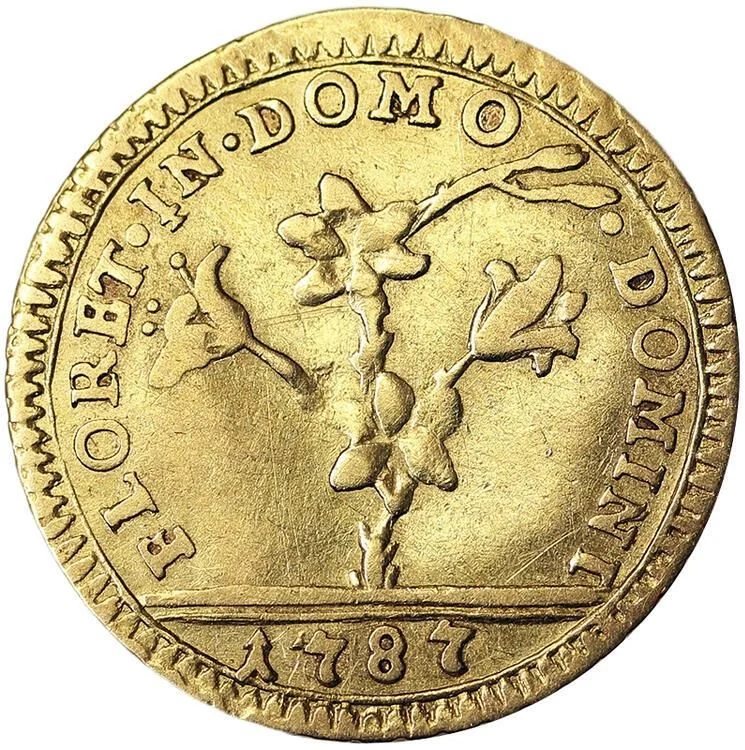
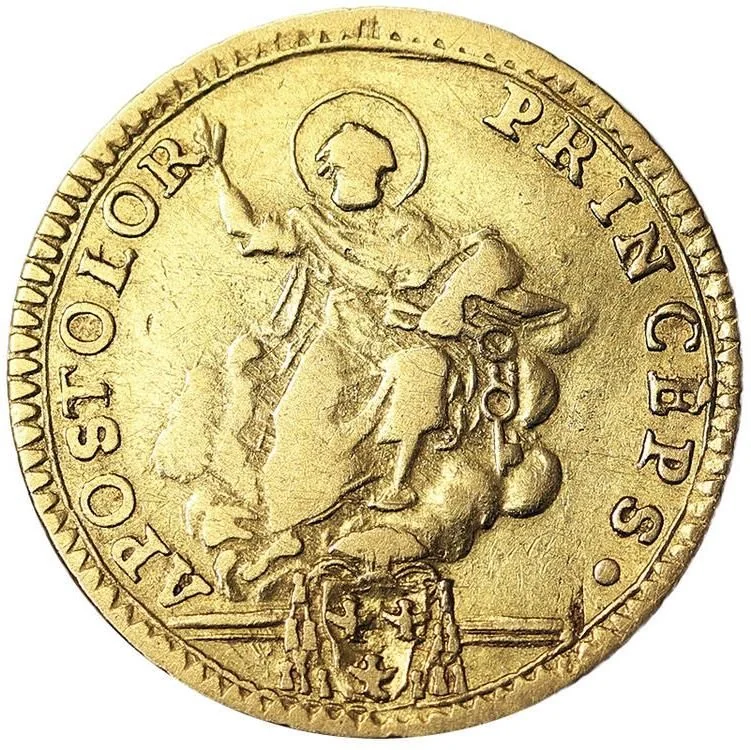
½ Doppia – Papal States
Vatican City
Context
Year: 1787
Country: Vatican City 
Issuer: Papal States
Ruler: Pius VI
Currency:
(1534—1835)
Demonetized: Yes
Material
References
KM: #Click to copy to clipboard1050
Numista: #363851
Value
Bullion value: $417.03
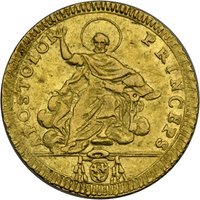
Obverse
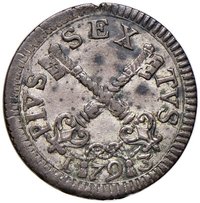
Reverse
Edge
Stringed
Mints
| Name | Mark |
|---|---|
| Rome | — |
Mintings
| Year | Mint Mark | Mintage | Quality | Collection |
|---|---|---|---|---|
| 1787 | — | — |
Historical background
In 1787, the Papal States, a collection of territories in central Italy under the sovereign rule of the Pope, operated with a complex and debased monetary system typical of the ancien régime. The primary unit was the scudo (plural: scudi), which was divided into 100 baiochi, each further subdivided into 5 quattrini. However, the reality was a chaotic mix of circulating coins from various papal mints (Rome, Bologna, Ancona) and even foreign currencies, each with fluctuating metallic content and value. Decades of fiscal pressure, often to fund artistic projects, administrative costs, and the luxurious papal court, had led to successive devaluations. The actual silver content in coins like the giulio and grosso had been steadily reduced, creating a disconnect between their face value and intrinsic worth, which eroded public trust and complicated commerce.
This monetary instability was a direct symptom of the broader financial distress of the Papal government. The state treasury was chronically depleted, relying heavily on inefficient taxes, monopolies, and the sale of public offices. Pope Pius VI, ruling from 1775 to 1799, was engaged in expensive land reclamation projects in the Pontine Marshes and faced the growing costs of maintaining neutrality amidst European tensions. Without a central bank or paper currency, the government resorted to manipulating the coinage as a short-term revenue measure, a practice known as seigniorage. This created a vicious cycle: weak public finances led to debased coinage, which in turn caused price inflation, hoarding of older, purer coins (Gresham's Law), and further strained the economy.
Consequently, by 1787, the monetary situation was a significant hindrance to economic development and a point of frustration for merchants and the populace. Transactions required careful negotiation and expert knowledge to assess the true value of a mixed bag of coins. While there were calls for reform from enlightened officials within the administration, the entrenched fiscal problems and conservative nature of the papal bureaucracy prevented any comprehensive overhaul. The fragile system would soon face even greater shocks, as the revolutionary fervor from France in 1789 would eventually spill into Italy, leading to the French occupation of Rome in 1798 and the temporary end of the Papal States' temporal power, sweeping its archaic currency system away.
This monetary instability was a direct symptom of the broader financial distress of the Papal government. The state treasury was chronically depleted, relying heavily on inefficient taxes, monopolies, and the sale of public offices. Pope Pius VI, ruling from 1775 to 1799, was engaged in expensive land reclamation projects in the Pontine Marshes and faced the growing costs of maintaining neutrality amidst European tensions. Without a central bank or paper currency, the government resorted to manipulating the coinage as a short-term revenue measure, a practice known as seigniorage. This created a vicious cycle: weak public finances led to debased coinage, which in turn caused price inflation, hoarding of older, purer coins (Gresham's Law), and further strained the economy.
Consequently, by 1787, the monetary situation was a significant hindrance to economic development and a point of frustration for merchants and the populace. Transactions required careful negotiation and expert knowledge to assess the true value of a mixed bag of coins. While there were calls for reform from enlightened officials within the administration, the entrenched fiscal problems and conservative nature of the papal bureaucracy prevented any comprehensive overhaul. The fragile system would soon face even greater shocks, as the revolutionary fervor from France in 1789 would eventually spill into Italy, leading to the French occupation of Rome in 1798 and the temporary end of the Papal States' temporal power, sweeping its archaic currency system away.
✨ Legendary