

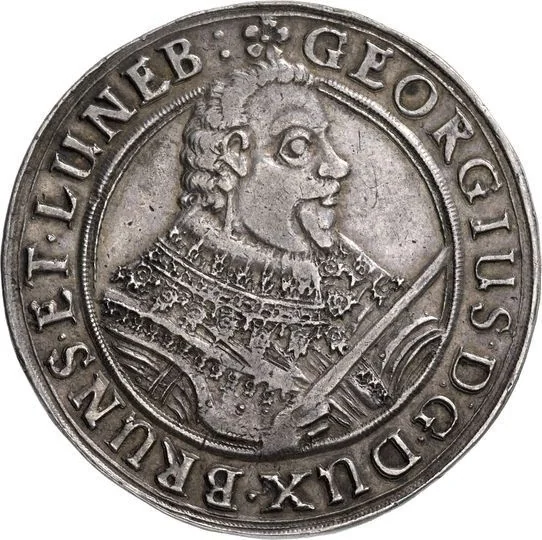
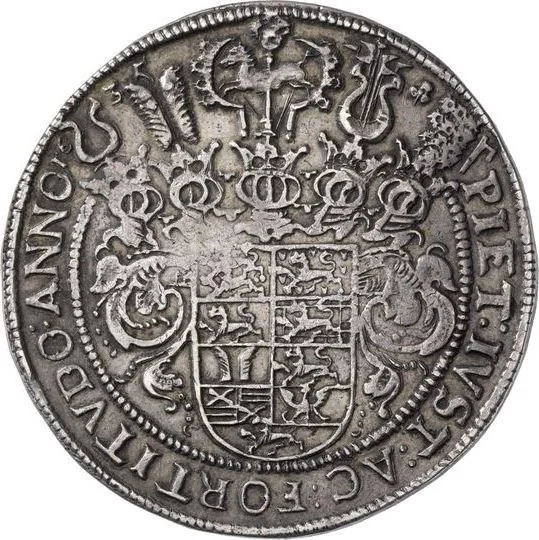
1 thaler – Brunswick-Lüneburg-Calenberg
Add to wishlist
Germany
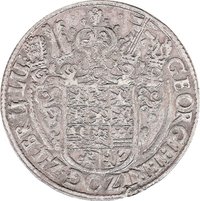
Obverse
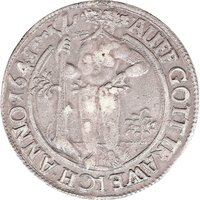
Reverse
Description:
Helmeted arms, legend dated.
Inscription:
PIET: IVST: AC: FORTITVDO. ANNO. 16 35
Script: Latin
Edge
Mints
| Name | Mark |
|---|---|
| Hamelin | — |
Mintings
| Year | Mint Mark | Mintage | Quality | Collection |
|---|---|---|---|---|
| 1635 | — | — | ||
| 1636 | — | — |
Historical background
In 1635, the Duchy of Brunswick-Lüneburg, specifically the Principality of Calenberg, was embroiled in the profound economic devastation of the Thirty Years' War. The region suffered from troop movements, requisitions, and the general collapse of trade and agriculture, which severely undermined the real economy that backed its currency. This crisis led to a classic "Kipper- und Wipperzeit" (clipping and swindling period), where ruling authorities, desperate for revenue to fund military operations, systematically debased the coinage. They reduced the precious metal content in coins like Taler and smaller denominations while ordering them to be accepted at their old, higher face value, causing rampant inflation and a loss of public trust in the currency.
The monetary situation was further complicated by the fragmented political structure of the Brunswick-Lüneburg territories. While Calenberg, under Duke George of Brunswick-Lüneburg, issued its own debased coins, it competed with a flood of similarly degraded and often counterfeit money from neighboring states and occupying armies circulating within its borders. This created a chaotic monetary environment where the value of coin was uncertain and constantly fluctuating, with older, full-weight coins being hoarded and driven out of circulation by Gresham's Law ("bad money drives out good").
Consequently, the year 1635 represents a peak of monetary disorder in Calenberg. The official currency was fundamentally unstable, leading to a de facto barter economy for many everyday transactions, as people lost faith in the coin of the realm. This financial collapse mirrored the broader social and physical destruction of the war, crippling the principality's economy and placing an unbearable burden on its population, who faced soaring prices for basic necessities alongside the direct horrors of the conflict.
The monetary situation was further complicated by the fragmented political structure of the Brunswick-Lüneburg territories. While Calenberg, under Duke George of Brunswick-Lüneburg, issued its own debased coins, it competed with a flood of similarly degraded and often counterfeit money from neighboring states and occupying armies circulating within its borders. This created a chaotic monetary environment where the value of coin was uncertain and constantly fluctuating, with older, full-weight coins being hoarded and driven out of circulation by Gresham's Law ("bad money drives out good").
Consequently, the year 1635 represents a peak of monetary disorder in Calenberg. The official currency was fundamentally unstable, leading to a de facto barter economy for many everyday transactions, as people lost faith in the coin of the realm. This financial collapse mirrored the broader social and physical destruction of the war, crippling the principality's economy and placing an unbearable burden on its population, who faced soaring prices for basic necessities alongside the direct horrors of the conflict.
✨ Legendary