

2 Thalers – Brunswick-Lüneburg-Calenberg
Germany
Context
Year: 1634
Country: Germany 
Issuer: Brunswick-Lüneburg-Calenberg
Ruler: George
Currency:
Demonetized: Yes
Material
References
KM: #Click to copy to clipboard12
Numista: #266679
Value
Bullion value: $164.97
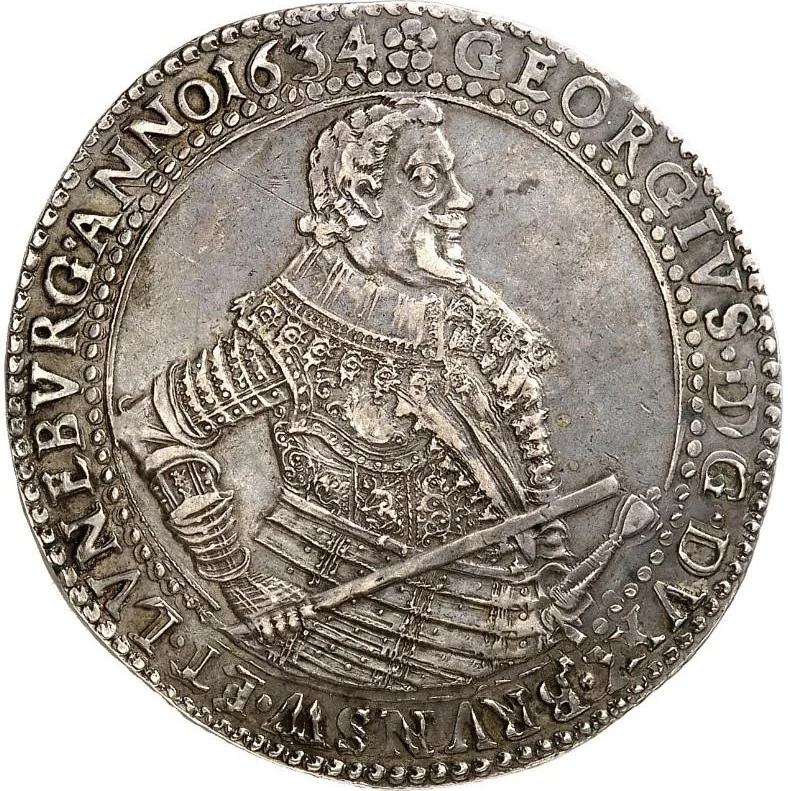
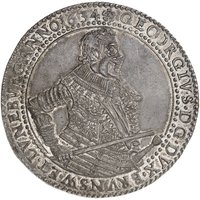
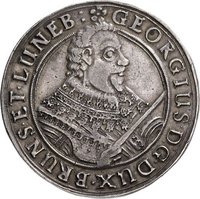
Obverse
Description:
Half-length figure, right, dated.
Inscription:
GEROGIVS D G DVX BRUNSW ET LVNEBVRG ANNO 1634
Script: Latin
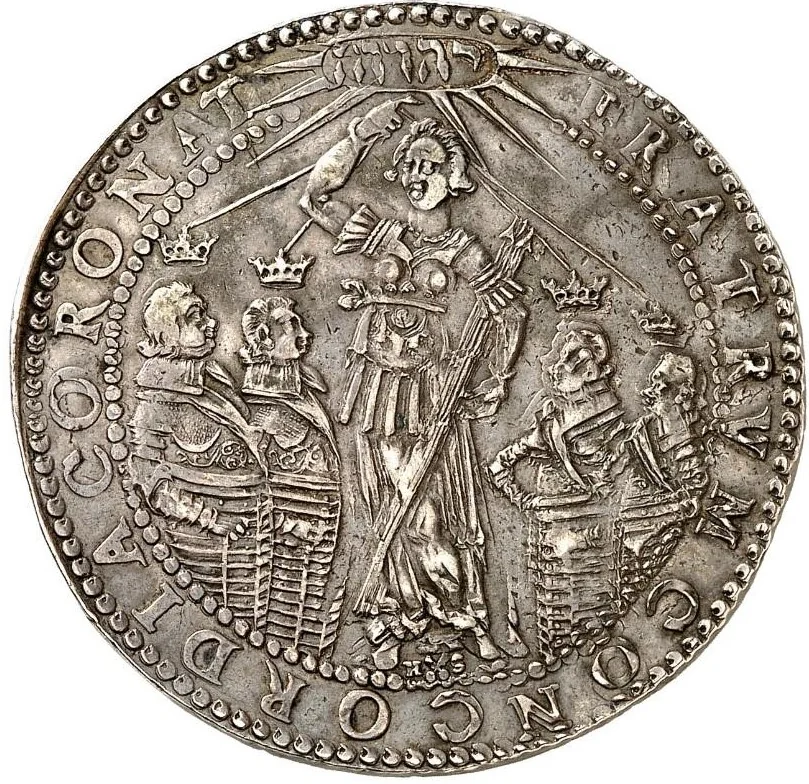
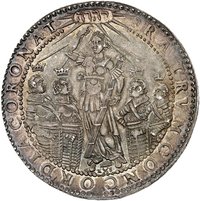
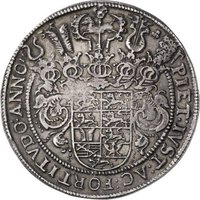
Reverse
Edge
Mintings
| Year | Mint Mark | Mintage | Quality | Collection |
|---|---|---|---|---|
| 1634 | — | — |
Historical background
In 1634, the Duchy of Brunswick-Lüneburg, specifically the Principality of Calenberg, was deeply entangled in the economic devastation of the Thirty Years' War. The region suffered from military occupation, rampant plundering, and severe population displacement, which crippled agricultural and commercial activity. This collapse of the real economy placed immense strain on the monetary system, as state revenues plummeted while war expenses soared, leading the ducal authorities to seek desperate fiscal measures.
The primary currency issue was a severe and chaotic debasement of the coinage. To finance war costs and debts, the ruling dukes, in conjunction with other regional powers, engaged in the Kipper- und Wipperzeit (the clipping and culling period). This involved drastically reducing the precious metal content in coins like Thalers, Groschen, and Pfennigs while minting them at their old face value. The result was a flood of bad money, which drove out the remaining full-value coins (Gresham's Law), causing rampant inflation, a loss of public trust in the currency, and the breakdown of both local and long-distance trade.
Furthermore, the monetary landscape was fragmented and complex. Alongside the debased local issues, various foreign coins from neighboring states and armies circulated, each with fluctuating and uncertain values. This chaos was exacerbated by the absence of a strong central monetary authority, as the Holy Roman Empire's regulatory framework had effectively collapsed. Consequently, in 1634, Calenberg's economy was characterized by a destructive mix of worthless coinage, hyperinflation for basic goods, and a retreat into barter, reflecting the broader societal collapse wrought by the war in the region.
The primary currency issue was a severe and chaotic debasement of the coinage. To finance war costs and debts, the ruling dukes, in conjunction with other regional powers, engaged in the Kipper- und Wipperzeit (the clipping and culling period). This involved drastically reducing the precious metal content in coins like Thalers, Groschen, and Pfennigs while minting them at their old face value. The result was a flood of bad money, which drove out the remaining full-value coins (Gresham's Law), causing rampant inflation, a loss of public trust in the currency, and the breakdown of both local and long-distance trade.
Furthermore, the monetary landscape was fragmented and complex. Alongside the debased local issues, various foreign coins from neighboring states and armies circulated, each with fluctuating and uncertain values. This chaos was exacerbated by the absence of a strong central monetary authority, as the Holy Roman Empire's regulatory framework had effectively collapsed. Consequently, in 1634, Calenberg's economy was characterized by a destructive mix of worthless coinage, hyperinflation for basic goods, and a retreat into barter, reflecting the broader societal collapse wrought by the war in the region.
✨ Legendary