

1 Thaler – Brunswick-Lüneburg-Calenberg
Germany
Context
Years: 1637–1642
Country: Germany 
Issuer: Brunswick-Lüneburg-Calenberg
Ruler: George
Currency:
Demonetized: Yes
Material
References
KM: #Click to copy to clipboard22
Numista: #32871
Obverse
Description:
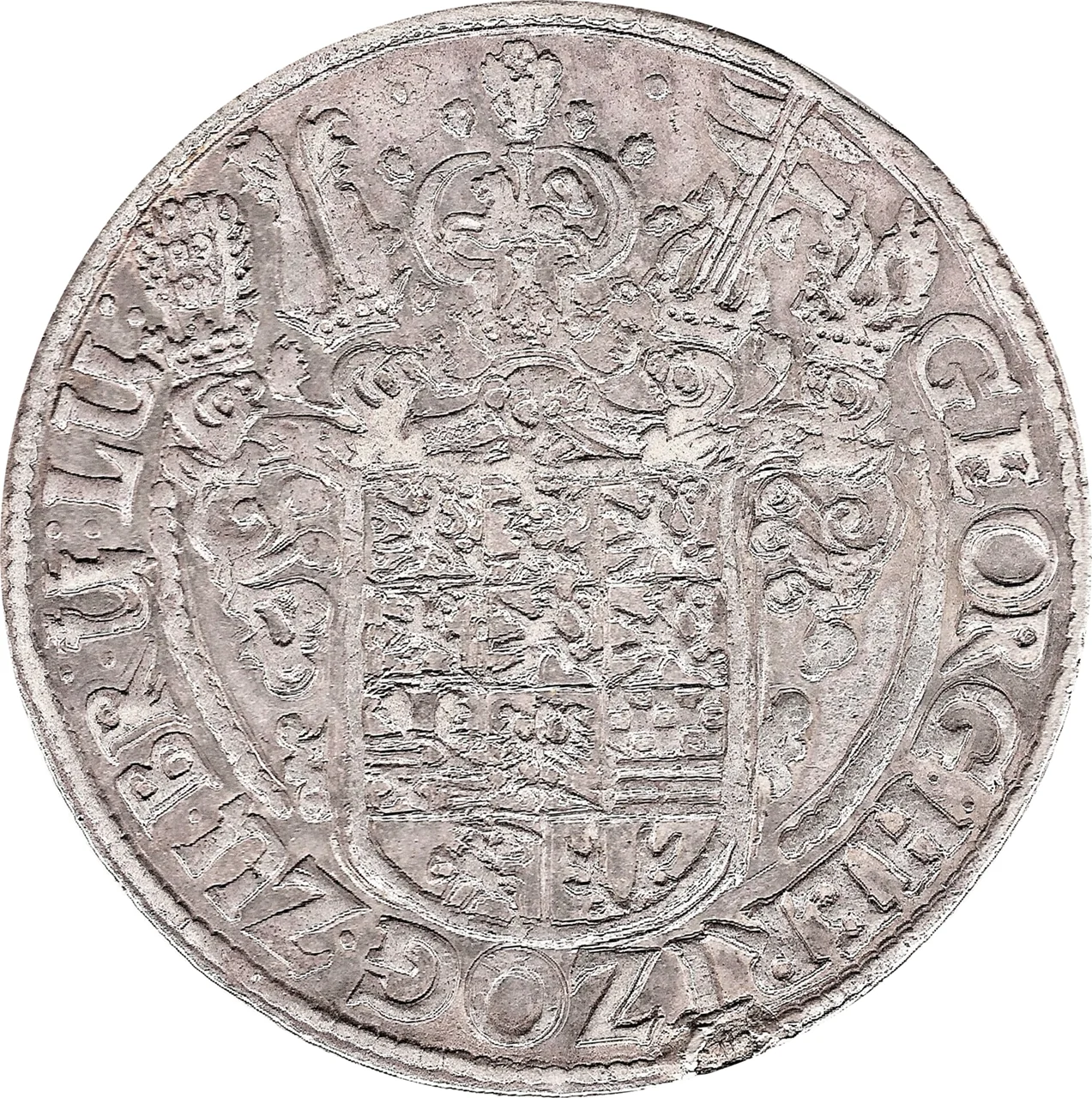
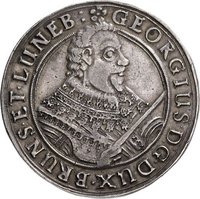
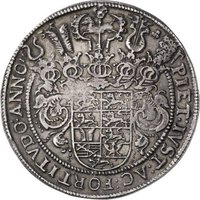
Crowned coat of arms with surrounding legend.
Inscription:
GEORG:HERTZOG.ZU.BR:U:LU:
Script: Latin
Reverse
Description:
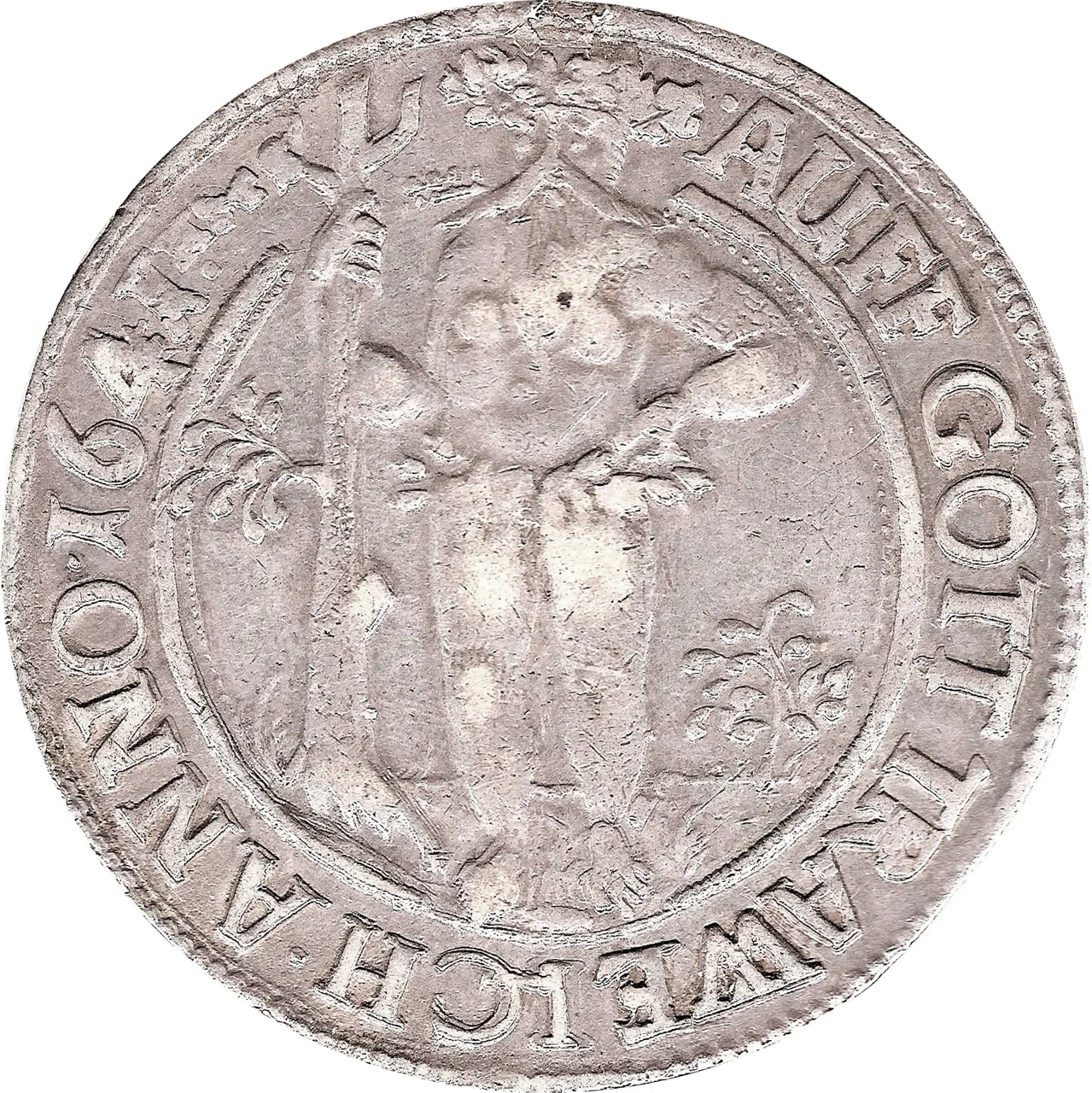
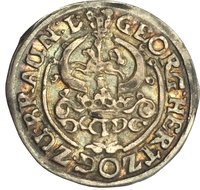
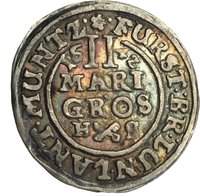
Wild man with a tree, legend encircling.
Inscription:
AUFF GOTT TRAWE ICH.ANNO.1641
Script: Latin
Edge
Mintings
| Year | Mint Mark | Mintage | Quality | Collection |
|---|---|---|---|---|
| 1637 | — | — | ||
| 1638 | — | — | ||
| 1639 | — | — | ||
| 1640 | — | — | ||
| 1641 | — | — | ||
| 1642 | — | — |
Historical background
In 1637, the Duchy of Brunswick-Lüneburg, specifically the Principality of Calenberg, was in a state of severe monetary and economic crisis, deeply exacerbated by the ongoing Thirty Years' War. The region was a battleground and occupation zone, suffering from troop movements, plunder, and heavy war contributions (Kontributionen) demanded by both passing and occupying armies. This relentless extraction of wealth devastated the local economy, crippled trade, and placed the ducal treasury under immense strain, leading to a desperate need for revenue.
The currency situation was characterized by rampant debasement and chaotic circulation. To meet wartime financial obligations, the ruling authorities, like many in the Holy Roman Empire, engaged in the practice of lowering the precious metal content in newly minted coins while maintaining their face value. This led to an influx of inferior Kippermünzen (debased coinage) and a corresponding flight of older, full-value coins out of circulation (Gresham's Law). The monetary landscape became a confusing mix of domestic debased issues, foreign coins, and remnants of older, better currency, destroying public trust and disrupting everyday transactions.
Consequently, prices for essential goods soared, not only due to scarcity caused by the war but also due to the rapid depreciation of the circulating medium. While a comprehensive, standardized currency reform for the broader Brunswick-Lüneburg territories would later be attempted with the Reichstaler convention of 1665, the year 1637 represents a low point of monetary disorder in Calenberg. The currency was essentially a tool of short-term war finance, with its stability and integrity sacrificed, deepening the hardship endured by the local population.
The currency situation was characterized by rampant debasement and chaotic circulation. To meet wartime financial obligations, the ruling authorities, like many in the Holy Roman Empire, engaged in the practice of lowering the precious metal content in newly minted coins while maintaining their face value. This led to an influx of inferior Kippermünzen (debased coinage) and a corresponding flight of older, full-value coins out of circulation (Gresham's Law). The monetary landscape became a confusing mix of domestic debased issues, foreign coins, and remnants of older, better currency, destroying public trust and disrupting everyday transactions.
Consequently, prices for essential goods soared, not only due to scarcity caused by the war but also due to the rapid depreciation of the circulating medium. While a comprehensive, standardized currency reform for the broader Brunswick-Lüneburg territories would later be attempted with the Reichstaler convention of 1665, the year 1637 represents a low point of monetary disorder in Calenberg. The currency was essentially a tool of short-term war finance, with its stability and integrity sacrificed, deepening the hardship endured by the local population.
✨ Legendary