

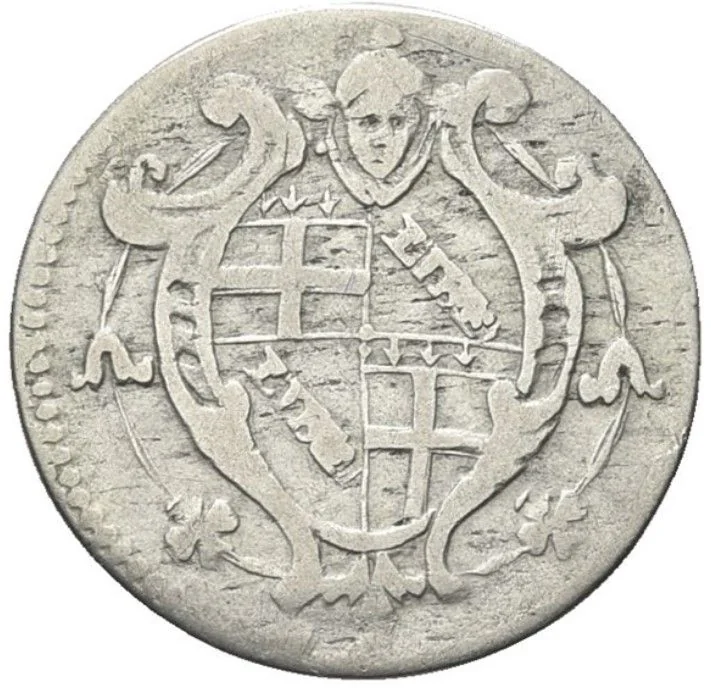
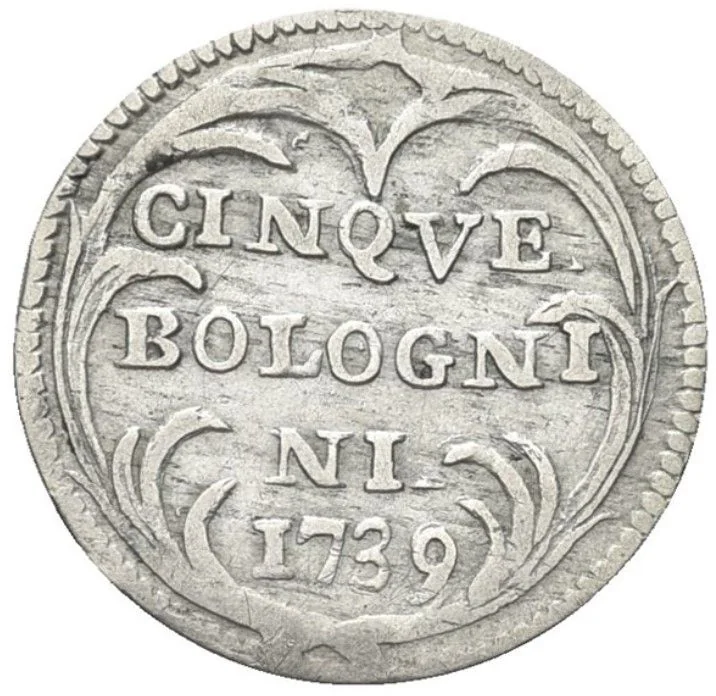
1 Carlin – Bologna
Italy
Context
Years: 1738–1740
Country: Italy 
Issuer: Bologna
Ruler: Clement XII
Currency:
(1534—1835)
Demonetized: Yes
Material
References
KM: #Click to copy to clipboard213
Numista: #363144
Value
Bullion value: $3.41
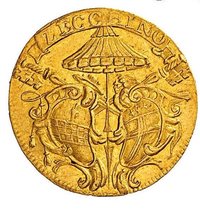
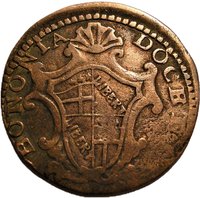
Obverse
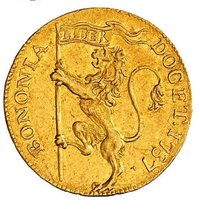
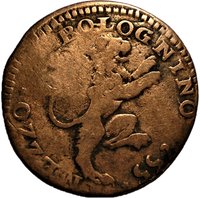
Reverse
Edge
Plain
Mints
| Name | Mark |
|---|---|
| Bologna | — |
Mintings
| Year | Mint Mark | Mintage | Quality | Collection |
|---|---|---|---|---|
| 1738 | — | — | ||
| 1739 | — | — | ||
| 1740 | — | — |
Historical background
In 1738, Bologna existed within a complex monetary landscape typical of the Italian peninsula before unification. The city was part of the Papal States, and its primary official currency was the Papal scudo, a silver coin. However, Bologna also minted its own subsidiary coins, such as the lira bolognese and soldo, which were used for everyday local transactions. This created a formal hierarchy of value, but the reality was far more chaotic due to the circulation of a multitude of foreign coins from neighbouring states like the Republic of Venice, the Duchy of Modena, and the Grand Duchy of Tuscany, each with fluctuating metallic content and exchange rates.
The practical economy was burdened by constant calculation and uncertainty. Merchants and bankers required extensive tariffe (exchange rate bulletins) to navigate the values of dozens of different gold and silver coins in play, from the Venetian zecchino to the Spanish doubloon. This proliferation of specie was exacerbated by wear, clipping, and counterfeiting, which further eroded trust in the actual metal content of any given coin. Consequently, transactions often required expert assaying, and prices were frequently negotiated based on the specific type of coin being offered.
Beneath this metallic circulation, a layer of credit instruments—bills of exchange, promissory notes, and bank transfers—facilitated larger commercial and state operations. The Banco di Bologna, established earlier in the century, provided a crucial mechanism for clearing debts without the physical movement of unreliable specie. Thus, Bologna in 1738 operated with a tripartite system: an official papal currency, a chaotic daily reality of mixed foreign and local coinage, and a more stable credit network for elite finance, all managed by a sophisticated class of money-changers and bankers who were essential to the city’s economic functioning.
The practical economy was burdened by constant calculation and uncertainty. Merchants and bankers required extensive tariffe (exchange rate bulletins) to navigate the values of dozens of different gold and silver coins in play, from the Venetian zecchino to the Spanish doubloon. This proliferation of specie was exacerbated by wear, clipping, and counterfeiting, which further eroded trust in the actual metal content of any given coin. Consequently, transactions often required expert assaying, and prices were frequently negotiated based on the specific type of coin being offered.
Beneath this metallic circulation, a layer of credit instruments—bills of exchange, promissory notes, and bank transfers—facilitated larger commercial and state operations. The Banco di Bologna, established earlier in the century, provided a crucial mechanism for clearing debts without the physical movement of unreliable specie. Thus, Bologna in 1738 operated with a tripartite system: an official papal currency, a chaotic daily reality of mixed foreign and local coinage, and a more stable credit network for elite finance, all managed by a sophisticated class of money-changers and bankers who were essential to the city’s economic functioning.
✨ Legendary