

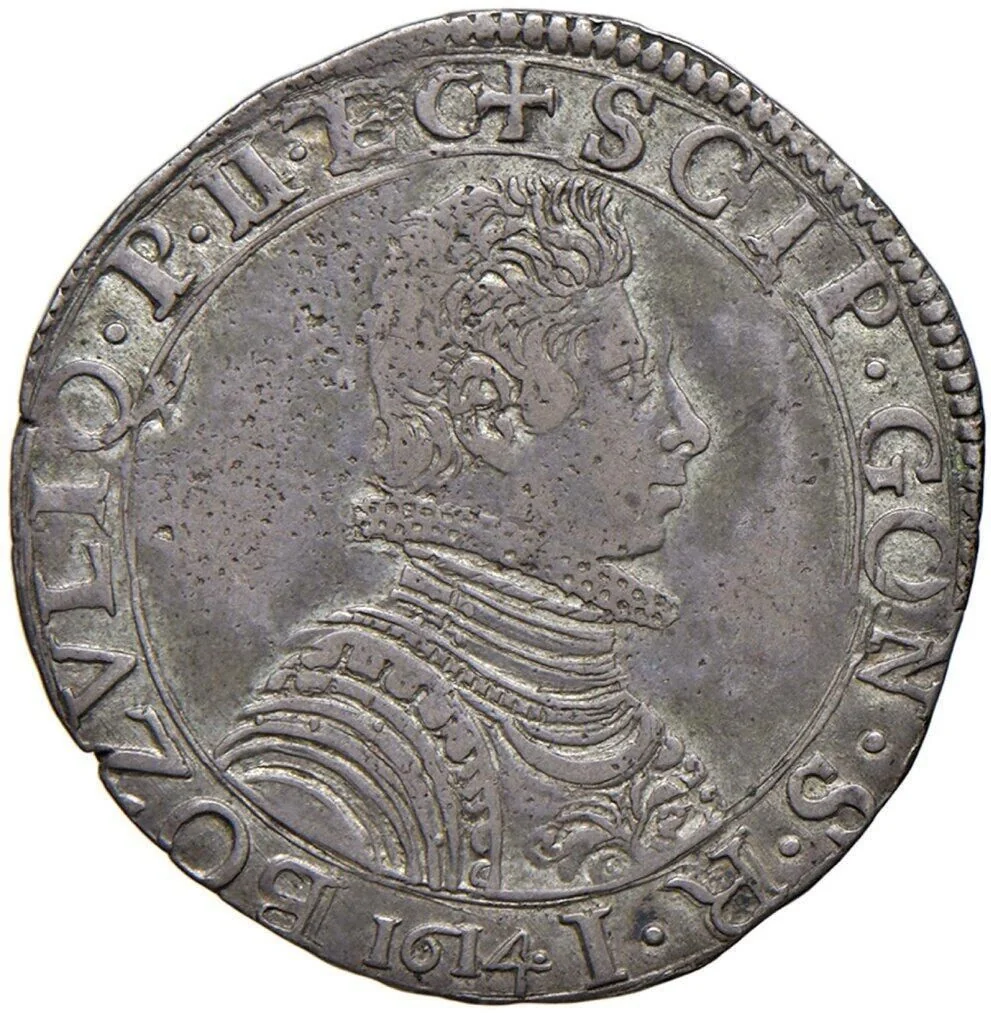
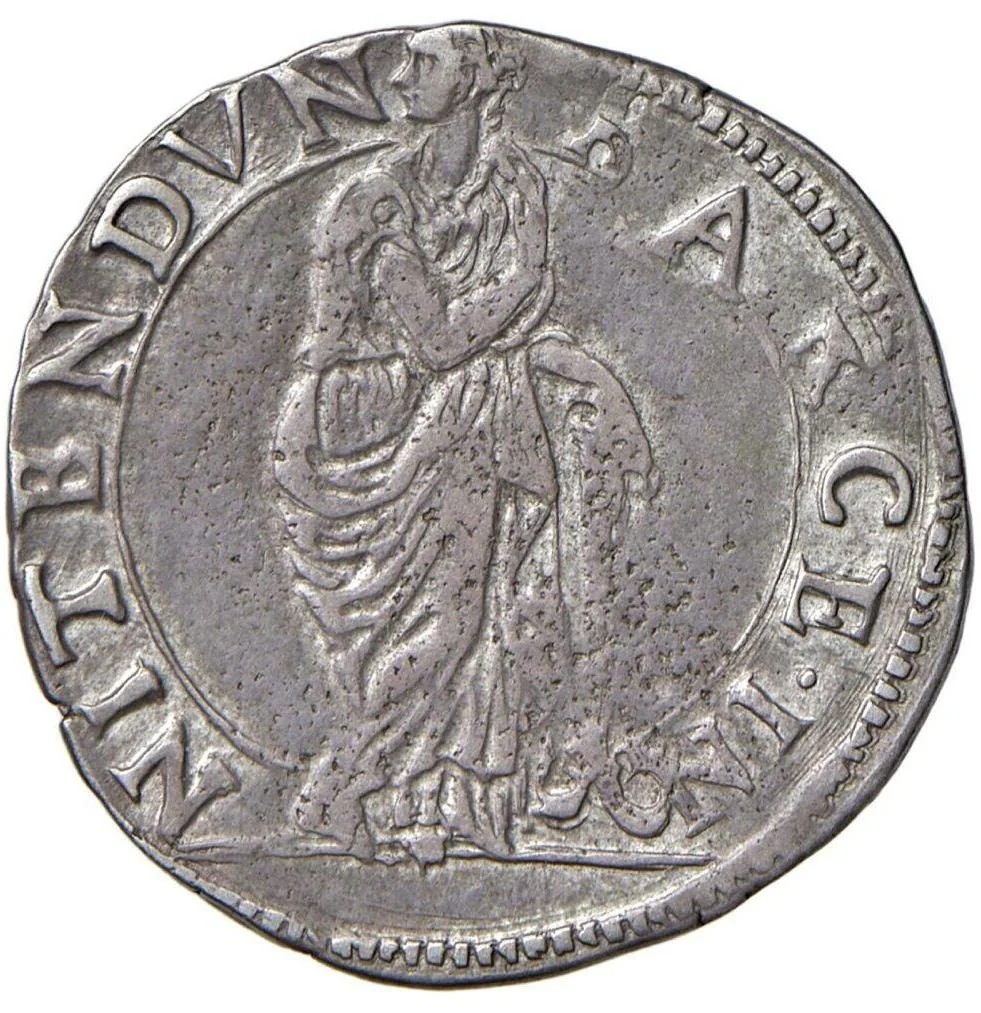
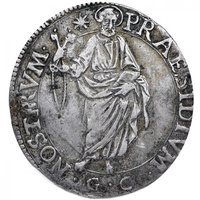
1 Lira – Bozzolo
Italy
Obverse
Reverse
Edge
Mints
| Name | Mark |
|---|---|
| Bozzolo | — |
Mintings
| Year | Mint Mark | Mintage | Quality | Collection |
|---|---|---|---|---|
| 1614 | — | — |
Historical background
In 1614, the Duchy of Mantua, which included the small but prosperous town of Bozzolo, was navigating a complex and fragmented monetary landscape. The region did not have a single, unified currency. Instead, commerce operated on a dual system: actual physical coins and abstract units of account. The most important unit of account was the lira, divided into 20 soldi or 240 denari. However, the coins in daily circulation were a heterogeneous mix, including local Mantuan scudi and doppie, Venetian ducats and lire, and even Spanish reales from the vast Habsburg empire, which exerted significant political influence over Northern Italy.
This multiplicity of coins, each with fluctuating metallic content and exchange rates, created constant challenges for merchants and officials in Bozzolo. The value of a coin was not simply its face value but its weight and fineness of gold or silver. Debasement—reducing the precious metal in coins—by various states was a common practice to raise short-term revenue, leading to inflation and loss of public trust. Consequently, money changers (campsores) were essential figures in the marketplace, assessing and exchanging this bewildering array of specie, while official tariffs were frequently published to try to fix exchange rates between "real money" (moneta reale) and "money of account" (moneta di conto).
The situation in Bozzolo was further strained by the fiscal policies of Duke Ferdinando Gonzaga. Facing immense debts from courtly extravagance and military expenditures, the Mantuan mint was often engaged in manipulative practices. While not in Bozzolo itself, the ducal policy directly impacted the town's economy, as the overproduction of debased coinage could flood local markets, driving good-quality foreign coins out of circulation—a manifestation of Gresham’s Law where "bad money drives out good." Thus, for Bozzolo’s traders and peasants alike, everyday transactions required careful calculation amidst a currency environment defined by instability, multiplicity, and the distant duke’s financial desperation.
This multiplicity of coins, each with fluctuating metallic content and exchange rates, created constant challenges for merchants and officials in Bozzolo. The value of a coin was not simply its face value but its weight and fineness of gold or silver. Debasement—reducing the precious metal in coins—by various states was a common practice to raise short-term revenue, leading to inflation and loss of public trust. Consequently, money changers (campsores) were essential figures in the marketplace, assessing and exchanging this bewildering array of specie, while official tariffs were frequently published to try to fix exchange rates between "real money" (moneta reale) and "money of account" (moneta di conto).
The situation in Bozzolo was further strained by the fiscal policies of Duke Ferdinando Gonzaga. Facing immense debts from courtly extravagance and military expenditures, the Mantuan mint was often engaged in manipulative practices. While not in Bozzolo itself, the ducal policy directly impacted the town's economy, as the overproduction of debased coinage could flood local markets, driving good-quality foreign coins out of circulation—a manifestation of Gresham’s Law where "bad money drives out good." Thus, for Bozzolo’s traders and peasants alike, everyday transactions required careful calculation amidst a currency environment defined by instability, multiplicity, and the distant duke’s financial desperation.

✨ Legendary