

1 Doppia – Bozzolo
Italy
Context
Year: 1618
Country: Italy 
Issuer: Bozzolo
Ruler: Scipione Gonzaga
Currency:
(1497—1670)
Demonetized: Yes
Material
Diameter: 27 mm
Weight: 7 g
Gold weight: 6.90 g
Shape: Irregular round
Composition: 98.6% Gold
Magnetic: No
Alignment: Coin alignment

flip
References
KM: #Click to copy to clipboard52
Numista: #536350
Value
Bullion value: $1149.04
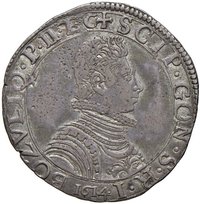
Obverse
Description:
Crowned arms within inner circle.
Inscription:
SCIP PRIN BOZ II MAR HOS C P ET C
Script: Latin
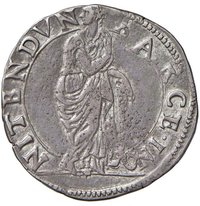
Reverse
Description:
Crowned female figure.
Inscription:
ABSIT NE ABSIT DOP N D CARATI 21 6
1618
1618
Script: Latin
Edge
Mints
| Name | Mark |
|---|---|
| Bozzolo | — |
Mintings
| Year | Mint Mark | Mintage | Quality | Collection |
|---|---|---|---|---|
| 1618 | — | — |
Historical background
In 1618, the Duchy of Mantua, which included the small but prosperous town of Bozzolo, operated within the complex and fragmented monetary landscape of early modern Italy. Bozzolo itself was a Gonzaga feudo, ruled by a cadet branch of the Mantuan family, and its economy was primarily agricultural, with a growing mercantile class. There was no single "Bozzolo currency"; instead, the town’s market saw a chaotic circulation of coins from various states. Transactions were conducted using a mix of Mantuan scudi and lire, Venetian ducats and lire, Spanish silver reales (crucial for international trade), and even Imperial thalers from German lands. This proliferation created a constant need for money-changers and led to disputes over exchange rates and coin purity.
The monetary situation was further strained by the practice of "crying up" or "crying down" coins, where local authorities periodically revalued foreign currencies against the Mantuan lira to attract specie or protect local reserves. This instability was exacerbated by the widespread clipping and debasement of coins, as both states and individuals sought to profit from the difference between a coin’s face value and its intrinsic metal content. For Bozzolo’s merchants and peasants alike, this meant prices and wages were subject to unpredictable fluctuations beyond simple supply and demand, embedding a layer of financial risk into daily life.
This fragile system existed on the brink of catastrophe in 1618. The looming Thirty Years' War (beginning that very year) and the impending Mantuan War of Succession (1628–31) would soon place immense fiscal pressure on the Gonzaga rulers. To finance military expenditures, they would resort to severe currency debasement, dramatically reducing the silver content of their coinage. Therefore, the monetary confusion in Bozzolo in 1618, while chronic, was a prelude to a period of severe inflationary crisis, where the trust in coinage itself would be eroded, profoundly impacting the town’s economic and social stability.
The monetary situation was further strained by the practice of "crying up" or "crying down" coins, where local authorities periodically revalued foreign currencies against the Mantuan lira to attract specie or protect local reserves. This instability was exacerbated by the widespread clipping and debasement of coins, as both states and individuals sought to profit from the difference between a coin’s face value and its intrinsic metal content. For Bozzolo’s merchants and peasants alike, this meant prices and wages were subject to unpredictable fluctuations beyond simple supply and demand, embedding a layer of financial risk into daily life.
This fragile system existed on the brink of catastrophe in 1618. The looming Thirty Years' War (beginning that very year) and the impending Mantuan War of Succession (1628–31) would soon place immense fiscal pressure on the Gonzaga rulers. To finance military expenditures, they would resort to severe currency debasement, dramatically reducing the silver content of their coinage. Therefore, the monetary confusion in Bozzolo in 1618, while chronic, was a prelude to a period of severe inflationary crisis, where the trust in coinage itself would be eroded, profoundly impacting the town’s economic and social stability.

✨ Legendary