

¼ Mohar – Kathmandu Kingdom
Nepal
Context
Year: 1698
Nepal Sambat Year: 818
Country: Nepal 
Issuer: Kathmandu Kingdom
Ruler: Bhaskara Malla
Currency:
(1546—1932)
Demonetized: Yes
References
KM: #Click to copy to clipboard215
Numista: #361684
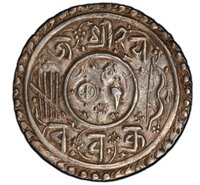
Obverse
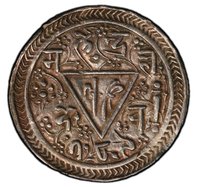
Reverse
Edge
Mintings
| Year | Mint Mark | Mintage | Quality | Collection |
|---|---|---|---|---|
| 1698 | — | — |
Historical background
In 1698, the Kathmandu Kingdom (one of the three rival city-states in the Nepal Valley, alongside Patan and Bhaktapur) operated within a complex and fragmented monetary system. The primary circulating currency was the Mohar, a silver coin minted locally by the Malla kings. These coins were typically small, thick, and stamped with crude symbols, including the king's name and titles, often in the Nepalese script. However, the purity and weight of these mohars could vary significantly between the three kingdoms and even between different reigns, leading to a lack of standardization that complicated trade.
The economy was not isolated; it was heavily influenced by robust trans-Himalayan trade. Alongside local mohars, foreign silver coins, particularly the Mughal Rupee from the Indian subcontinent, circulated widely and were often preferred for larger transactions due to their more consistent silver content and broader acceptance. Furthermore, the kingdom's strategic position on the salt and wool trade route between Tibet and India meant that Tibetan silver coins and even raw silver bullion were common mediums of exchange. This created a de facto multi-currency environment where merchants had to be adept at assessing metal purity and exchange rates.
King Bhupatindra Malla, who ruled Bhaktapur, was on the throne in 1698, and his kingdom was known for its relative prosperity and cultural flourishing. While specific records for Kathmandu's King Bhaskara Malla in that exact year are sparse, the period was characterized by intense inter-kingdom rivalry. This competition extended to coinage, as each Malla king used minting as an expression of sovereignty and prestige. The system was essentially manual and artisanal, with coins struck by hand, making counterfeiting relatively easy and further complicating the monetary landscape for the valley's merchants, farmers, and artisans.
The economy was not isolated; it was heavily influenced by robust trans-Himalayan trade. Alongside local mohars, foreign silver coins, particularly the Mughal Rupee from the Indian subcontinent, circulated widely and were often preferred for larger transactions due to their more consistent silver content and broader acceptance. Furthermore, the kingdom's strategic position on the salt and wool trade route between Tibet and India meant that Tibetan silver coins and even raw silver bullion were common mediums of exchange. This created a de facto multi-currency environment where merchants had to be adept at assessing metal purity and exchange rates.
King Bhupatindra Malla, who ruled Bhaktapur, was on the throne in 1698, and his kingdom was known for its relative prosperity and cultural flourishing. While specific records for Kathmandu's King Bhaskara Malla in that exact year are sparse, the period was characterized by intense inter-kingdom rivalry. This competition extended to coinage, as each Malla king used minting as an expression of sovereignty and prestige. The system was essentially manual and artisanal, with coins struck by hand, making counterfeiting relatively easy and further complicating the monetary landscape for the valley's merchants, farmers, and artisans.
✨ Legendary