

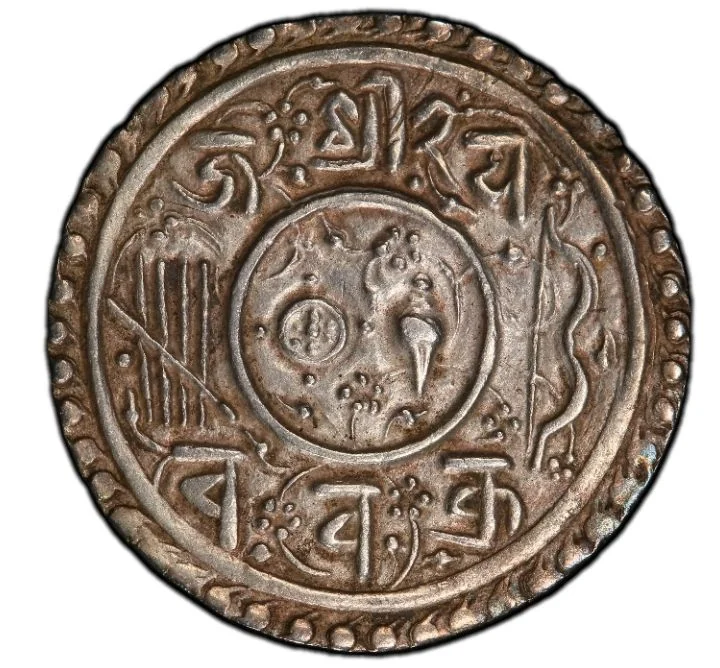
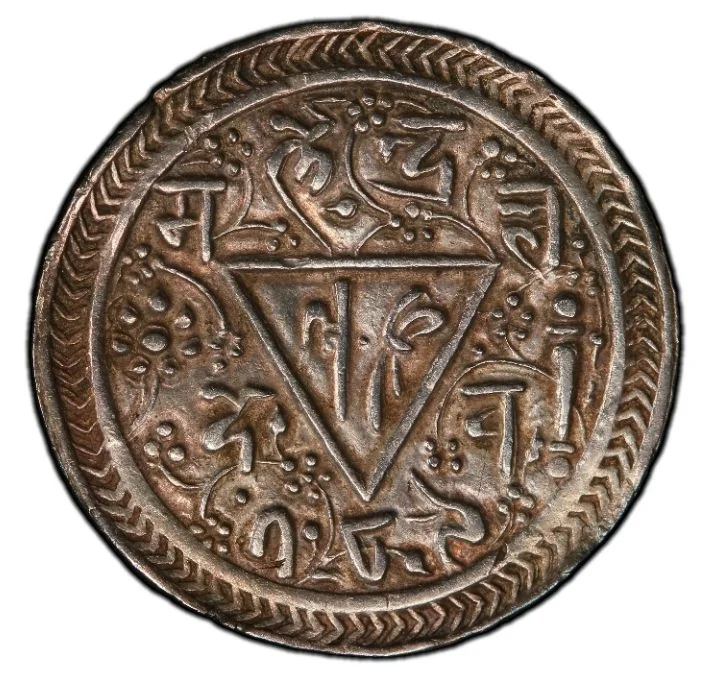
1 Mohar – Kathmandu Kingdom
Nepal
Context
Year: 1669
Nepal Sambat Year: 789
Country: Nepal 
Issuer: Kathmandu Kingdom
Ruler: Chakravartendra Malla
Currency:
(1546—1932)
Demonetized: Yes
Material
References
KM: #Click to copy to clipboard173
Numista: #361682
Value
Bullion value: $15.79
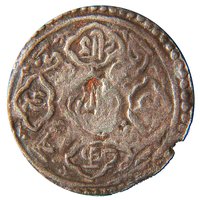
Obverse
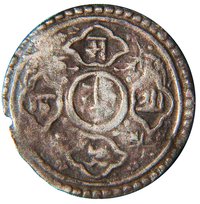
Reverse
Edge
Mintings
| Year | Mint Mark | Mintage | Quality | Collection |
|---|---|---|---|---|
| 1669 | — | — |
Historical background
In 1669, the Kathmandu Valley was not a unified kingdom but a constellation of three rival city-states: Kathmandu, Patan, and Bhaktapur, each ruled by its own Malla king. The currency situation was therefore complex and competitive, reflecting both the political fragmentation and the region's vibrant economic activity as a hub on the trans-Himalayan trade route. The primary circulating medium was the Mohar, a silver coin minted independently by each kingdom. These coins were often deliberately debased with copper or other alloys, leading to variations in purity and value between the issuers, which caused friction in trade and required constant evaluation by merchants.
The Malla kings viewed coinage as a direct instrument of sovereignty and propaganda. Coins bore the symbols and inscriptions of the ruling monarch, declaring his legitimacy and piety, often invoking Hindu deities. This practice turned currency into a tool of political rivalry; a king might manipulate the weight or silver content of his mohars to gain economic advantage over his neighbors or to attract trade to his own markets. Alongside these local coins, older dramas (copper coins) remained in circulation for smaller transactions, and a significant volume of trade was conducted through barter, especially in rural areas and local markets.
Furthermore, the valley's economy was not isolated. Due to its critical position between Tibet and the Indian plains, foreign currencies played a substantial role. Tibetan silver coins, Mughal rupees from the south, and even coins from other Indian princely states circulated freely, often preferred for their consistent purity in long-distance trade. This influx created a de facto multi-currency system where merchants and moneychangers (sarrafs) were essential figures, assessing and exchanging a bewildering array of coins, thereby facilitating the valley's commercial prosperity despite its internal political divisions.
The Malla kings viewed coinage as a direct instrument of sovereignty and propaganda. Coins bore the symbols and inscriptions of the ruling monarch, declaring his legitimacy and piety, often invoking Hindu deities. This practice turned currency into a tool of political rivalry; a king might manipulate the weight or silver content of his mohars to gain economic advantage over his neighbors or to attract trade to his own markets. Alongside these local coins, older dramas (copper coins) remained in circulation for smaller transactions, and a significant volume of trade was conducted through barter, especially in rural areas and local markets.
Furthermore, the valley's economy was not isolated. Due to its critical position between Tibet and the Indian plains, foreign currencies played a substantial role. Tibetan silver coins, Mughal rupees from the south, and even coins from other Indian princely states circulated freely, often preferred for their consistent purity in long-distance trade. This influx created a de facto multi-currency system where merchants and moneychangers (sarrafs) were essential figures, assessing and exchanging a bewildering array of coins, thereby facilitating the valley's commercial prosperity despite its internal political divisions.

✨ Legendary