

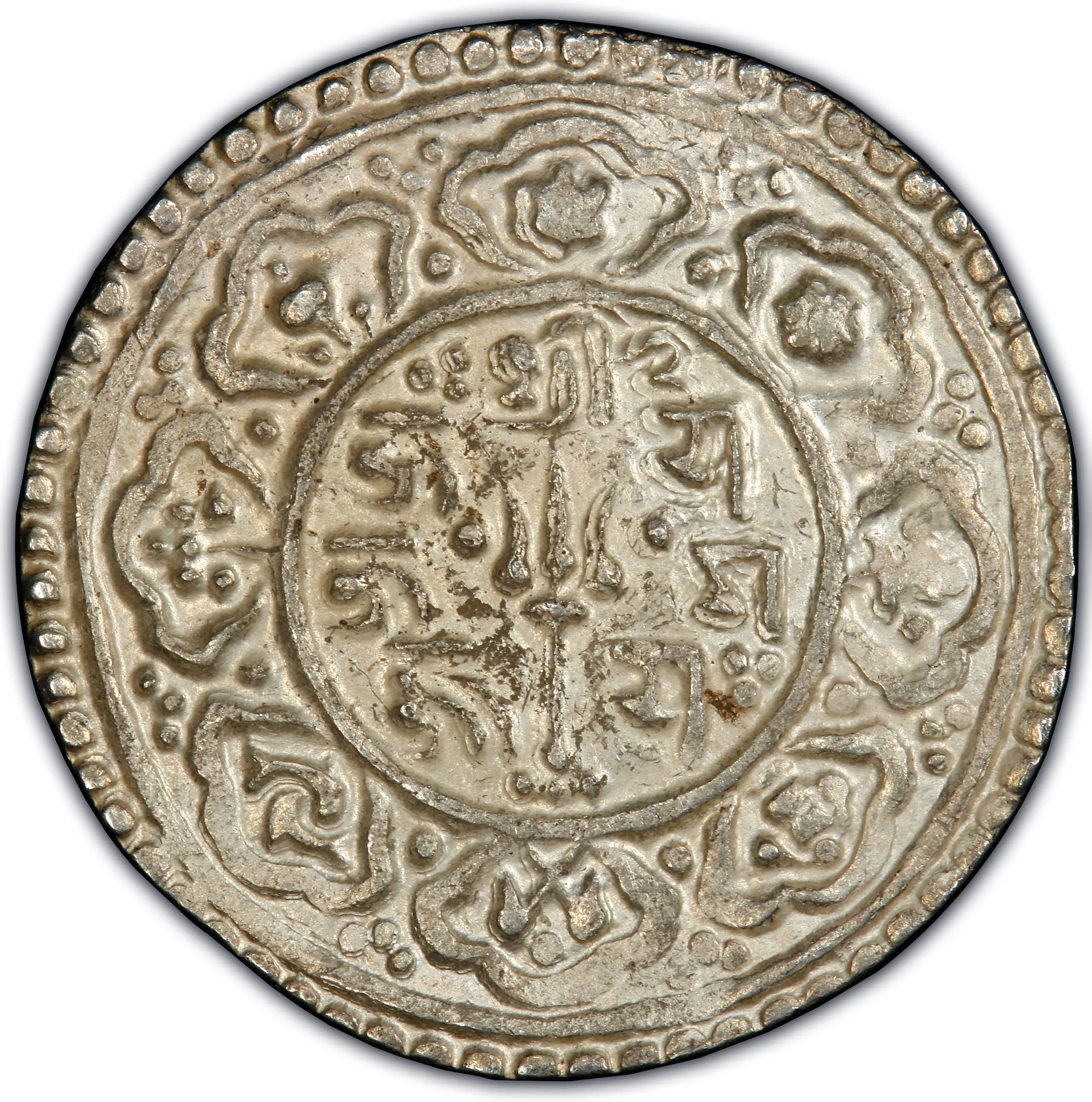
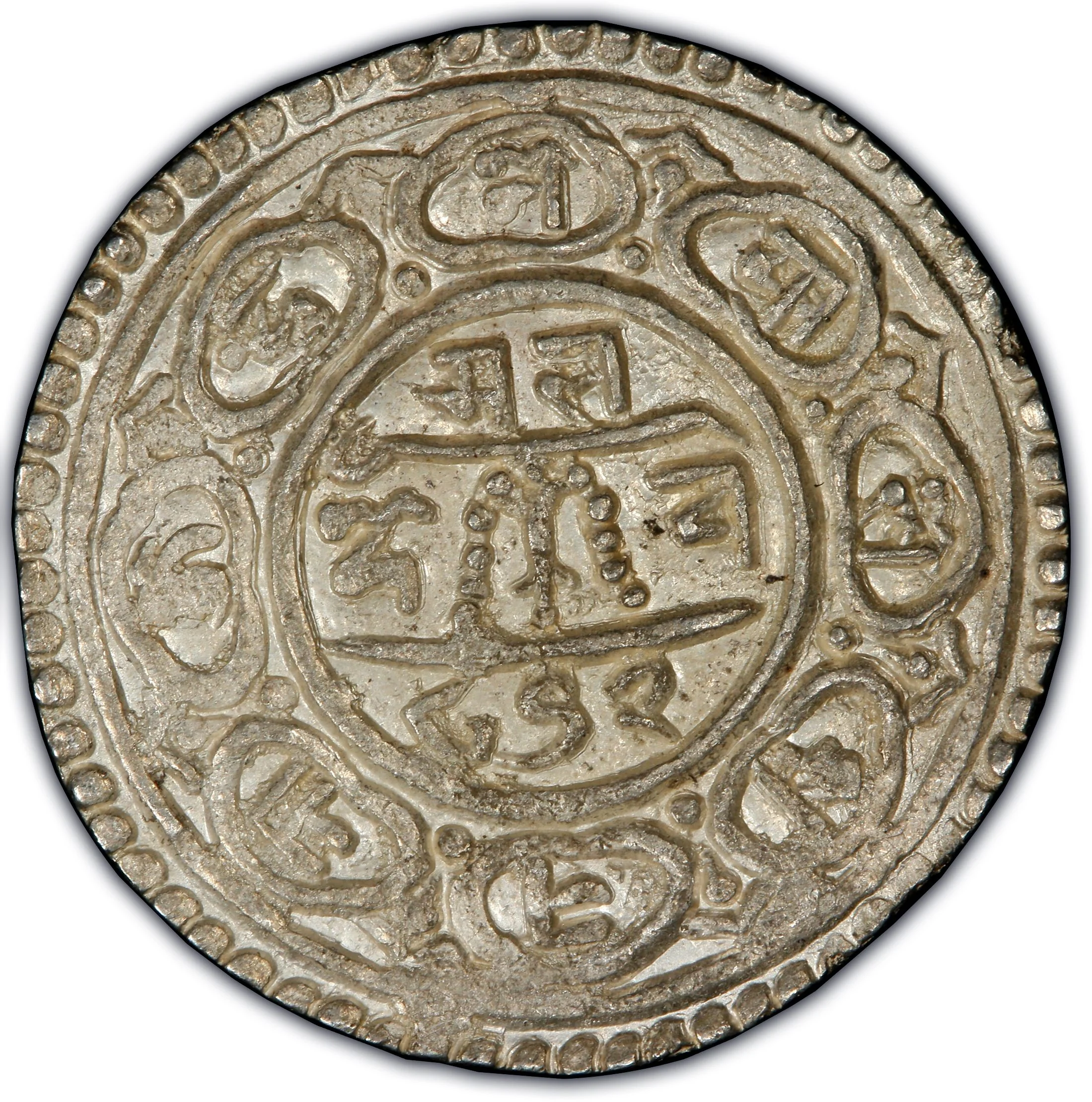
1 mohar – Kathmandu Kingdom
Add to wishlist
Nepal
Context
Material
References
KM: #
Numista: #361679
Value
Bullion value: $13.90
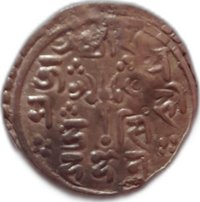
Obverse
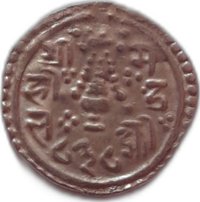
Reverse
Edge
Mintings
| Year | Mint Mark | Mintage | Quality | Collection |
|---|---|---|---|---|
| 1722 | — | — | ||
| 1728 | — | — |
Historical background
In 1722, the Kathmandu Valley was not a single kingdom but a constellation of three rival city-states: Kathmandu, Patan, and Bhaktapur, each ruled by its own Malla king. This political fragmentation directly shaped the monetary landscape, as each kingdom sought economic prestige and autonomy through its own coinage. The primary circulating currency was the silver mohar, but its weight, purity, and design varied between the three mints, leading to a complex and competitive system of exchange. Trade between the cities, as well as with Tibet to the north and the Indian plains to the south, required constant evaluation and conversion of these different issues.
The economy was fundamentally agrarian, but coinage was essential for taxation, land transactions, and the vibrant artisan and merchant activity within the cities. The Malla kings used coinage as a tool of legitimacy, prominently featuring symbols associated with their lineage and Hindu deities. However, the supply of silver, the lifeblood of the currency, was precarious. It relied heavily on imports from Tibet in exchange for Valley-grown grain and manufactured goods, making the monetary system vulnerable to disruptions in this critical trade route or to political tensions with Tibetan authorities.
Furthermore, the period was one of growing economic strain. The rival kingdoms engaged in costly construction of palaces and temples, while maintaining defensive forces, draining royal treasuries. This likely led to practices such as debasement—reducing the silver content in mohars—to stretch resources, though evidence for specific debasement in 1722 itself is less clear. The fragmented and pressured monetary environment of the Valley in this era foreshadowed the political instability that would culminate in the valley's unification by Prithvi Narayan Shah of Gorkha a few decades later, who would subsequently impose a uniform coinage across the conquered territories.
The economy was fundamentally agrarian, but coinage was essential for taxation, land transactions, and the vibrant artisan and merchant activity within the cities. The Malla kings used coinage as a tool of legitimacy, prominently featuring symbols associated with their lineage and Hindu deities. However, the supply of silver, the lifeblood of the currency, was precarious. It relied heavily on imports from Tibet in exchange for Valley-grown grain and manufactured goods, making the monetary system vulnerable to disruptions in this critical trade route or to political tensions with Tibetan authorities.
Furthermore, the period was one of growing economic strain. The rival kingdoms engaged in costly construction of palaces and temples, while maintaining defensive forces, draining royal treasuries. This likely led to practices such as debasement—reducing the silver content in mohars—to stretch resources, though evidence for specific debasement in 1722 itself is less clear. The fragmented and pressured monetary environment of the Valley in this era foreshadowed the political instability that would culminate in the valley's unification by Prithvi Narayan Shah of Gorkha a few decades later, who would subsequently impose a uniform coinage across the conquered territories.
✨ Legendary