

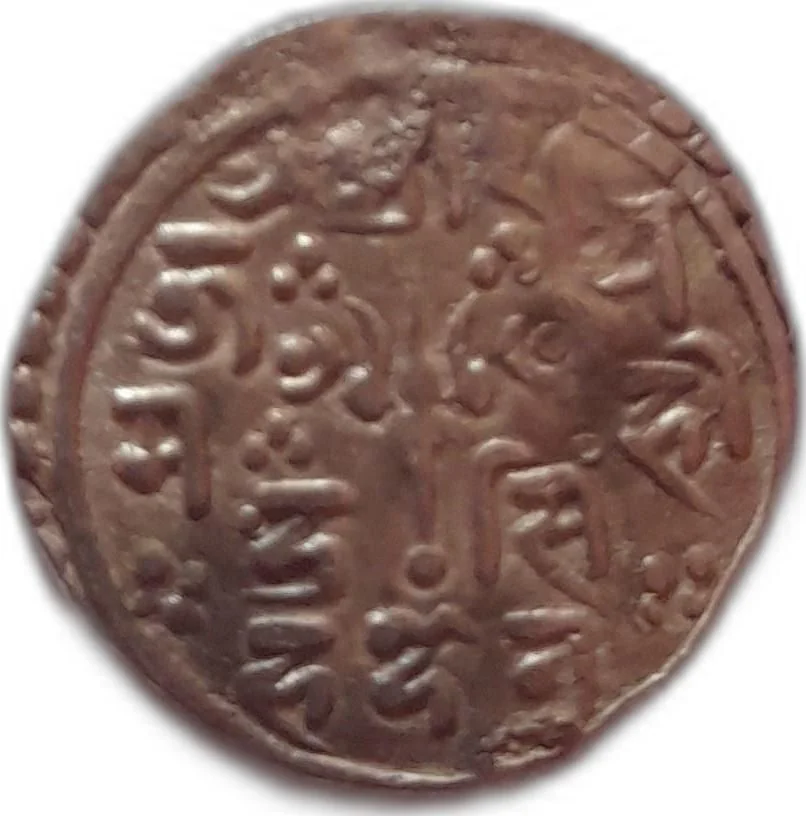
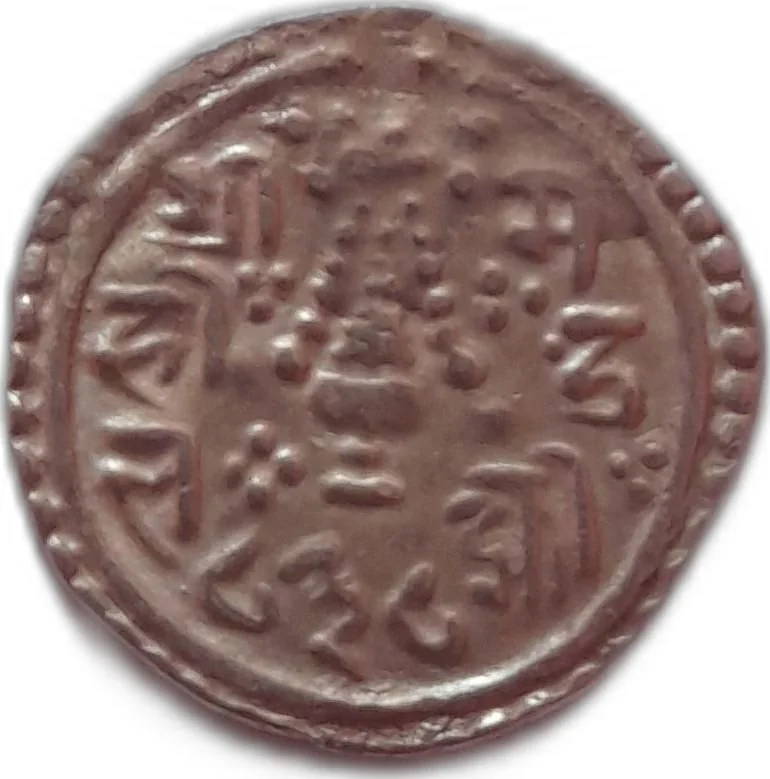
¼ Mohar – Kathmandu Kingdom
Nepal
Context
Year: 1718
Nepal Sambat Year: 838
Country: Nepal 
Issuer: Kathmandu Kingdom
Ruler: Mahindra Simha
Currency:
(1546—1932)
Demonetized: Yes
Material
References
KM: #Click to copy to clipboard226
Numista: #198212
Value
Bullion value: $4.04
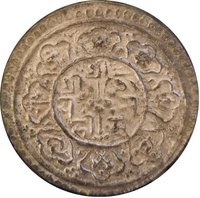
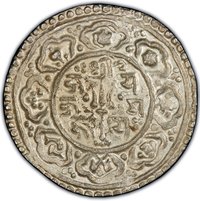
Obverse
Description:
Trident centered.
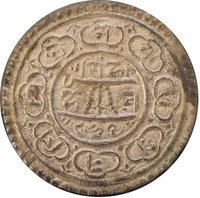
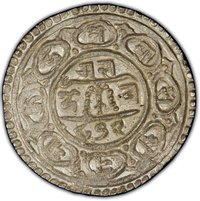
Reverse
Edge
Mintings
| Year | Mint Mark | Mintage | Quality | Collection |
|---|---|---|---|---|
| 1718 | — | — |
Historical background
In 1718, the Kathmandu Valley was not a unified kingdom but a constellation of three fiercely competitive city-states: Kathmandu, Patan, and Bhaktapur. Each was ruled by its own Malla dynasty king, engaged in constant rivalry through warfare, diplomacy, and grand cultural patronage. This political fragmentation was directly reflected in the monetary system. While trade with Tibet and India flourished, there was no single, authoritative currency. The primary circulating medium was the Mohar, a silver coin, but its weight, purity, and design varied between the three kingdoms, each minting its own version to assert sovereignty and economic control.
The currency situation was further complicated by the widespread use of non-native coinage, particularly Indian Rupees from the Mughal Empire to the south. These rupees, often of more reliable silver content, circulated alongside local mohars, creating a complex environment for merchants who had to navigate exchange rates and assay values. Additionally, the critical trans-Himalayan trade with Tibet, a cornerstone of the valley's wealth, relied heavily on salt, wool, and gold dust as de facto currencies, especially for larger transactions. This meant the economy operated on a multi-layered system: local silver coins for regional trade, foreign silver for broader commerce, and commodity money for the high-stakes northern trade.
For the common people, this system presented daily challenges. The varying quality of coins led to distrust and the need for money-changers (sarrafs) in every market. Kings frequently manipulated the silver content of their mohars to finance lavish temple construction or military campaigns, effectively taxing their populace through inflation and debasement. Thus, in 1718, the currency of the Kathmandu Valley was less a symbol of unified economic policy and more a direct reflection of its fractured political landscape, serving as both a tool of royal authority and a source of everyday economic uncertainty.
The currency situation was further complicated by the widespread use of non-native coinage, particularly Indian Rupees from the Mughal Empire to the south. These rupees, often of more reliable silver content, circulated alongside local mohars, creating a complex environment for merchants who had to navigate exchange rates and assay values. Additionally, the critical trans-Himalayan trade with Tibet, a cornerstone of the valley's wealth, relied heavily on salt, wool, and gold dust as de facto currencies, especially for larger transactions. This meant the economy operated on a multi-layered system: local silver coins for regional trade, foreign silver for broader commerce, and commodity money for the high-stakes northern trade.
For the common people, this system presented daily challenges. The varying quality of coins led to distrust and the need for money-changers (sarrafs) in every market. Kings frequently manipulated the silver content of their mohars to finance lavish temple construction or military campaigns, effectively taxing their populace through inflation and debasement. Thus, in 1718, the currency of the Kathmandu Valley was less a symbol of unified economic policy and more a direct reflection of its fractured political landscape, serving as both a tool of royal authority and a source of everyday economic uncertainty.
✨ Legendary