

¼ Silver Ecu – France
France

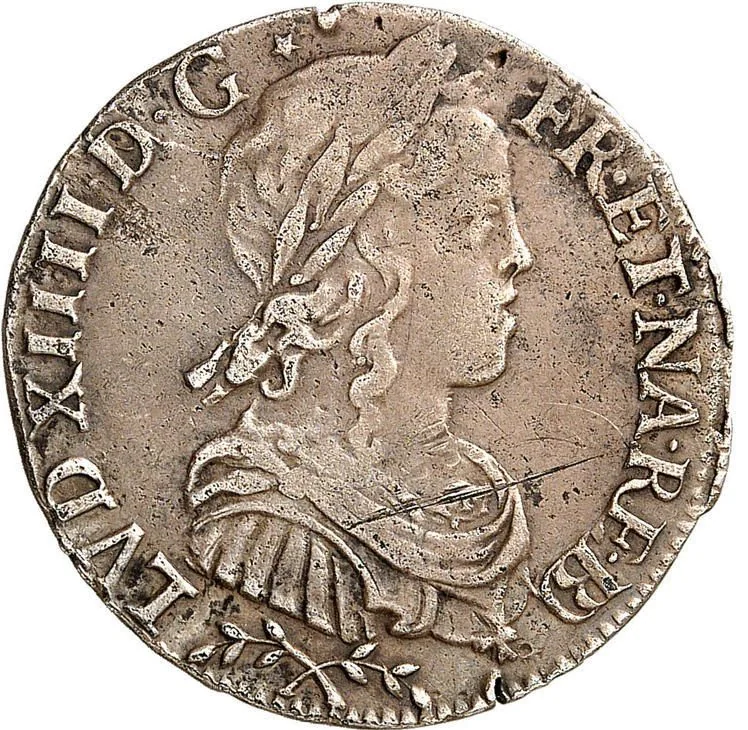
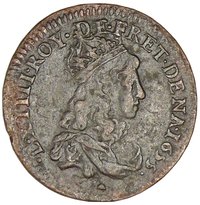
Obverse
Description:
Young Louis XIV bust, right-facing.
Inscription:
LVD.XIIII.D.G FR.ET.NA.RE.BD
Script: Latin
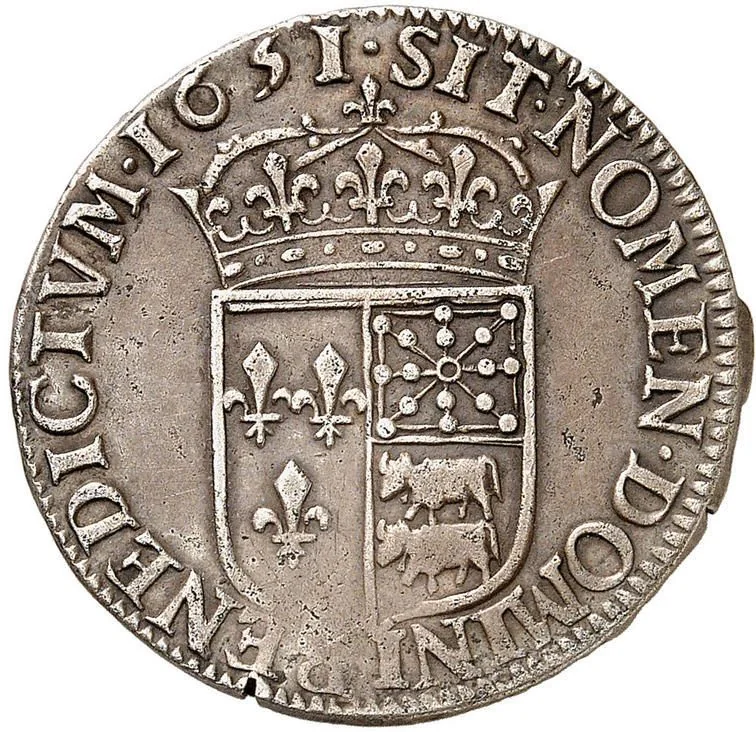
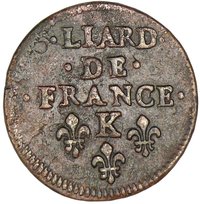
Reverse
Description:
Shield of France, Navarre, and Béarn.
Inscription:
.SIT.NOMEN.DOMINI.BENEDICTVM.1651
Script: Latin
Edge
Categories
| Object> Armour |
| Person> Monarch |
| Symbols> Coat of Arms |
| Symbol> Crown |
| Symbol> Wreath |
| Symbol> Fleur-de-lis |
Historical background
In 1651, France was in the throes of the aristocratic uprising known as the Fronde, a period of civil war that placed immense strain on the royal treasury. King Louis XIV was still a minor, and the government, led by Cardinal Mazarin, was engaged in a desperate struggle for survival against rebellious princes and parlements. To finance the military campaigns and political maneuvering required to defeat the Frondeurs, the Crown resorted to extreme fiscal measures, including the repeated debasement of the coinage. This involved reducing the precious metal content in coins while officially maintaining their face value, a practice that generated short-term revenue but devastated the monetary system.
The currency situation was therefore one of profound instability and confusion. Multiple edicts altered the official values of the louis d'or and the écu, the primary gold and silver coins, leading to wild fluctuations in exchange rates. This monetary manipulation created a two-tier economy: one for those with access to stable foreign currency or bullion, and another for the common people and merchants who faced rapidly depreciating coinage in daily transactions. Prices soared as trust in the currency collapsed, causing widespread hardship, market disruption, and a effective transfer of wealth from the general populace to the Crown's coffers.
This chaotic financial policy was not only an economic crisis but also a major political liability for Mazarin's regime. The arbitrary alteration of coin values was deeply unpopular, alienating merchants, creditors, and the very officiers whose support was crucial. It underscored the Crown's financial desperation and became a key grievance of the Frondeurs, who accused the government of bankrupting the kingdom. Thus, in 1651, France's currency was not merely an economic instrument but a battleground, reflecting the broader struggle for power and the severe fragility of the French state.
The currency situation was therefore one of profound instability and confusion. Multiple edicts altered the official values of the louis d'or and the écu, the primary gold and silver coins, leading to wild fluctuations in exchange rates. This monetary manipulation created a two-tier economy: one for those with access to stable foreign currency or bullion, and another for the common people and merchants who faced rapidly depreciating coinage in daily transactions. Prices soared as trust in the currency collapsed, causing widespread hardship, market disruption, and a effective transfer of wealth from the general populace to the Crown's coffers.
This chaotic financial policy was not only an economic crisis but also a major political liability for Mazarin's regime. The arbitrary alteration of coin values was deeply unpopular, alienating merchants, creditors, and the very officiers whose support was crucial. It underscored the Crown's financial desperation and became a key grievance of the Frondeurs, who accused the government of bankrupting the kingdom. Thus, in 1651, France's currency was not merely an economic instrument but a battleground, reflecting the broader struggle for power and the severe fragility of the French state.
✨ Legendary