

1 Sovereign – Spanish Netherlands
Netherlands
Context
Years: 1633–1665
Country: Netherlands 
Issuer: Spanish Netherlands
Ruler: Philip IV
Currency:
(1506—1713)
Demonetized: Yes
Material
Diameter: 30 mm
Weight: 5.54 g
Gold weight: 5.25 g
Shape: Irregular round
Composition: 94.7% Gold
Magnetic: No
Technique: Hammered
Alignment: Coin alignment
flip
References
KM: #Click to copy to clipboard51
Numista: #358774
Value
Bullion value: $873.97
Obverse
Description:
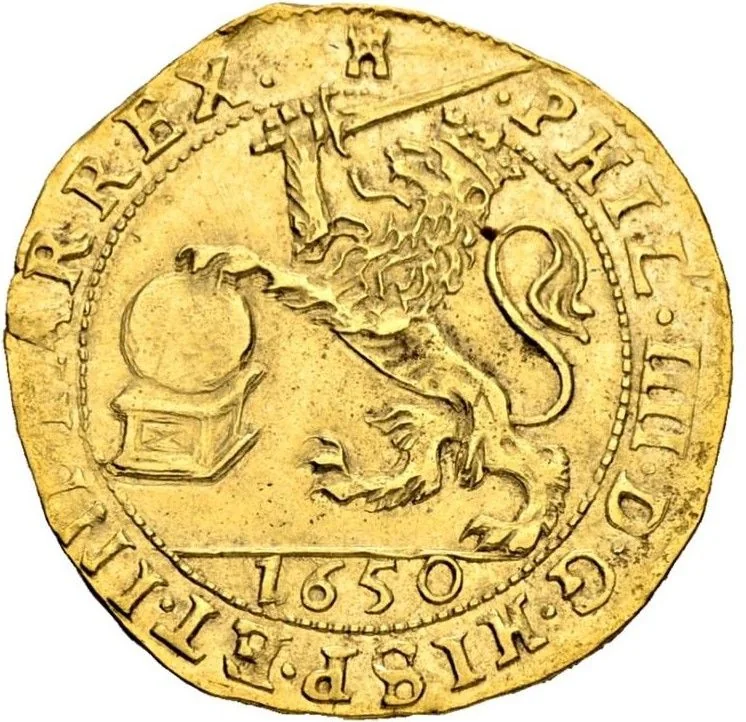
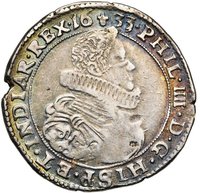
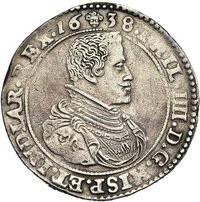
Lion left, rampant with sword and paw on globe. Date below, mint mark above.
Inscription:
· PHIL · IIII · D · G · HISP · ET · INDIAR · REX ·
Script: Latin
Reverse
Description:
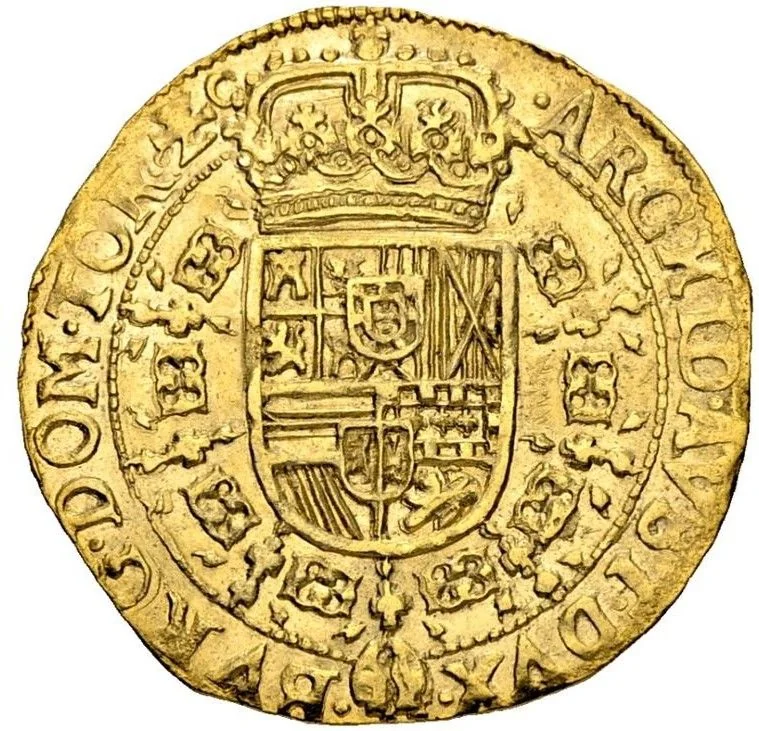
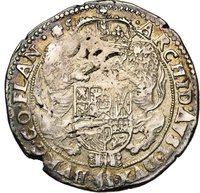
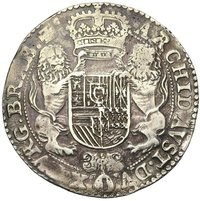
Shield crowned and encircled by the Golden Fleece.
Inscription:
· ARCHID · AVST · DVX · BVRG · DOM · TOR · Zc
Script: Latin
Edge
Mints
| Name | Mark |
|---|---|
| Tournai | — |
Mintings
| Year | Mint Mark | Mintage | Quality | Collection |
|---|---|---|---|---|
| 1633 | — | — | ||
| 1634 | — | — | ||
| 1641 | — | — | ||
| 1644 | — | — | ||
| 1645 | — | — | ||
| 1648 | — | — | ||
| 1649 | — | — | ||
| 1650 | — | — | ||
| 1651 | — | — | ||
| 1652 | — | — | ||
| 1653 | — | — | ||
| 1654 | — | — | ||
| 1655 | — | — | ||
| 1656 | — | — | ||
| 1657 | — | — | ||
| 1658 | — | — | ||
| 1659 | — | — | ||
| 1660 | — | — | ||
| 1661 | — | — | ||
| 1662 | — | — | ||
| 1663 | — | — | ||
| 1665 | — | — |
Historical background
In 1633, the Spanish Netherlands was embroiled in the Eighty Years' War, a protracted conflict for independence from the Spanish Crown. This constant state of warfare placed an immense financial strain on the region, leading to severe fiscal and monetary instability. The government in Brussels, under the rule of the Infanta Isabella Clara Eugenia and her advisors, was perpetually short of funds to pay its large military garrisons. This dire need for liquidity led to repeated debasements of the coinage, a practice where the silver content of coins was reduced to create more money from the same amount of precious metal, effectively a form of inflation.
The currency landscape was consequently chaotic and fragmented. A bewildering variety of coins circulated simultaneously: older, full-weight coins from before the debasements; newer, lighter "light money" (moneda ligera); and a plethora of foreign currencies from trade, such as Dutch rijksdaalders and German thalers. This created a complex system of exchange where the value of a coin was not simply its face value but its perceived intrinsic metal content, leading to Gresham's Law in action—"bad money drives out good." People hoarded the older, purer coins, further disrupting daily commerce and causing prices to fluctuate wildly.
Authorities attempted to manage this crisis through official proclamations, setting and periodically adjusting the legal exchange rates (tarifas) for the myriad of coins in an effort to impose order. However, these decrees were often ineffective or ignored in the market, as the fundamental problem was a lack of confidence and the relentless financial demands of the war. Thus, in 1633, the economy of the Spanish Netherlands was characterized by monetary confusion, inflationary pressure, and a profound instability that hampered trade and burdened the population, reflecting the deep crisis of the Habsburg war effort in the Low Countries.
The currency landscape was consequently chaotic and fragmented. A bewildering variety of coins circulated simultaneously: older, full-weight coins from before the debasements; newer, lighter "light money" (moneda ligera); and a plethora of foreign currencies from trade, such as Dutch rijksdaalders and German thalers. This created a complex system of exchange where the value of a coin was not simply its face value but its perceived intrinsic metal content, leading to Gresham's Law in action—"bad money drives out good." People hoarded the older, purer coins, further disrupting daily commerce and causing prices to fluctuate wildly.
Authorities attempted to manage this crisis through official proclamations, setting and periodically adjusting the legal exchange rates (tarifas) for the myriad of coins in an effort to impose order. However, these decrees were often ineffective or ignored in the market, as the fundamental problem was a lack of confidence and the relentless financial demands of the war. Thus, in 1633, the economy of the Spanish Netherlands was characterized by monetary confusion, inflationary pressure, and a profound instability that hampered trade and burdened the population, reflecting the deep crisis of the Habsburg war effort in the Low Countries.
✨ Legendary