

1 Ducaton – Spanish Netherlands
Netherlands
Context
Years: 1636–1666
Country: Netherlands 
Issuer: Spanish Netherlands
Ruler: Philip IV
Currency:
(1506—1713)
Demonetized: Yes
Material
Diameter: 43 mm
Weight: 32.48 g
Silver weight: 30.66 g
Shape: Irregular round
Composition: 94.4% Silver
Magnetic: No
Technique: Hammered
Alignment: Coin alignment
flip
References
KM: #Click to copy to clipboard72
Numista: #61014
Value
Bullion value: $88.86
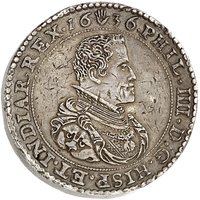
Obverse
Description:
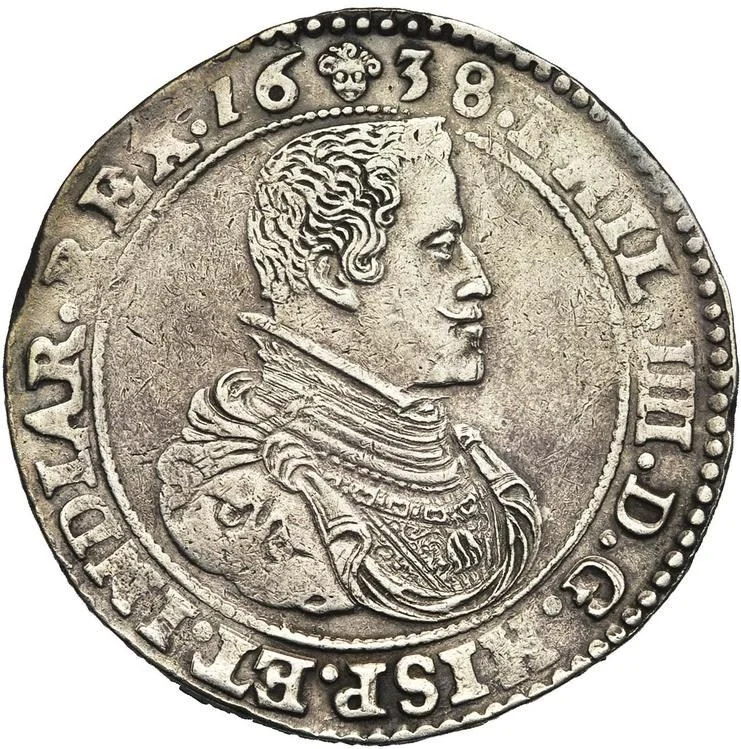
Armored bust of Philip IV right, mint mark above.
Inscription:
. PHIL . IIII . D . G . HISP . ET . INDIAR . REX .
1637
1637
Script: Latin
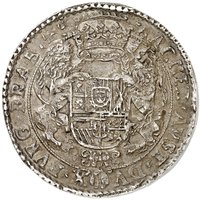
Reverse
Description:
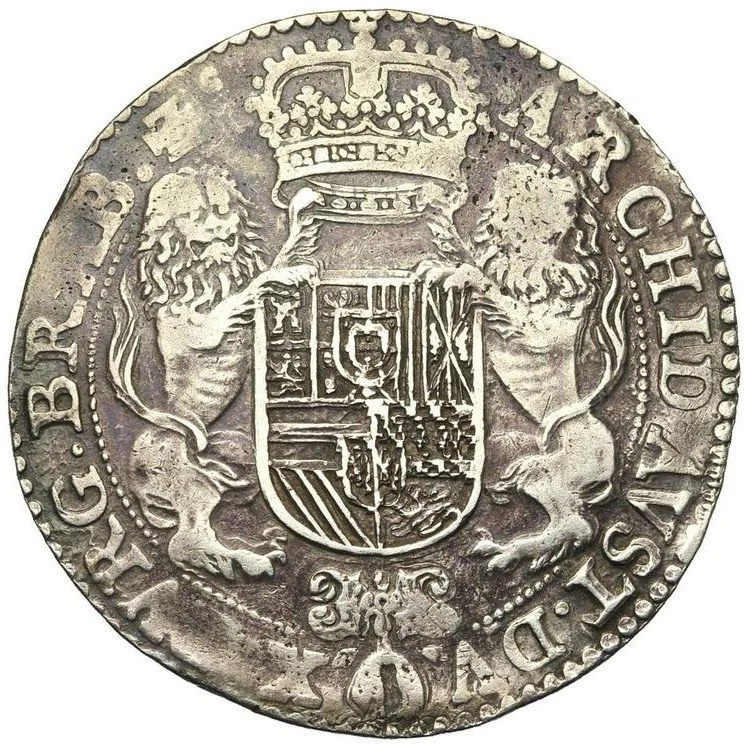
Crowned coat of arms flanked by lions, with the Golden Fleece jewel below.
Inscription:
ARCHID · AVST · DVX · BVRG · BRAB · Ƶ c ·
Script: Latin
Edge
Plain
Mints
| Name | Mark |
|---|---|
| Antwerp | — |
Mintings
| Year | Mint Mark | Mintage | Quality | Collection |
|---|---|---|---|---|
| 1636 | — | — | ||
| 1637 | — | — | ||
| 1638 | — | — | ||
| 1639 | — | — | ||
| 1640 | — | — | ||
| 1641 | — | — | ||
| 1642 | — | — | ||
| 1644 | — | — | ||
| 1645 | — | — | ||
| 1647 | — | — | ||
| 1648 | — | — | ||
| 1649 | — | — | ||
| 1650 | — | — | ||
| 1651 | — | — | ||
| 1652 | — | — | ||
| 1653 | — | — | ||
| 1654 | — | — | ||
| 1655 | — | — | ||
| 1656 | — | — | ||
| 1657 | — | — | ||
| 1658 | — | — | ||
| 1659 | — | — | ||
| 1660 | — | — | ||
| 1661 | — | — | ||
| 1662 | — | — | ||
| 1663 | — | — | ||
| 1664 | — | — | ||
| 1665 | — | — | ||
| 1666 | — | — |
Historical background
In 1636, the Spanish Netherlands was embroiled in the Eighty Years' War, a protracted conflict for independence from the Spanish Crown. This constant state of warfare placed an immense financial strain on the government in Brussels, which was forced to fund a large standing army. To meet these exorbitant costs, the authorities resorted to repeated debasements of the coinage, reducing the precious metal content in coins like the patagon and ducatón while officially maintaining their face value. This practice, essentially a form of inflation, eroded public trust and created monetary chaos, as older, purer coins were hoarded or exported, leaving a circulation of increasingly inferior currency.
The situation was exacerbated by the arrival of vast quantities of copper vellón coinage from Spain itself, where the Crown was employing the same desperate fiscal tactics. This flood of low-value copper money, intended to pay troops and suppliers, further distorted the local economy. The result was a severe disparity between the official exchange rates set by the government and the actual market value of coins, leading to a complex and unstable system where multiple coinages circulated simultaneously at fluctuating values. Merchants and the public struggled with daily uncertainty, and economic activity was hampered by the difficulty of establishing fair prices and conducting reliable transactions.
Consequently, 1636 represents a peak of monetary crisis within the broader wartime turmoil. The Habsburg authorities attempted to manage the chaos through periodic "calls-in" and re-coinages, decreeing new values for old coins, but these measures provided only temporary relief. The fundamental problem of wartime finance remained unsolved, leaving the economy of the Spanish Netherlands vulnerable to speculative attacks and deeply inefficient, a condition that would persist for the remainder of the conflict.
The situation was exacerbated by the arrival of vast quantities of copper vellón coinage from Spain itself, where the Crown was employing the same desperate fiscal tactics. This flood of low-value copper money, intended to pay troops and suppliers, further distorted the local economy. The result was a severe disparity between the official exchange rates set by the government and the actual market value of coins, leading to a complex and unstable system where multiple coinages circulated simultaneously at fluctuating values. Merchants and the public struggled with daily uncertainty, and economic activity was hampered by the difficulty of establishing fair prices and conducting reliable transactions.
Consequently, 1636 represents a peak of monetary crisis within the broader wartime turmoil. The Habsburg authorities attempted to manage the chaos through periodic "calls-in" and re-coinages, decreeing new values for old coins, but these measures provided only temporary relief. The fundamental problem of wartime finance remained unsolved, leaving the economy of the Spanish Netherlands vulnerable to speculative attacks and deeply inefficient, a condition that would persist for the remainder of the conflict.
💎 Very Rare