

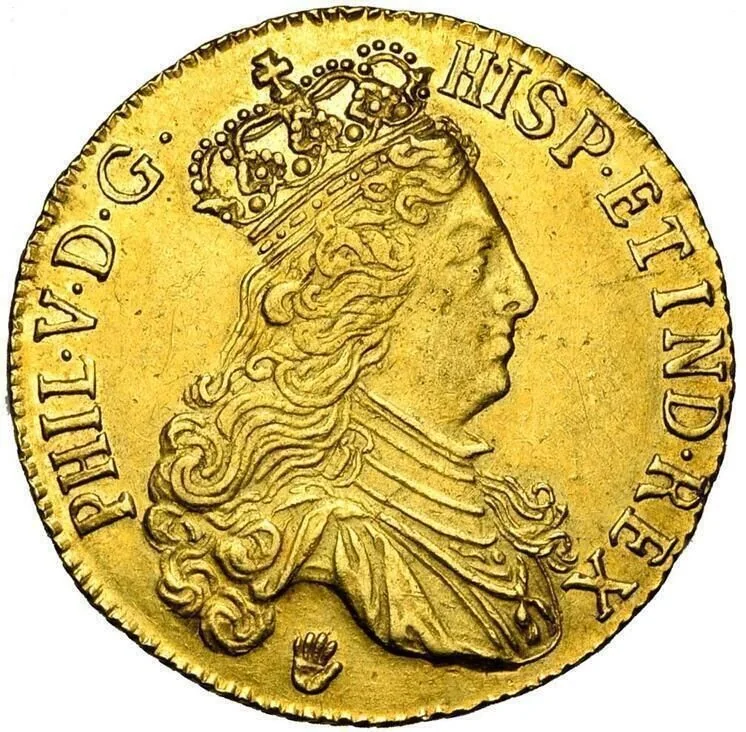
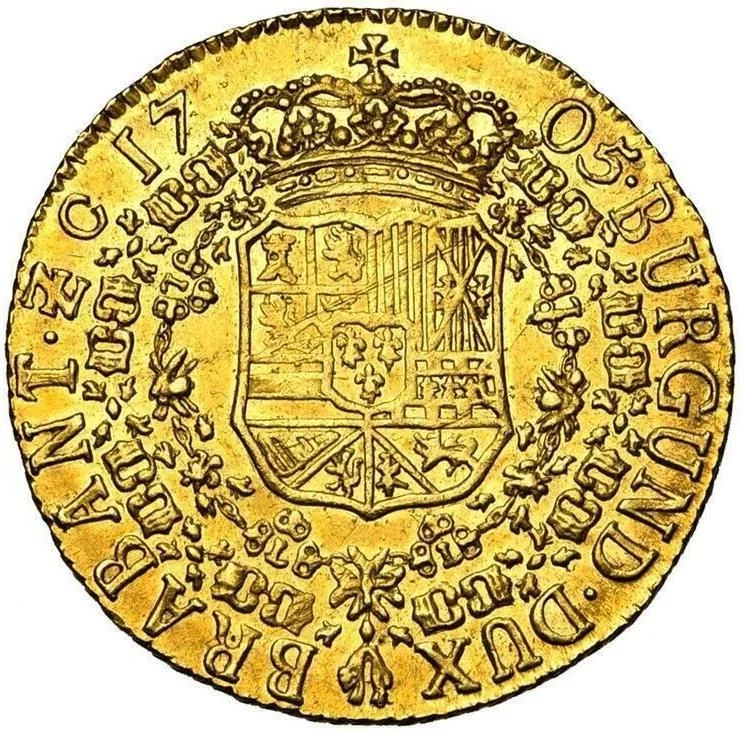
2 sovereigns – Spanish Netherlands
Add to wishlist
Netherlands
Context
Years: 1704–1706
Country: Netherlands
Issuer: Spanish Netherlands
Ruler: Philip V
Currency:
(1506—1713)
Demonetized: Yes
Total mintage: 8,428
Material
References
KM: #
Numista: #355938
Value
Bullion value: $1582.42
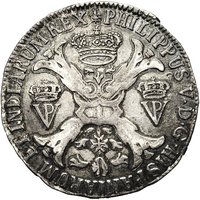
Obverse
Description:
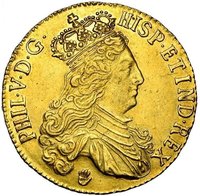
Crowned bust right, mint mark beneath (hand).
Inscription:
PHIL • V • D • G • HISP • ET IND • REX •
Script: Latin
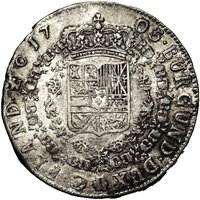
Reverse
Description:
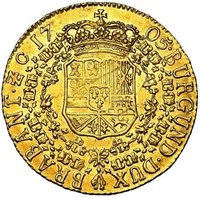
Crowned arms with collars of the Holy Spirit and Golden Fleece; date above.
Inscription:
BURGUND • DUX BRABANT • Z C 17 05
Script: Latin
Edge
Mints
| Name | Mark |
|---|---|
| Antwerp | Hand |
Mintings
| Year | Mint Mark | Mintage | Quality | Collection |
|---|---|---|---|---|
| 1704 | — | 7,004 | ||
| 1705 | — | — | ||
| 1706 | — | 1,424 |
Historical background
In 1704, the Spanish Netherlands found itself in a precarious monetary crisis, deeply entangled in the wider War of the Spanish Succession (1701-1714). The region, a battleground between the Franco-Spanish Bourbon alliance and the Grand Alliance (led by England, the Dutch Republic, and the Habsburg Empire), suffered from severe fiscal strain. To finance their military campaigns, both sides, but particularly the French authorities administering the territory, engaged in rampant currency debasement. They repeatedly reduced the silver content in coins like the patagon and florin while increasing their nominal values, leading to a proliferation of underweight and adulterated currency in circulation.
This deliberate debasement created economic chaos. Trust in the coinage collapsed, causing rampant inflation and a breakdown in both local commerce and long-distance trade. Merchants and the public struggled to ascertain the true value of coins, which varied not only by type but also by mint and year of issue. The situation was further complicated by the circulation of older, full-weight coins from the Dutch Republic and the Holy Roman Empire, which were often hoarded or exported, leaving the degraded currency as the primary medium for everyday transactions—a classic example of Gresham’s Law, where "bad money drives out good."
The monetary disorder reflected the broader political instability of a region with contested sovereignty. Attempts at regulation were ineffective, as competing authorities issued conflicting ordinances. The crisis eroded the economic vitality of the Spanish Netherlands, impoverishing the population and disrupting the once-thriving urban economies. Ultimately, the currency turmoil of 1704 was a direct symptom of the region's status as a warzone, where fiscal expediency for military survival took devastating precedence over economic stability and public welfare.
This deliberate debasement created economic chaos. Trust in the coinage collapsed, causing rampant inflation and a breakdown in both local commerce and long-distance trade. Merchants and the public struggled to ascertain the true value of coins, which varied not only by type but also by mint and year of issue. The situation was further complicated by the circulation of older, full-weight coins from the Dutch Republic and the Holy Roman Empire, which were often hoarded or exported, leaving the degraded currency as the primary medium for everyday transactions—a classic example of Gresham’s Law, where "bad money drives out good."
The monetary disorder reflected the broader political instability of a region with contested sovereignty. Attempts at regulation were ineffective, as competing authorities issued conflicting ordinances. The crisis eroded the economic vitality of the Spanish Netherlands, impoverishing the population and disrupting the once-thriving urban economies. Ultimately, the currency turmoil of 1704 was a direct symptom of the region's status as a warzone, where fiscal expediency for military survival took devastating precedence over economic stability and public welfare.
✨ Legendary