

½ patagon – Spanish Netherlands
Add to wishlist
Netherlands
Context
Year: 1705
Country: Netherlands
Issuer: Spanish Netherlands
Ruler: Philip V
Currency:
(1506—1713)
Subdivision: ½ patagon = 24 Stuivers
Demonetized: Yes
Total mintage: 3,139
Material
References
KM: #
Numista: #100041
Value
Bullion value: $31.41
Obverse
Description:
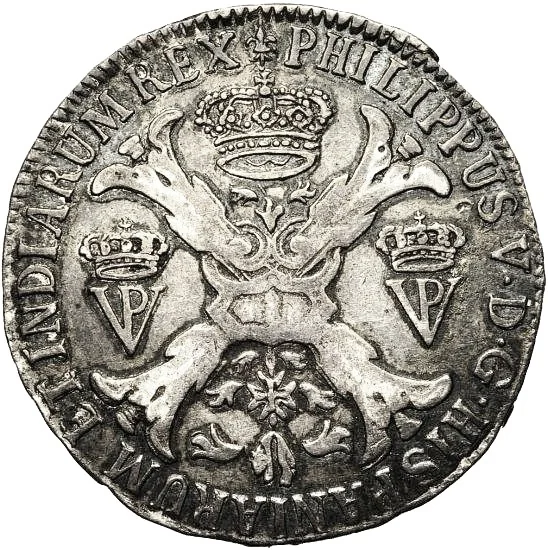
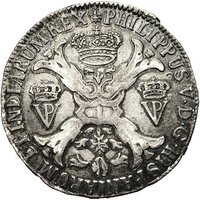
Crowned Burgundian cross with central firesteel, the Order of the Golden Fleece jewel below, and crowned PV monograms on each side.
Inscription:
PHILLIPUS V • D • G • HISPANIARUM ET INDIARUM REX
Script: Latin
Reverse
Description:
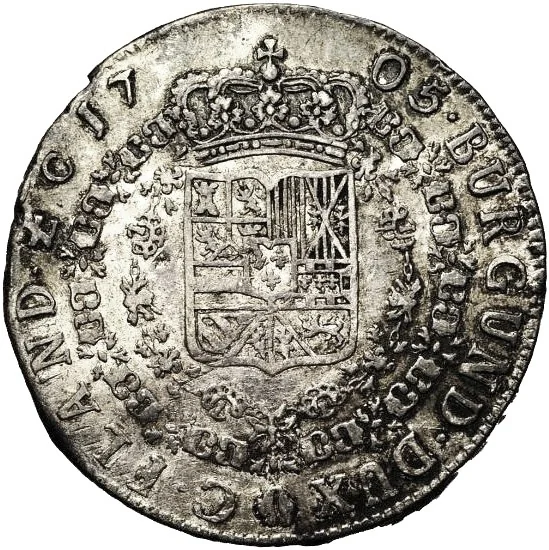
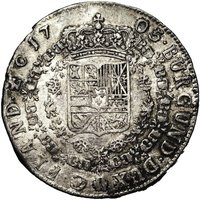
Shield with many arms, crowned and encircled by the Golden Fleece, splits the date above.
Inscription:
BURGUND • DVX C·FLAND • Zc.
Script: Latin
Edge
Mints
| Name | Mark |
|---|---|
| Bruges | — |
Mintings
| Year | Mint Mark | Mintage | Quality | Collection |
|---|---|---|---|---|
| 1705 | lis | 3,139 |
Historical background
In 1705, the Spanish Netherlands found itself in a precarious monetary crisis, a direct consequence of its role as a primary battleground in the War of the Spanish Succession (1701-1714). The region was occupied and administered by a coalition of Allied powers, primarily England and the Dutch Republic, who were fighting to prevent the unification of the Spanish and French crowns under the Bourbon dynasty. This military occupation placed immense fiscal strain on the local economy, as the Allied armies financed their campaigns through a combination of heavy taxation and, crucially, the deliberate debasement of the coinage.
The core of the crisis was a severe shortage of small-denomination coins used for daily wages and market trade. To pay their troops and suppliers, the Allied authorities systematically issued low-quality, lightweight "occupation coinage" — often minted from captured bullion or melted-down church silver — with a forced nominal value far exceeding its intrinsic metal worth. This practice, combined with the circulation of underweight coins from previous debasements and a flood of counterfeit money, led to a classic "bad money drives out good" scenario (Gresham's Law). Sound, full-weight coins were hoarded or exported, leaving the populace with a rapidly depreciating currency that fueled rampant inflation and crippled commercial trust.
Consequently, the year 1705 was marked by economic paralysis and social distress. Prices for basic necessities soared as the value of coinage became unpredictable, harming both wage-earners and merchants. Local authorities and guilds issued frantic ordinances attempting to fix exchange rates and refuse suspect coins, but with little success against the overwhelming pressure from the military paymasters. The monetary chaos thus served as a daily manifestation of the war's devastation, undermining the region's once-thriving economy and deepening the hardship of its inhabitants under foreign occupation.
The core of the crisis was a severe shortage of small-denomination coins used for daily wages and market trade. To pay their troops and suppliers, the Allied authorities systematically issued low-quality, lightweight "occupation coinage" — often minted from captured bullion or melted-down church silver — with a forced nominal value far exceeding its intrinsic metal worth. This practice, combined with the circulation of underweight coins from previous debasements and a flood of counterfeit money, led to a classic "bad money drives out good" scenario (Gresham's Law). Sound, full-weight coins were hoarded or exported, leaving the populace with a rapidly depreciating currency that fueled rampant inflation and crippled commercial trust.
Consequently, the year 1705 was marked by economic paralysis and social distress. Prices for basic necessities soared as the value of coinage became unpredictable, harming both wage-earners and merchants. Local authorities and guilds issued frantic ordinances attempting to fix exchange rates and refuse suspect coins, but with little success against the overwhelming pressure from the military paymasters. The monetary chaos thus served as a daily manifestation of the war's devastation, undermining the region's once-thriving economy and deepening the hardship of its inhabitants under foreign occupation.
✨ Legendary