

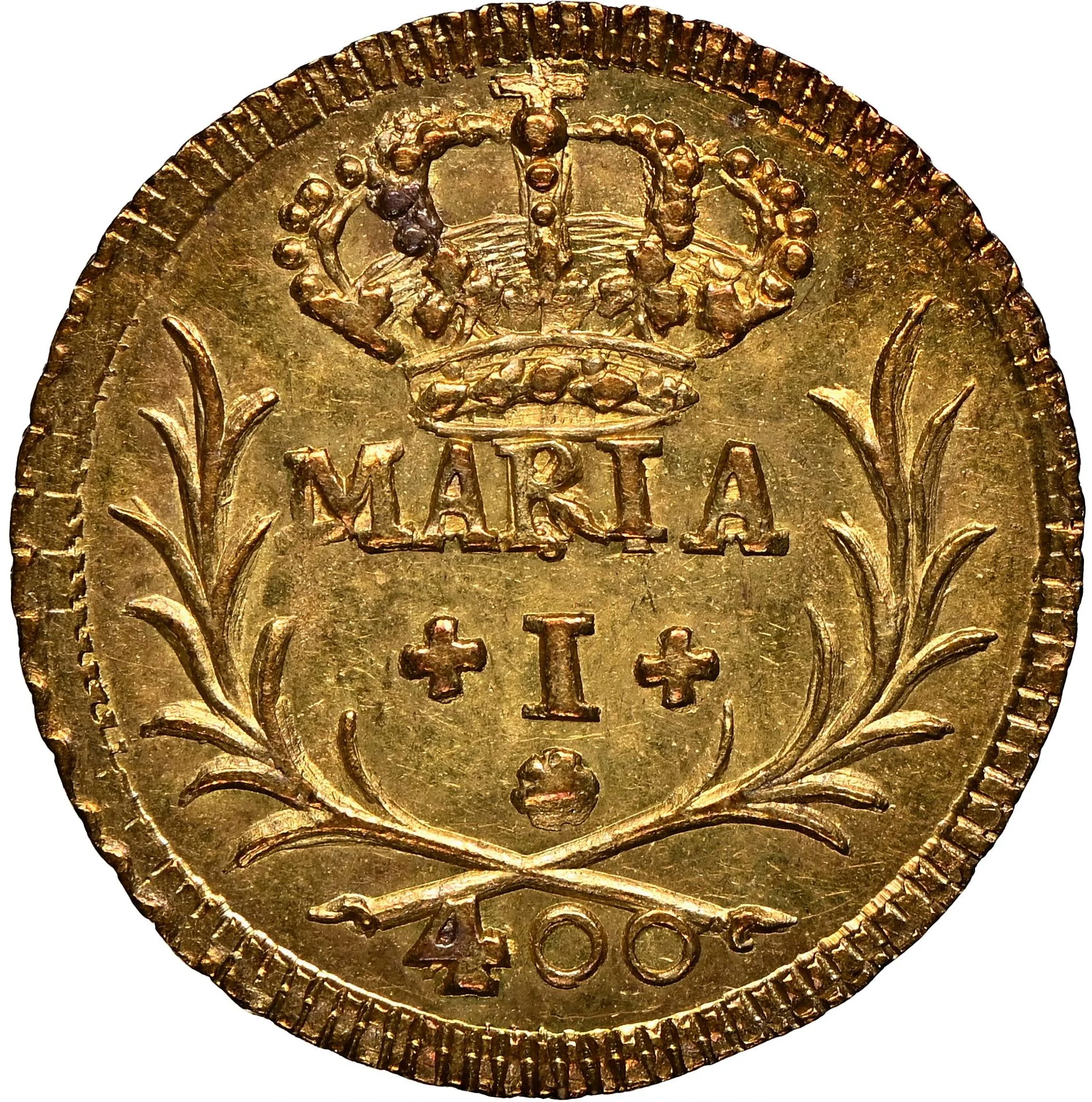
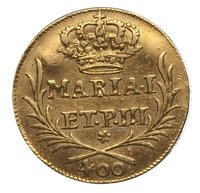
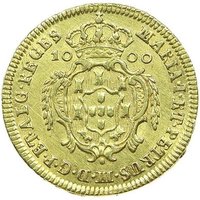
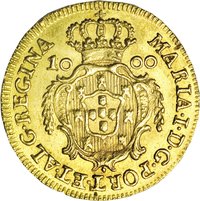
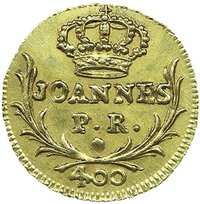
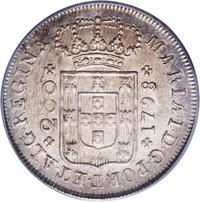
Obverse
Inscription:
MARIA
*I*
400
*I*
400
Script: Latin
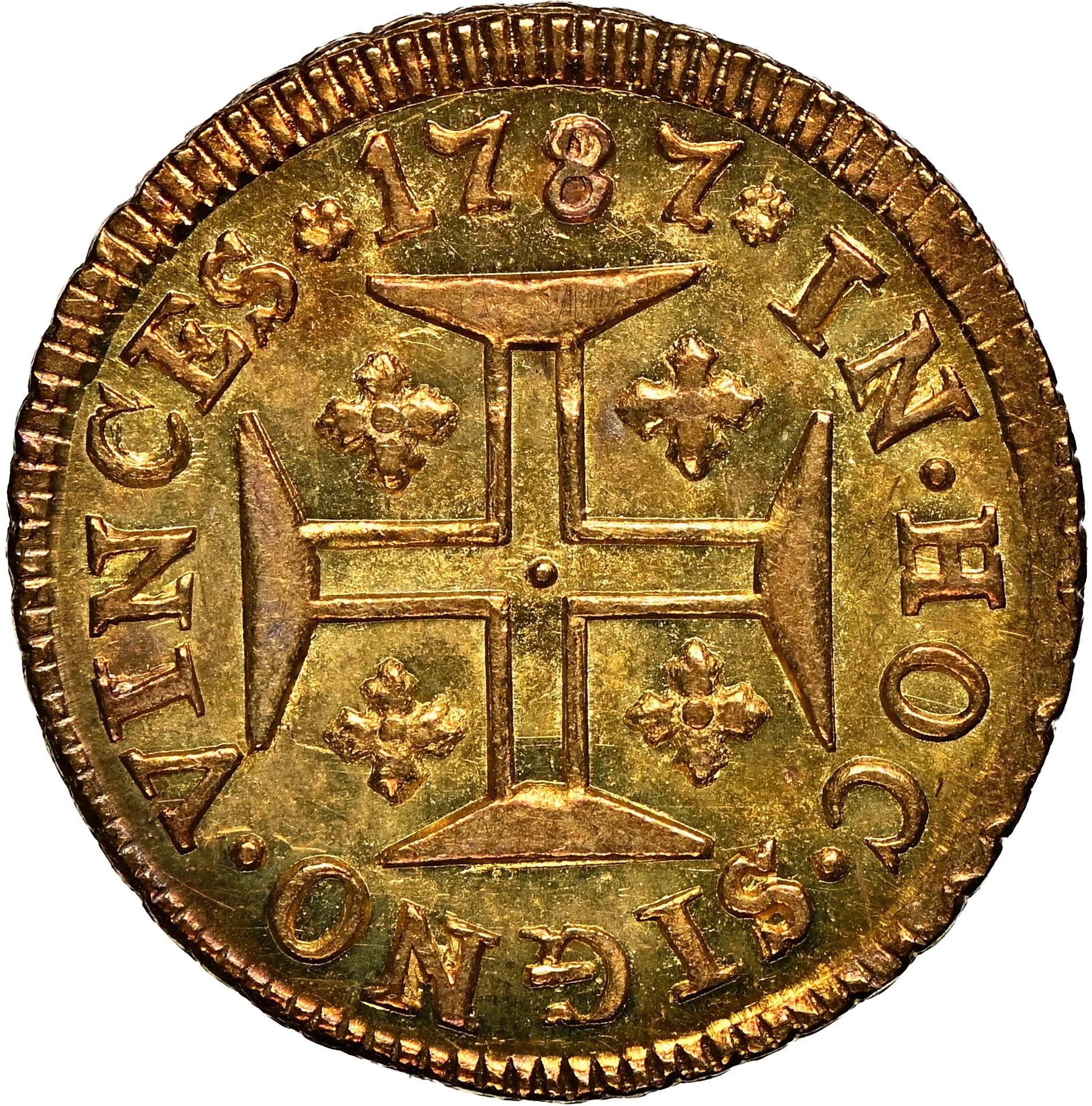
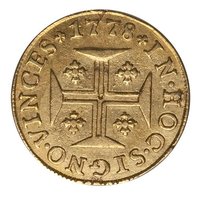
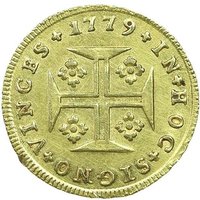
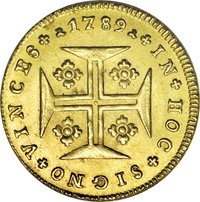
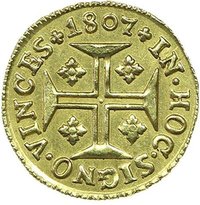
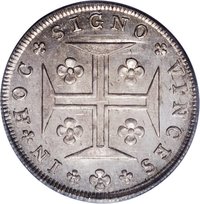
Reverse
Inscription:
*1790*IN.HOC.SIGNO.VINCES
Script: Latin
Edge
Rope shape
Mints
| Name | Mark |
|---|---|
| Imprensa Nacional - Casa da Moeda | — |
Mintings
| Year | Mint Mark | Mintage | Quality | Collection |
|---|---|---|---|---|
| 1787 | — | 8,439 | ||
| 1790 | — | 22,425 | ||
| 1795 | — | 10,602 | ||
| 1796 | — | 14,476 |
Historical background
In 1787, Portugal operated under a complex and strained monetary system, largely a legacy of the reign of King José I and his powerful minister, the Marquis of Pombal. The currency in circulation was a bimetallic system based on the Portuguese real (plural: réis), with gold moedas and silver cruzados serving as higher-value units. However, the system was fragmented and unreliable. Decades of economic challenges, including the devastating 1755 Lisbon earthquake and heavy spending on reconstruction and the military, had led to repeated debasements of coinage. This resulted in a chronic shortage of high-quality, full-weight specie (particularly gold), while a confusing array of older, worn, and foreign coins (especially Brazilian gold and Spanish pieces of eight) circulated at fluctuating values.
The economic policies of Pombal, which ended in 1777, had aimed at mercantilist control but left the treasury depleted. By 1787, during the reign of Queen Maria I, the state faced significant fiscal pressure. The crown was deeply indebted, largely due to the costs of maintaining the empire and a series of wars. To raise revenue, the government frequently resorted to minting new coinage with reduced precious metal content, a practice that eroded public trust and spurred inflation. Furthermore, the immense wealth in gold and diamonds flowing from the Brazilian colony, which had once buoyed the economy, was beginning to decline, exacerbating the monetary shortage in the metropolis.
Consequently, the currency situation was characterized by instability and uncertainty. The disparity between the official face value of coins and their intrinsic metal value led to Gresham's Law in action, where "bad money drives out good." People hoarded full-weight gold and silver coins, conducting daily business with inferior copper and debased silver. This environment hampered domestic commerce, complicated tax collection, and created difficulties for merchants in international trade. The year 1787 thus represents a point of latent crisis within the Antigo Regime, where monetary fragility underscored the broader structural weaknesses in the Portuguese economy, foreshadowing the greater financial turmoil that would unfold in the decades ahead.
The economic policies of Pombal, which ended in 1777, had aimed at mercantilist control but left the treasury depleted. By 1787, during the reign of Queen Maria I, the state faced significant fiscal pressure. The crown was deeply indebted, largely due to the costs of maintaining the empire and a series of wars. To raise revenue, the government frequently resorted to minting new coinage with reduced precious metal content, a practice that eroded public trust and spurred inflation. Furthermore, the immense wealth in gold and diamonds flowing from the Brazilian colony, which had once buoyed the economy, was beginning to decline, exacerbating the monetary shortage in the metropolis.
Consequently, the currency situation was characterized by instability and uncertainty. The disparity between the official face value of coins and their intrinsic metal value led to Gresham's Law in action, where "bad money drives out good." People hoarded full-weight gold and silver coins, conducting daily business with inferior copper and debased silver. This environment hampered domestic commerce, complicated tax collection, and created difficulties for merchants in international trade. The year 1787 thus represents a point of latent crisis within the Antigo Regime, where monetary fragility underscored the broader structural weaknesses in the Portuguese economy, foreshadowing the greater financial turmoil that would unfold in the decades ahead.
Series: Cross of Christ
✨ Legendary