

6 Thalers – Brunswick-Lüneburg-Calenberg
Germany
Context
Year: 1638
Country: Germany 
Issuer: Brunswick-Lüneburg-Calenberg
Ruler: George
Currency:
Demonetized: Yes
Material
References
KM: #Click to copy to clipboard27
Numista: #266680
Value
Bullion value: $503.64
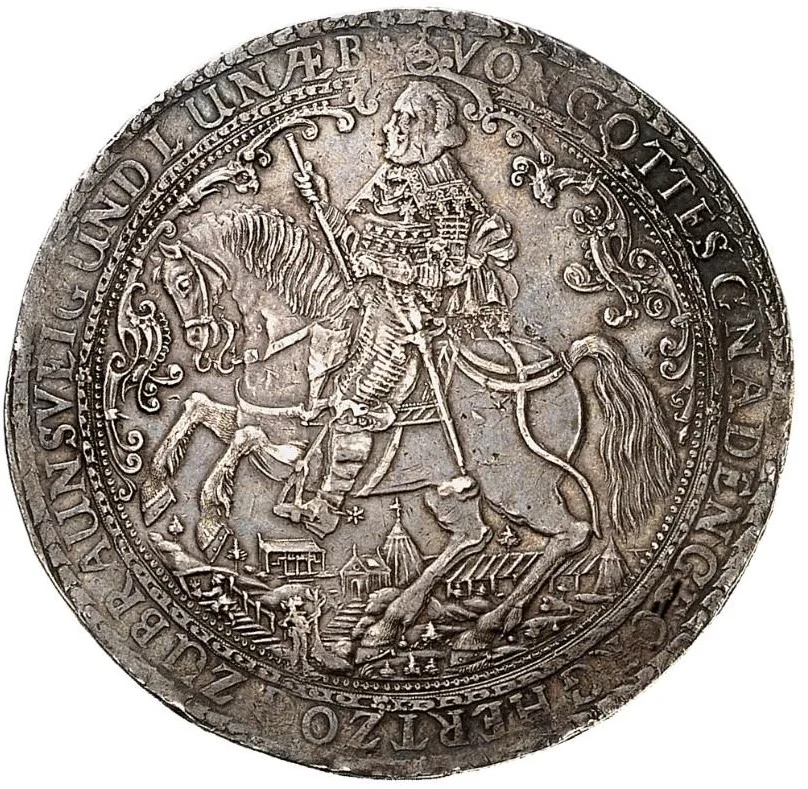
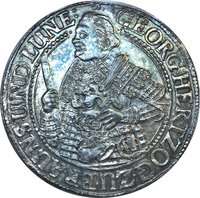
Obverse
Description:
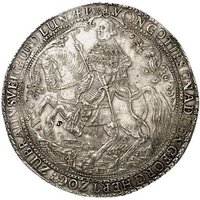
Mounted Duke
Inscription:
VON GOTTES GNADEN GEORG HERTZOG ZU BRAUNSVEIG UND LUNAEB
Script: Latin
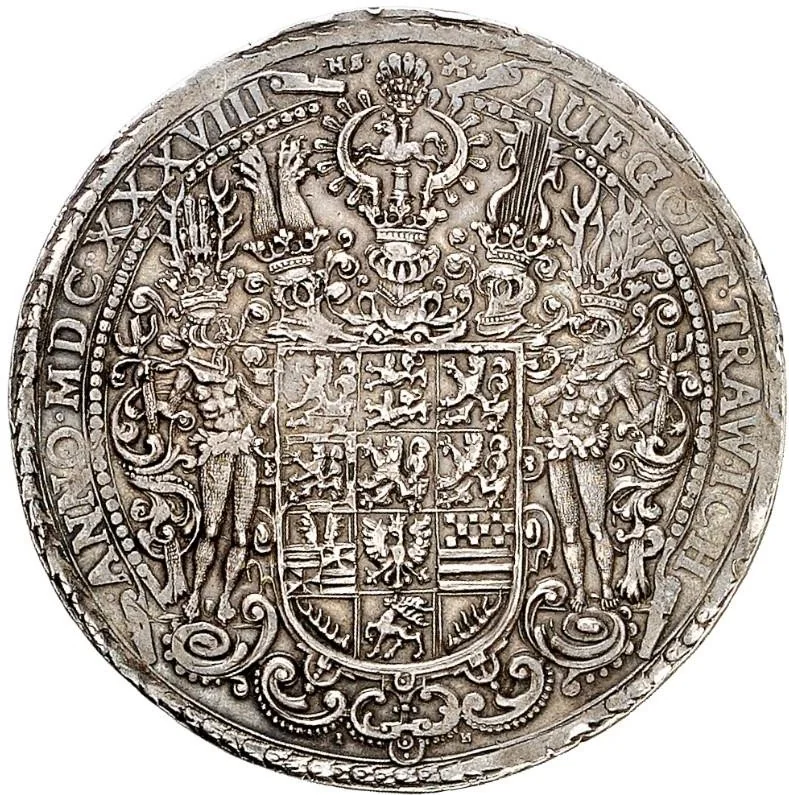
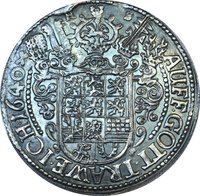
Reverse
Description:
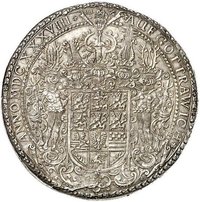
Helmeted arms with twelvefold supporters, dated in Roman numerals.
Inscription:
HS
AUF GOTT TRAW ICH ANNO MDCXXXVIII
IH
AUF GOTT TRAW ICH ANNO MDCXXXVIII
IH
Script: Latin
Edge
Mintings
| Year | Mint Mark | Mintage | Quality | Collection |
|---|---|---|---|---|
| 1638 | — | — |
Historical background
In 1638, the Duchy of Brunswick-Lüneburg, specifically the Principality of Calenberg, was in a state of severe monetary and economic crisis, deeply exacerbated by the ongoing Thirty Years' War. The region had been a frequent battleground and occupation zone, leading to massive population loss, agricultural collapse, and the plundering of resources. This dire economic reality forced the ruling authorities, under Duke George of Brunswick-Lüneburg, to engage in repeated currency debasements. By reducing the precious metal content in coins while maintaining their face value, the state aimed to generate immediate revenue to fund military expenditures and administrative costs, a desperate measure common among war-ravaged German territories.
The result was a chaotic circulation of heavily debased Kippermünzen (debased coinage) alongside older, full-value coins, which drove Gresham's Law ("bad money drives out good money") into full effect. Holders of good silver coins hoarded or exported them, leaving the economy flooded with unreliable, low-intrinsic-value currency. This led to rampant price inflation, a collapse in public trust in the coinage, and severe disruption to trade and credit. The monetary system was effectively fragmented and dysfunctional, causing hardship for the remaining population and complicating any attempts at economic recovery.
Recognizing the unsustainable situation, ducal authorities were likely contemplating or beginning preparations for a monetary reform. Such a reform, which would involve calling in and reminting the debased currency at a standardized, higher value, was a complex and costly undertaking requiring careful political planning. Therefore, the background of 1638 is one of being at the nadir of a monetary collapse, with the immediate pressures of war finance clashing with the urgent need to restore monetary stability—a challenge that would define the region's fiscal policy in the subsequent years.
The result was a chaotic circulation of heavily debased Kippermünzen (debased coinage) alongside older, full-value coins, which drove Gresham's Law ("bad money drives out good money") into full effect. Holders of good silver coins hoarded or exported them, leaving the economy flooded with unreliable, low-intrinsic-value currency. This led to rampant price inflation, a collapse in public trust in the coinage, and severe disruption to trade and credit. The monetary system was effectively fragmented and dysfunctional, causing hardship for the remaining population and complicating any attempts at economic recovery.
Recognizing the unsustainable situation, ducal authorities were likely contemplating or beginning preparations for a monetary reform. Such a reform, which would involve calling in and reminting the debased currency at a standardized, higher value, was a complex and costly undertaking requiring careful political planning. Therefore, the background of 1638 is one of being at the nadir of a monetary collapse, with the immediate pressures of war finance clashing with the urgent need to restore monetary stability—a challenge that would define the region's fiscal policy in the subsequent years.
✨ Legendary