

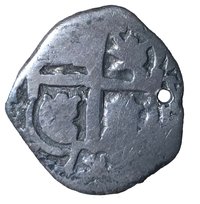
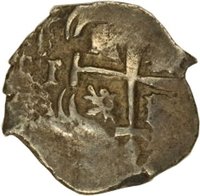
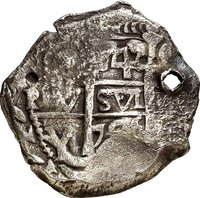
Obverse
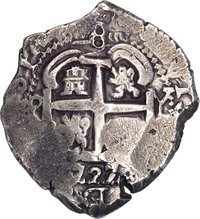
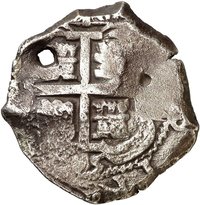
Description:
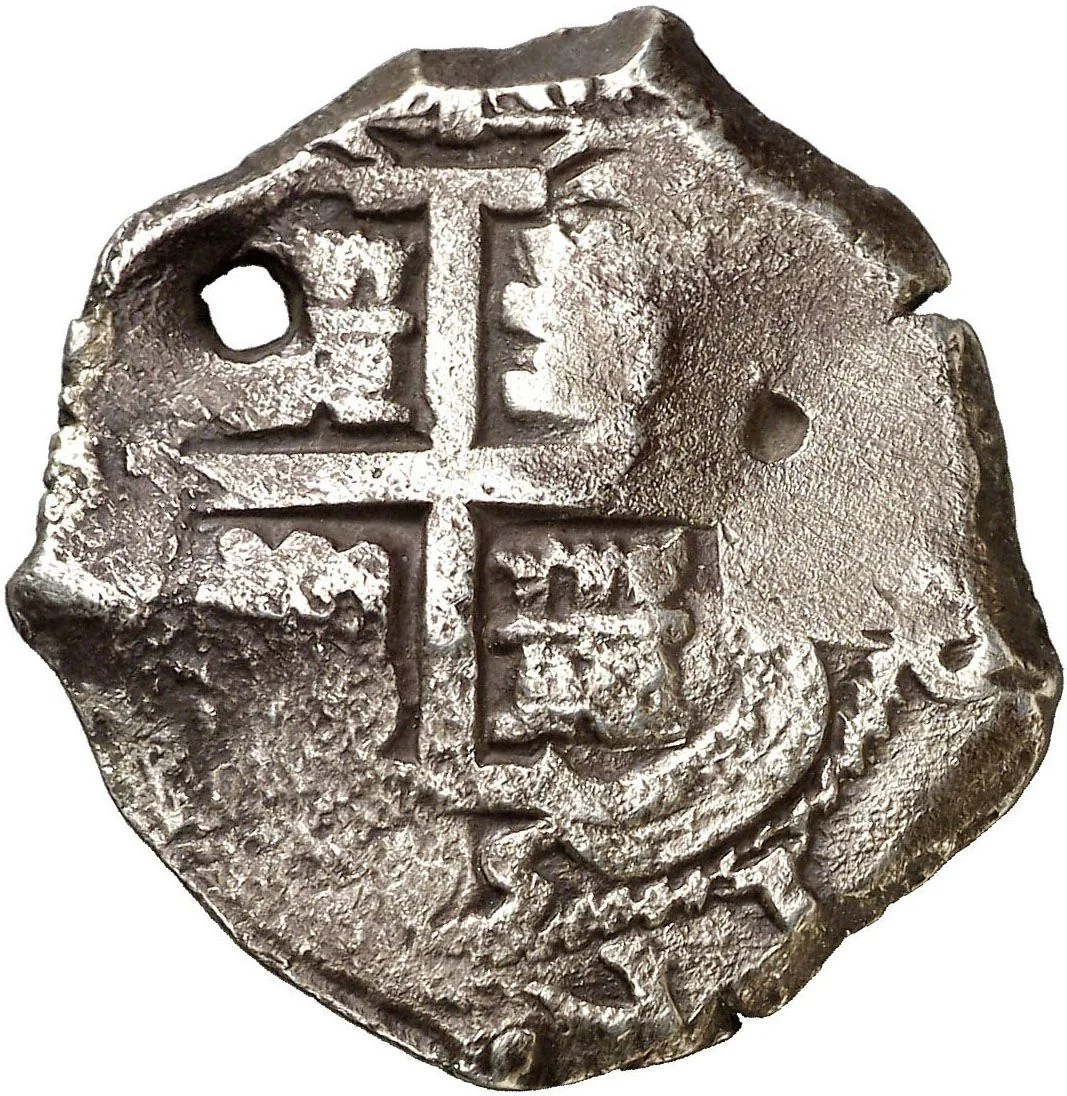
Jerusalem Cross with lions and castles in quarters. Face value above, mintmark left, assayer right, date below.
Inscription:
4
P Y
726
P Y
726
Script: Latin
Engraver: Diego de Ybarbouru
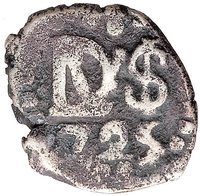
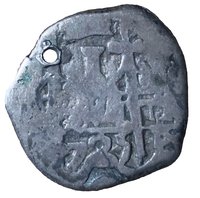
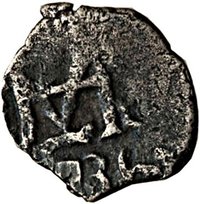
Reverse
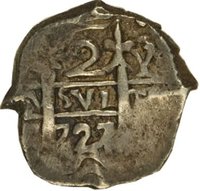
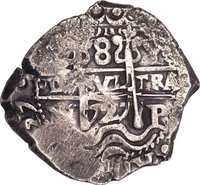
Description:
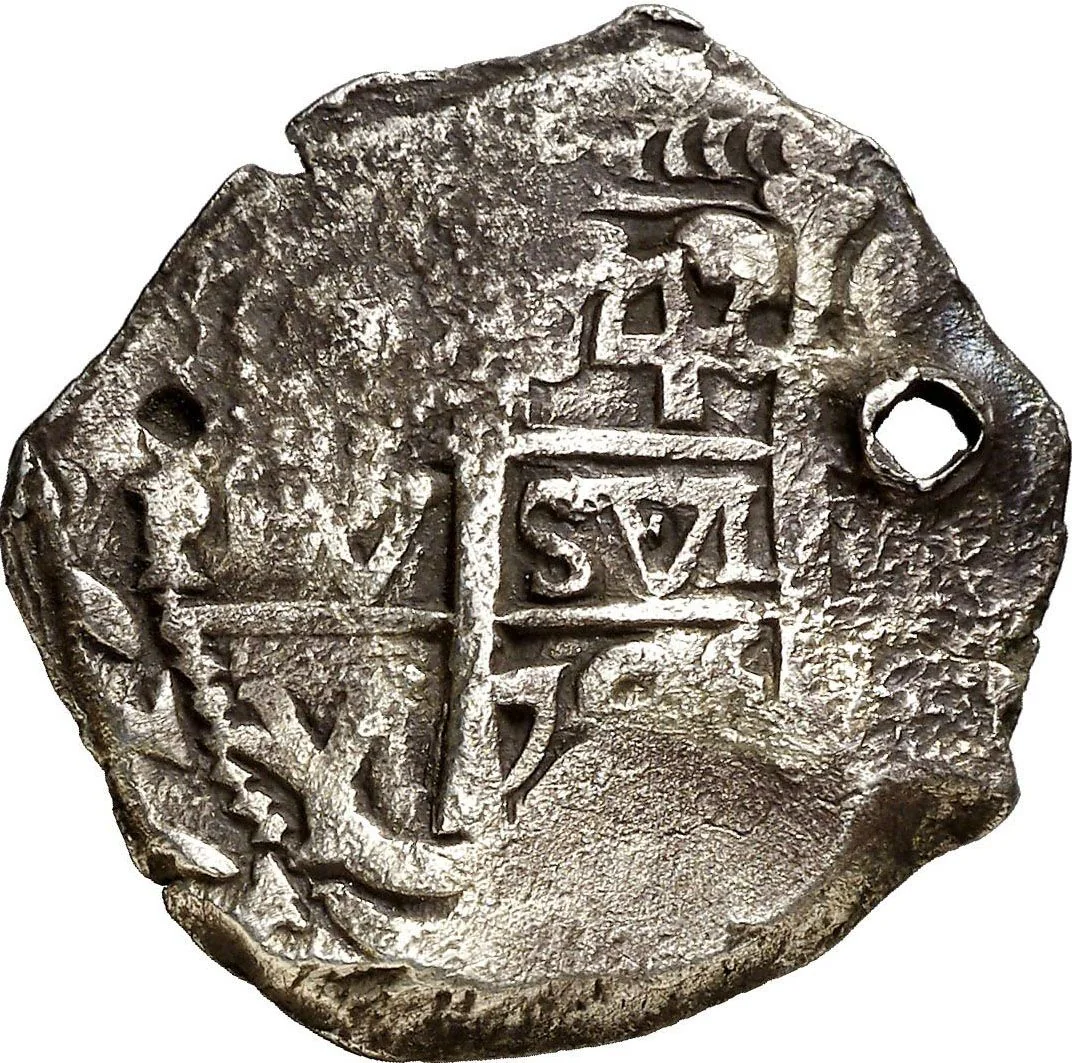
Waves | Two Columns
Inscription:
P 4 Y
PLV SVL TRA
Y 726 P
PLV SVL TRA
Y 726 P
Script: Latin
Engraver: Diego de Ybarbouru
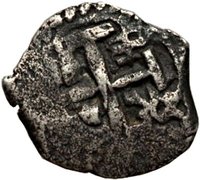
Edge
Smooth, irregular.Liso, irregular
Mints
| Name | Mark |
|---|---|
| Potosi | P |
Historical background
In 1725, the currency situation in the Province of Charcas (modern Bolivia) within the Spanish Viceroyalty of Peru was defined by a severe shortage of official coinage, a thriving illegal economy, and the overwhelming dominance of silver as the region's economic lifeblood. The primary source of wealth was the Cerro Rico of Potosí, the world's richest silver mine, which supplied the Spanish Empire with vast quantities of bullion. However, the minting of official coins, the legendary "pieces of eight," was tightly controlled by the Crown through the Potosí Mint (Casa de la Moneda). This official supply was insufficient for local and regional trade, leading to a chronic scarcity of circulating currency for everyday transactions.
This scarcity gave rise to a pervasive and tolerated system of substitute currencies. The most common was macuquina—crude, irregularly cut silver coins that were often clipped or debased. While officially illegal, macuquina circulated widely out of necessity, creating a dual monetary system alongside the scarce official coinage. Furthermore, in remote markets and among indigenous communities, barter remained a fundamental practice, with goods like coca leaves, textiles, and agricultural products serving as mediums of exchange. This informal economy operated parallel to the silver-based colonial system, highlighting the vast disparities and practical adaptations within the region.
Underpinning this complex monetary landscape was a system of profound economic extraction. The silver mined and minted in Potosí was largely destined for export to Spain, either as Crown revenue or private profit, draining the local economy of its most tangible asset. The currency situation in 1725, therefore, was one of contradiction: the region was the epicenter of global silver production, yet it suffered from a lack of standardized coinage, relied on illicit and primitive substitutes, and saw its immense wealth systematically removed to fuel imperial ambitions across the Atlantic.
This scarcity gave rise to a pervasive and tolerated system of substitute currencies. The most common was macuquina—crude, irregularly cut silver coins that were often clipped or debased. While officially illegal, macuquina circulated widely out of necessity, creating a dual monetary system alongside the scarce official coinage. Furthermore, in remote markets and among indigenous communities, barter remained a fundamental practice, with goods like coca leaves, textiles, and agricultural products serving as mediums of exchange. This informal economy operated parallel to the silver-based colonial system, highlighting the vast disparities and practical adaptations within the region.
Underpinning this complex monetary landscape was a system of profound economic extraction. The silver mined and minted in Potosí was largely destined for export to Spain, either as Crown revenue or private profit, draining the local economy of its most tangible asset. The currency situation in 1725, therefore, was one of contradiction: the region was the epicenter of global silver production, yet it suffered from a lack of standardized coinage, relied on illicit and primitive substitutes, and saw its immense wealth systematically removed to fuel imperial ambitions across the Atlantic.
Series: 1725 Bolivia circulation coins
✨ Legendary