

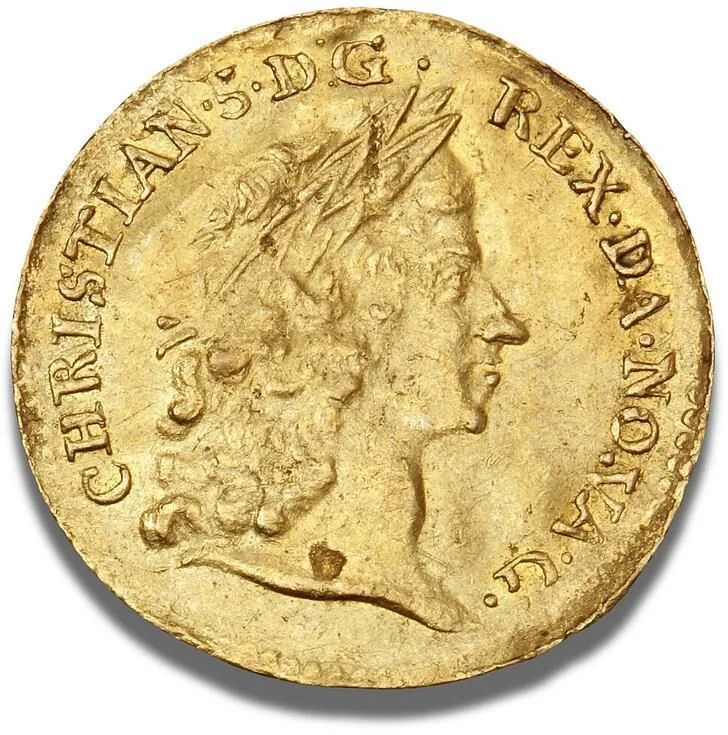
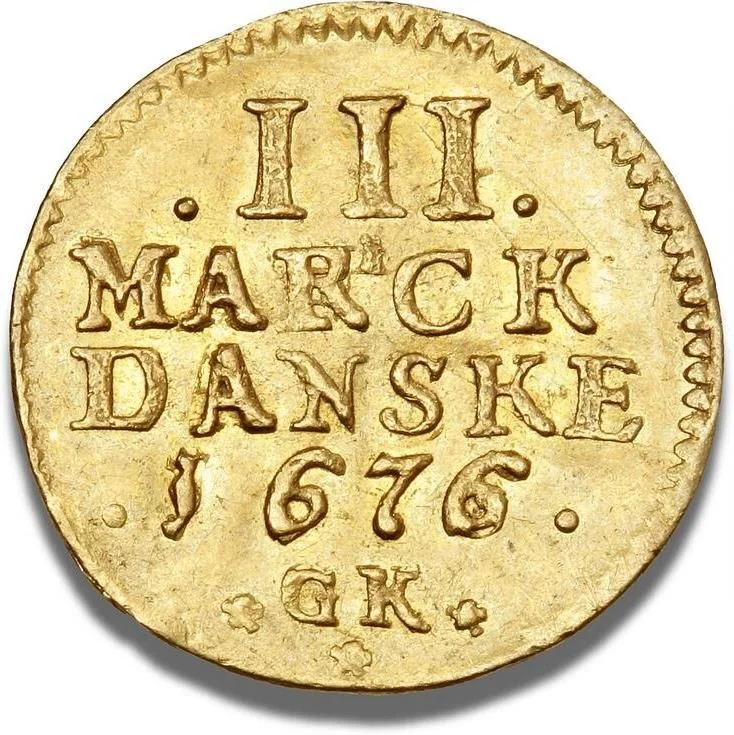
3 mark – Denmark
Add to wishlist
Denmark
Context
References
KM: #
Numista: #344119
Value
Bullion value: $134.13
Obverse
Description:
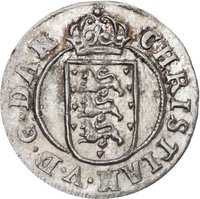
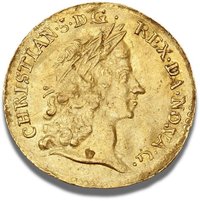
Christian V laureate bust right
Inscription:
CHRISTIAN 5 D G REX DA NO VA G
Script: Latin
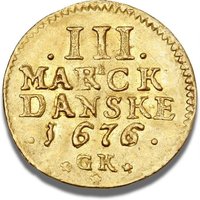
Reverse
Edge
Mintings
| Year | Mint Mark | Mintage | Quality | Collection |
|---|---|---|---|---|
| 1676 | — | — |
Historical background
In 1676, Denmark found itself embroiled in the Scanian War against Sweden, a conflict that placed immense strain on the state's finances and its currency system. The primary currency was the silver rigsdaler, but the costly demands of warfare—funding armies, fortifications, and a navy—led the monarchy to resort to desperate monetary measures. The government, under King Christian V, began the practice of debasement, reducing the silver content in newly minted coins while ordering them to circulate at the same face value as the older, purer coins.
This manipulation created a classic and disruptive economic phenomenon: Gresham's Law, where "bad money drives out good." The public, recognizing the difference, hoarded the older, full-value silver coins or used them for foreign trade, while the newer, debased coins flooded the domestic market. This led to a sharp decline in public trust, price inflation, and significant difficulties in everyday commerce, as merchants became wary of the mixed and uncertain currency in circulation.
Furthermore, the situation was exacerbated by the widespread use of low-value copper skilling coins for daily transactions, which were also subject to manipulation. The resulting monetary chaos contributed to economic hardship during the war years, highlighting the fragile link between state power, precious metal reserves, and public confidence. The currency crisis of 1676 thus stands as a clear example of how early modern warfare could destabilize a nation's economic foundations through fiscal expediency.
This manipulation created a classic and disruptive economic phenomenon: Gresham's Law, where "bad money drives out good." The public, recognizing the difference, hoarded the older, full-value silver coins or used them for foreign trade, while the newer, debased coins flooded the domestic market. This led to a sharp decline in public trust, price inflation, and significant difficulties in everyday commerce, as merchants became wary of the mixed and uncertain currency in circulation.
Furthermore, the situation was exacerbated by the widespread use of low-value copper skilling coins for daily transactions, which were also subject to manipulation. The resulting monetary chaos contributed to economic hardship during the war years, highlighting the fragile link between state power, precious metal reserves, and public confidence. The currency crisis of 1676 thus stands as a clear example of how early modern warfare could destabilize a nation's economic foundations through fiscal expediency.
Series: 1676 Denmark circulation coins
✨ Legendary