

1 krone – Denmark
Add to wishlist
Denmark
Context
Material
References
KM: #
Numista: #310386
Value
Bullion value: $37.80
Obverse
Description:
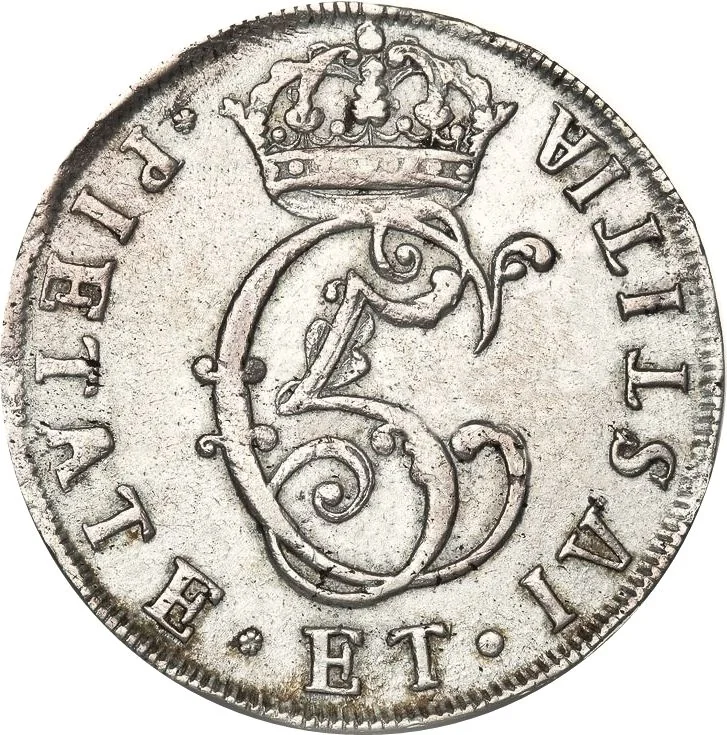
Crowned baroque monogram with ornate tips. Motto encircles rim, reading counter-clockwise from upper left.
Inscription:
C5
* PIETATE · ET · IUSTITIA *
* PIETATE · ET · IUSTITIA *
Script: Latin
Reverse
Description:
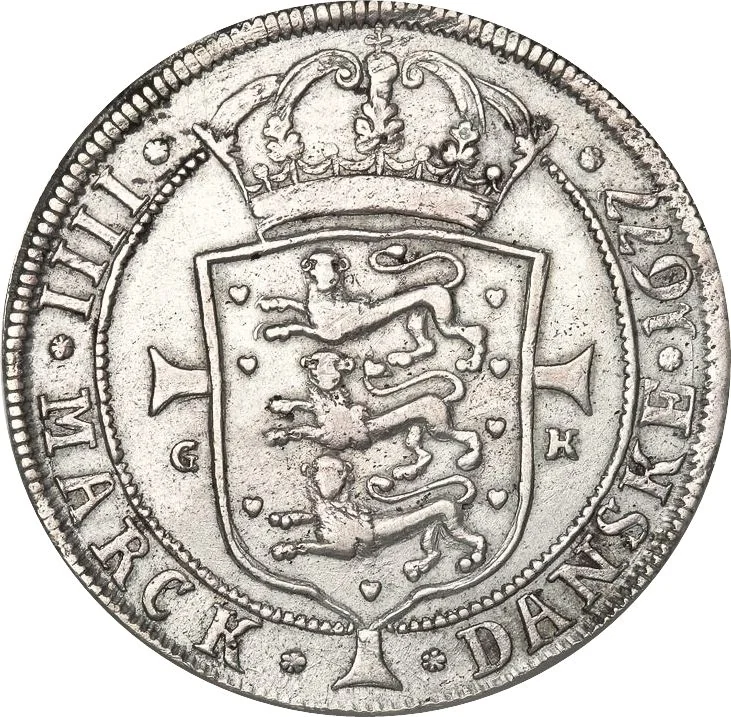
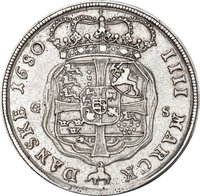
Crowned pointed shield with Denmark’s arms over a cross divides mintmark. Shield inside pearled ring. Value legend around rim, date at end, reading counterclockwise from upper left.
Inscription:
G | K
* IIII * MARCK * | DANSKE * 1677 *
* IIII * MARCK * | DANSKE * 1677 *
Script: Latin
Edge
Categories
| Symbols> Coat of Arms |
| Symbols> Monogram |
Mints
| Name | Mark |
|---|---|
| Copenhagen | GK |
Mintings
| Year | Mint Mark | Mintage | Quality | Collection |
|---|---|---|---|---|
| 1677 | GK | — |
Historical background
In 1677, Denmark operated under a silver-based monetary system, yet the period was marked by significant currency instability and debasement. The state, under the absolute monarchy of King Christian V, was burdened by the immense costs of the Scanian War (1675-1679) against Sweden. To finance the military, the government resorted to repeatedly minting new coinage with reduced silver content, a practice known as debasement. This created a confusing circulation of older, purer coins and newer, inferior ones, leading to Gresham's Law in action as people hoarded the "good" money and spent the "bad."
The situation was exacerbated by a general shortage of precious metals across Europe, which put downward pressure on the value of the Danish krone. The government's attempts to legislate value—setting official exchange rates between old and new coins—failed as market prices for bullion diverged sharply from the mandated rates. This resulted in rampant inflation, a loss of public confidence in the currency, and severe disruption to trade and credit markets. Merchants and the public faced great uncertainty, as the real value of coins could fluctuate unpredictably.
Ultimately, the currency crisis of 1677 was a direct fiscal symptom of protracted warfare, exposing the vulnerabilities of the early modern Danish state. The financial strain contributed to the economic hardships that followed the war's conclusion, necessitating subsequent reforms. While not an isolated event in 17th-century Europe, this period of monetary turmoil highlighted the challenges of maintaining a stable currency in the face of sovereign debt and the primitive fiscal tools available to monarchies of the era.
The situation was exacerbated by a general shortage of precious metals across Europe, which put downward pressure on the value of the Danish krone. The government's attempts to legislate value—setting official exchange rates between old and new coins—failed as market prices for bullion diverged sharply from the mandated rates. This resulted in rampant inflation, a loss of public confidence in the currency, and severe disruption to trade and credit markets. Merchants and the public faced great uncertainty, as the real value of coins could fluctuate unpredictably.
Ultimately, the currency crisis of 1677 was a direct fiscal symptom of protracted warfare, exposing the vulnerabilities of the early modern Danish state. The financial strain contributed to the economic hardships that followed the war's conclusion, necessitating subsequent reforms. While not an isolated event in 17th-century Europe, this period of monetary turmoil highlighted the challenges of maintaining a stable currency in the face of sovereign debt and the primitive fiscal tools available to monarchies of the era.
✨ Legendary