

20 Réis – Angola
Angola
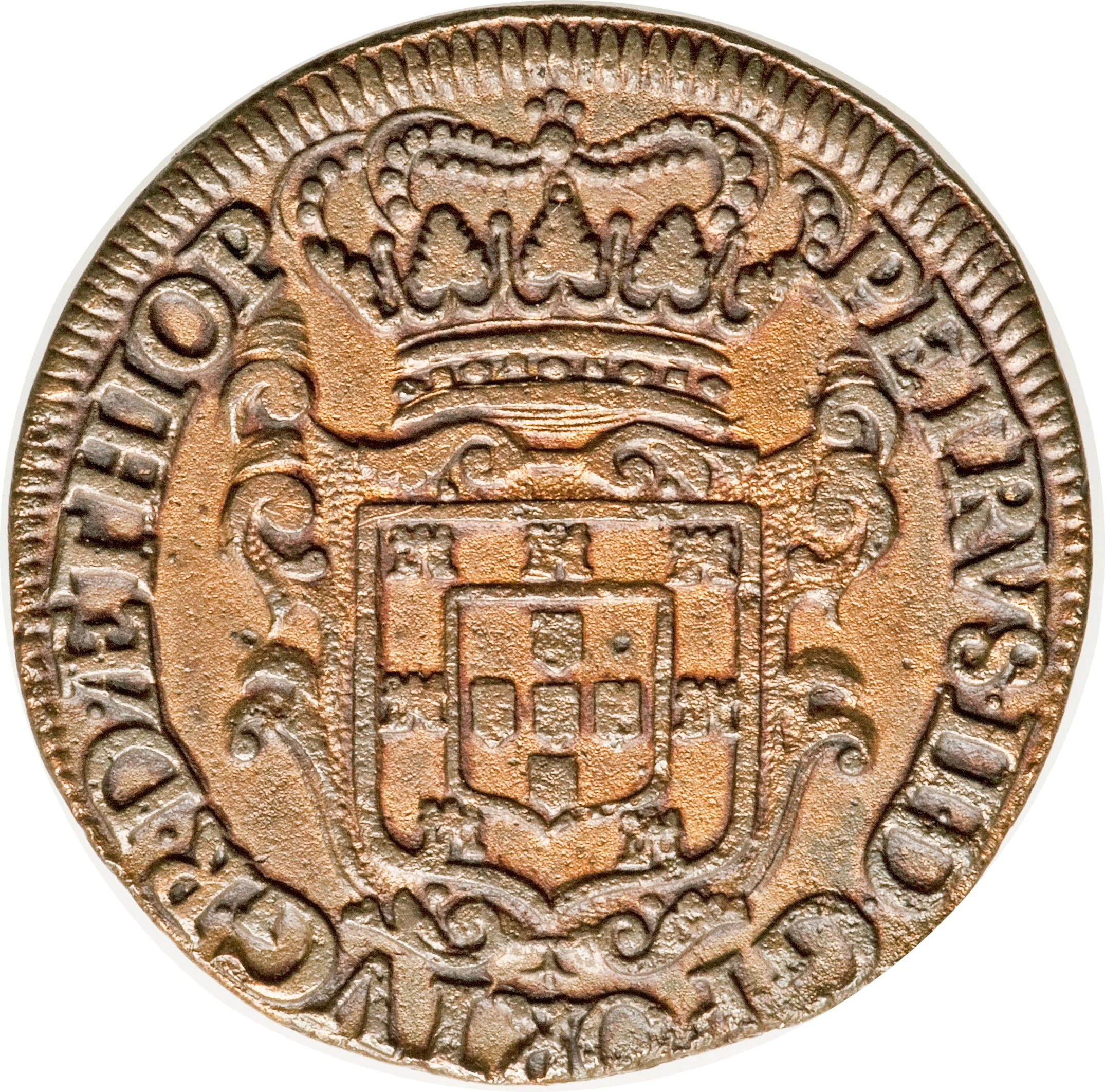
Obverse
Description:
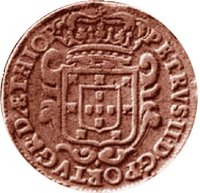
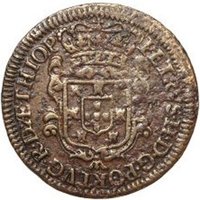
Crowned Portuguese coat of arms.
Inscription:
PETRVS·II·D·G·PORTVG·R·D·ÆTHIOP
Script: Latin
Engraver: Roque Francisco
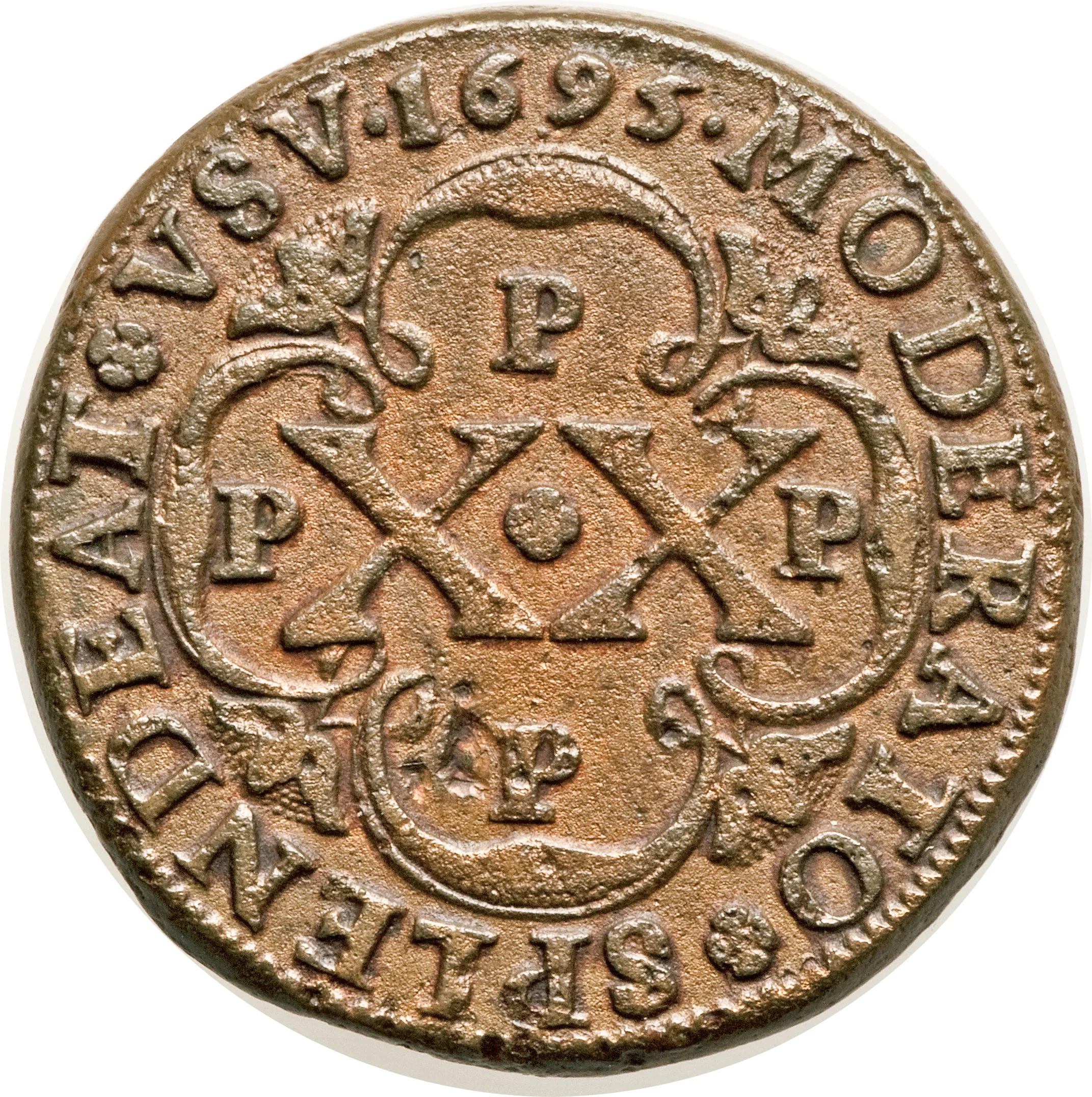
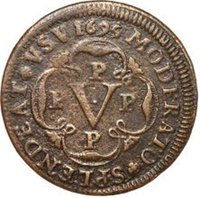
Reverse
Description:
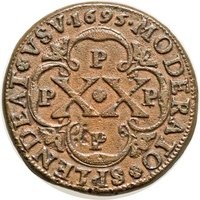
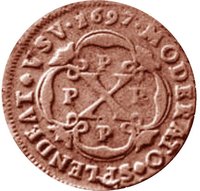
Value XX between PPPP and ornaments.
Inscription:
MODERATO SPLENDEAT VSV·1693/99·
P P X X P P
P P X X P P
Script: Latin
Engraver: Roque Francisco
Edge
Plain
Categories
| Symbol> Crown |
| Symbols> Coat of Arms |
Mints
| Name | Mark |
|---|---|
| Porto | PPPP |
Mintings
Historical background
In 1693, the currency situation in the Kingdom of Ndongo and Matamba, a region of modern-day Angola, was defined by a complex interplay of local, regional, and international systems, all underpinned by the transatlantic slave trade. The most significant and sought-after currency was not minted coins but human beings. Enslaved people, sourced from the interior through warfare and trade networks, served as the primary unit of value and exchange for the Portuguese merchants based in the coastal settlements, particularly Luanda. The number of enslaved individuals, often measured in peças da Índia (a standard "piece" representing a healthy adult), dictated access to imported European goods.
Alongside this tragic human currency, a variety of traditional and imported mediums of exchange circulated. Within African societies, certain commodities like salt, cloth (especially the libongos, or raffia cloth), and cowrie shells held value for local and regional trade. From Europe, the Portuguese introduced cloth, alcohol, firearms, and brass bracelets called manilhas, which were highly prized. Notably, there was an absence of formal European coinage in widespread local use; Portuguese réis existed mainly for accounting within the colonial administration and for high-value transactions between merchants, but did not penetrate the interior economies.
This monetary landscape was unstable and directly tied to the violent extraction of people. The Portuguese crown, through its colonial administration in Luanda, attempted to control and tax the slave trade, but often found its authority challenged by powerful African states like the Kingdom of Kongo and emerging powers like Queen Nzinga's Matamba, as well as by rival European interlopers. The year 1693 falls within a period of intense competition and shifting alliances, where currency—whether in human lives, trade goods, or symbolic items—was fundamentally a tool of political power and survival in a war-torn economy.
Alongside this tragic human currency, a variety of traditional and imported mediums of exchange circulated. Within African societies, certain commodities like salt, cloth (especially the libongos, or raffia cloth), and cowrie shells held value for local and regional trade. From Europe, the Portuguese introduced cloth, alcohol, firearms, and brass bracelets called manilhas, which were highly prized. Notably, there was an absence of formal European coinage in widespread local use; Portuguese réis existed mainly for accounting within the colonial administration and for high-value transactions between merchants, but did not penetrate the interior economies.
This monetary landscape was unstable and directly tied to the violent extraction of people. The Portuguese crown, through its colonial administration in Luanda, attempted to control and tax the slave trade, but often found its authority challenged by powerful African states like the Kingdom of Kongo and emerging powers like Queen Nzinga's Matamba, as well as by rival European interlopers. The year 1693 falls within a period of intense competition and shifting alliances, where currency—whether in human lives, trade goods, or symbolic items—was fundamentally a tool of political power and survival in a war-torn economy.
⭐ Rare