

1 Thaler – Austrian Empire
Austria
Context
Years: 1645–1657
Country: Austria 
Issuer: Austrian Empire
Ruler: Ferdinand III
Currency:
(1520—1754)
Demonetized: Yes
References
KM: #Click to copy to clipboard924
Numista: #33498
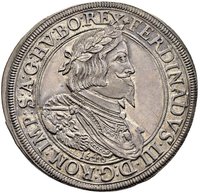
Obverse
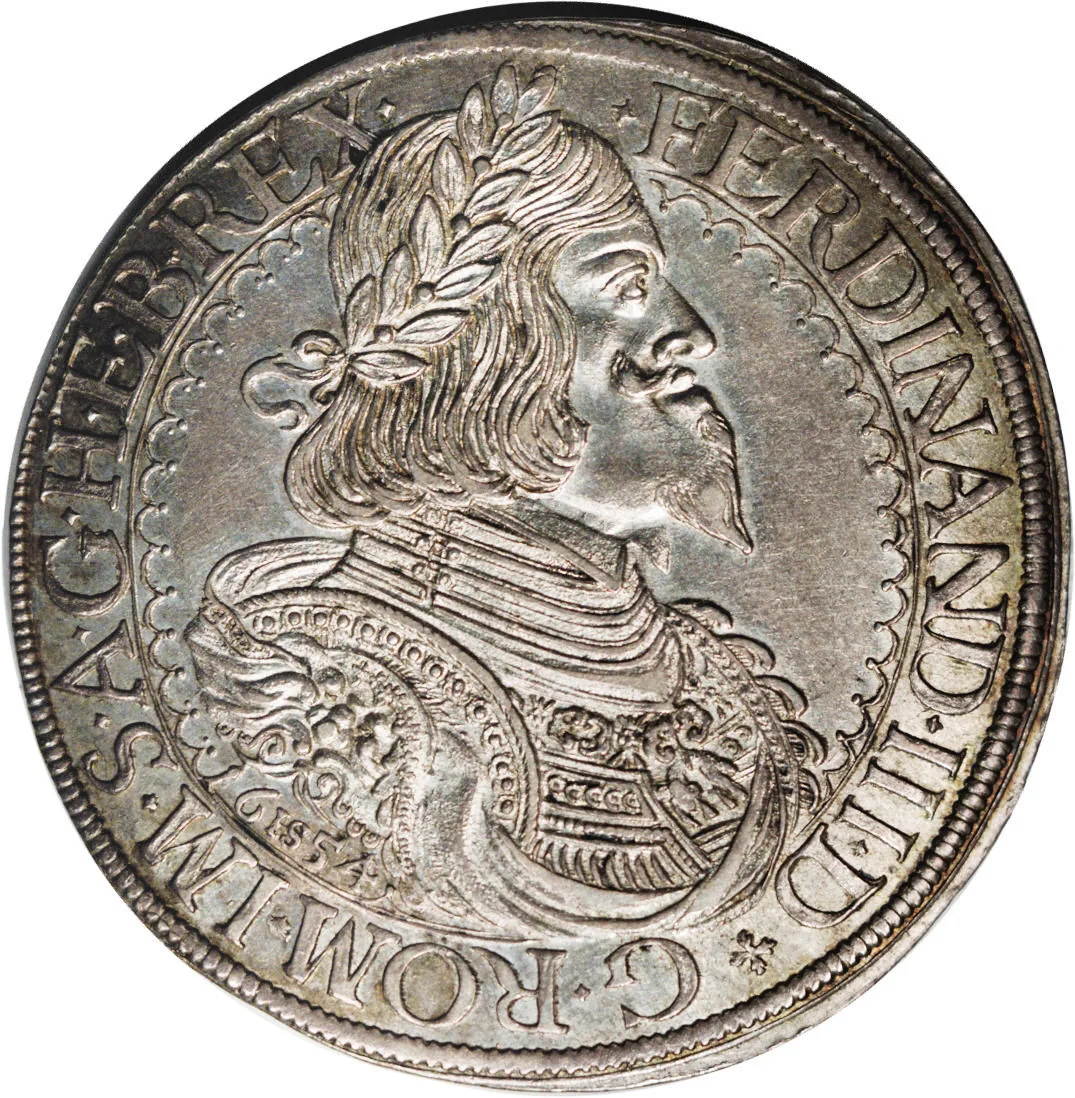
Description:
Portrait right, ornate inner border, lion on shoulder, date beneath bust.
Inscription:
FERDINAND III D G ROM IMP S A G H ET B REX
Script: Latin
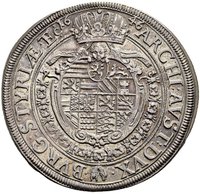
Reverse
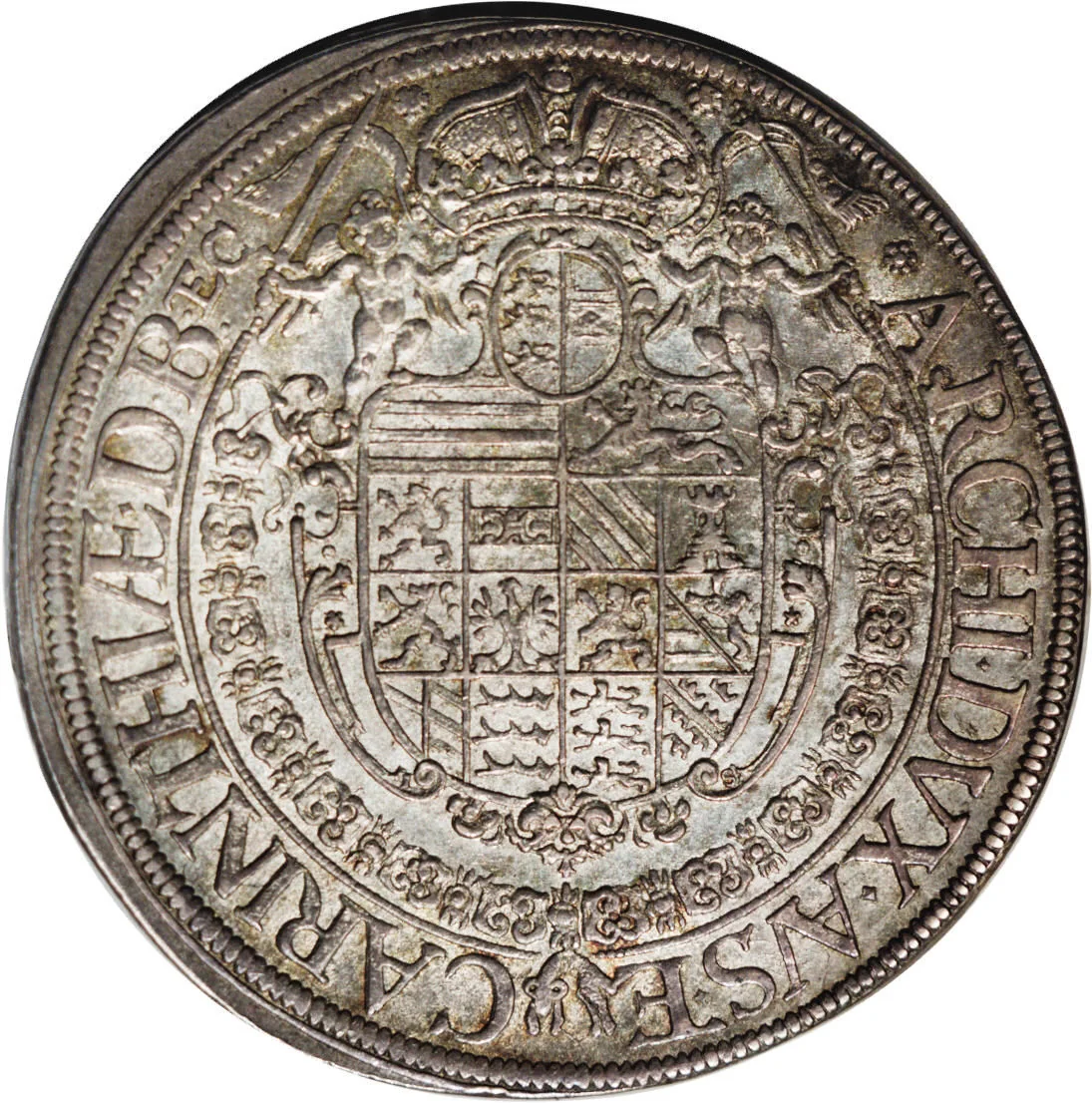
Description:
Arms circled with a small Carinthian shield above.
Inscription:
ARCHIDVX AVS ET CARINTHIÆ D B etc 1696:
Script: Latin
Edge
Mints
| Name | Mark |
|---|---|
| Sankt Veit | — |
Mintings
| Year | Mint Mark | Mintage | Quality | Collection |
|---|---|---|---|---|
| 1645 | — | — | ||
| 1649 | — | — | ||
| 1650 | — | — | ||
| 1654 | HS | — | ||
| 1657 | — | — |
Historical background
In 1645, the Austrian Habsburg monarchy was grappling with a severe and protracted currency crisis, a direct consequence of the immense financial strain of the Thirty Years' War (1618-1648). The conflict demanded colossal expenditures for armies and subsidies to allies, far exceeding the empire's ordinary revenue from taxes and feudal dues. To bridge this gap, the state resorted to repeated debasement of the coinage, notably the small-denomination Kreuzer and the silver Guldiner. By reducing the precious metal content in coins while maintaining their face value, the treasury could mint more coins from the same amount of silver, creating short-term liquidity at the cost of long-term economic stability.
This practice led to a classic manifestation of Gresham's Law, where "bad money drives out good." High-quality older coins and newly minted foreign currencies were hoarded or exported, leaving the debased, "bad" coins as the primary circulating medium. The result was rampant inflation, a collapse in public trust in the currency, and chaotic exchange rates that varied wildly between regions. The situation was exacerbated by the decentralized nature of minting rights, where not only the Emperor but also various territorial estates and cities operated mints, often competing in debasement to profit from seigniorage, further flooding the market with unreliable coinage.
The monetary chaos severely disrupted the Austrian economy, harming trade, credit, and daily commerce. While efforts at currency regulation, such as the Münzordnung of 1559, existed on paper, they were largely ineffective in the wartime context. The crisis of 1645 was thus a low point, reflecting the near bankruptcy of the Habsburg state. It underscored a fundamental weakness: the Empire's inability to fund a major war without destabilizing its own economic foundations, a problem that would only begin to be addressed with the establishment of more centralized financial institutions, like the Wiener Stadtbank, in the post-war decades.
This practice led to a classic manifestation of Gresham's Law, where "bad money drives out good." High-quality older coins and newly minted foreign currencies were hoarded or exported, leaving the debased, "bad" coins as the primary circulating medium. The result was rampant inflation, a collapse in public trust in the currency, and chaotic exchange rates that varied wildly between regions. The situation was exacerbated by the decentralized nature of minting rights, where not only the Emperor but also various territorial estates and cities operated mints, often competing in debasement to profit from seigniorage, further flooding the market with unreliable coinage.
The monetary chaos severely disrupted the Austrian economy, harming trade, credit, and daily commerce. While efforts at currency regulation, such as the Münzordnung of 1559, existed on paper, they were largely ineffective in the wartime context. The crisis of 1645 was thus a low point, reflecting the near bankruptcy of the Habsburg state. It underscored a fundamental weakness: the Empire's inability to fund a major war without destabilizing its own economic foundations, a problem that would only begin to be addressed with the establishment of more centralized financial institutions, like the Wiener Stadtbank, in the post-war decades.
✨ Legendary