Logo Title
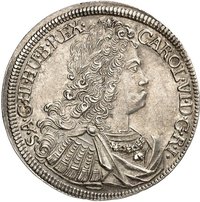
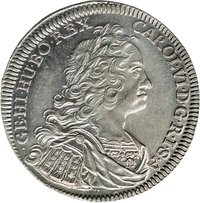
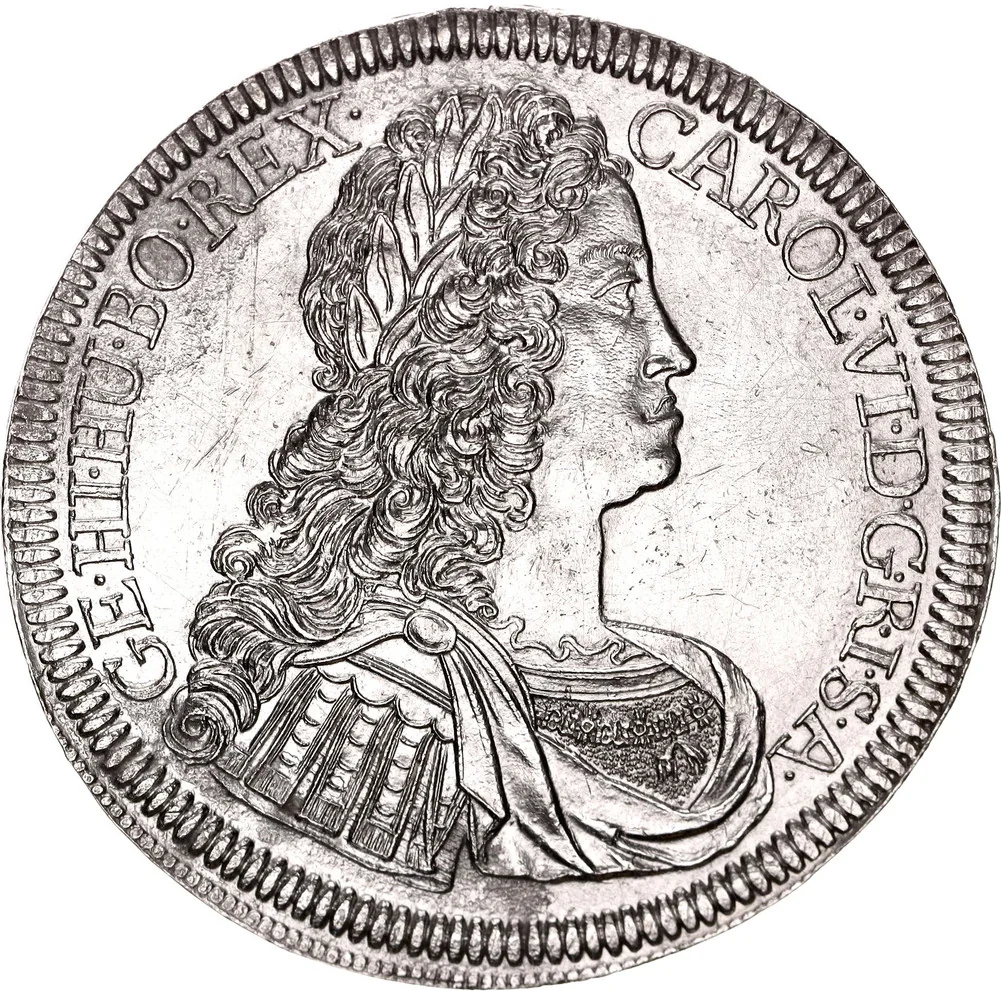
obverse
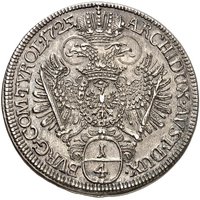
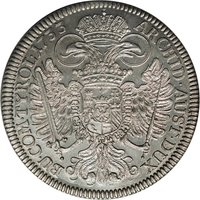
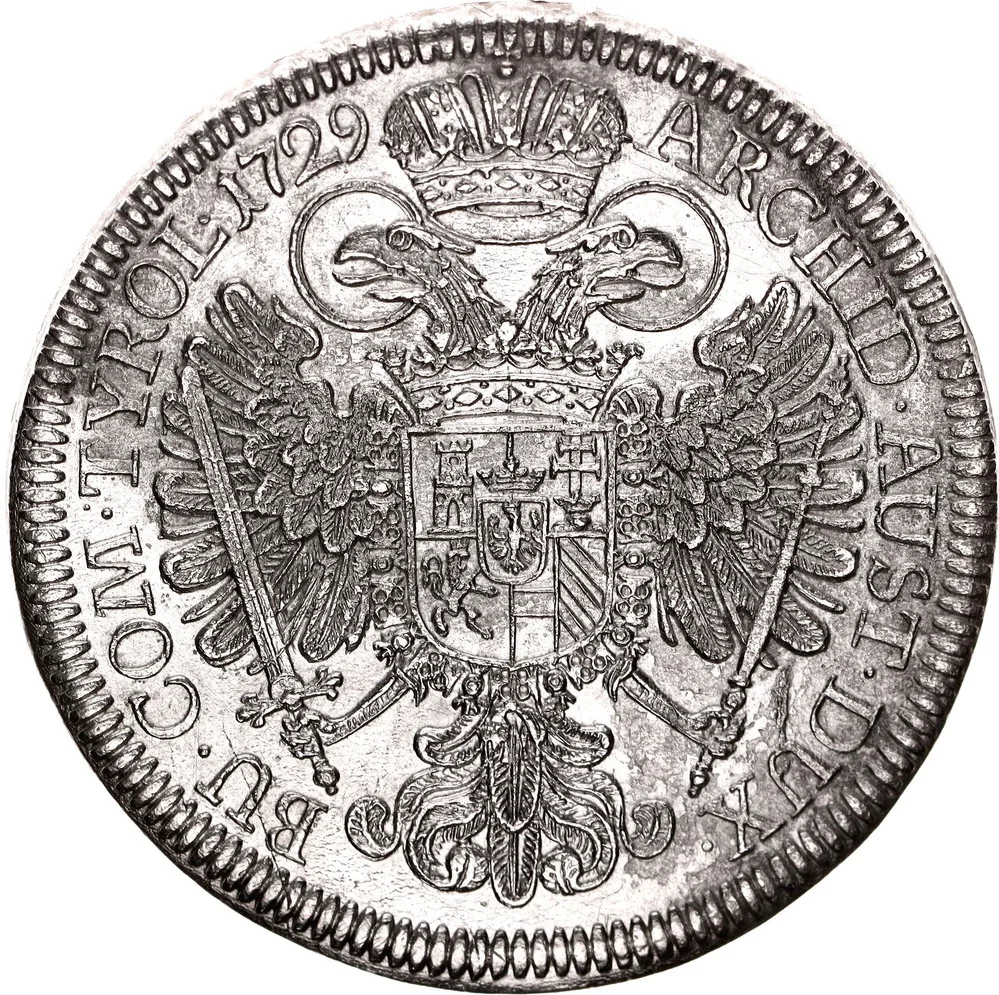
reverse
US Mint
Austria
Context
Year: 1729
Country: Austria Country flag
Currency:
Demonetized: Yes
Material
Diameter: 43 mm
Weight: 28.29 g
Silver weight: 24.75 g
Shape: Round
Composition: 87.5% Silver
Magnetic: No
Alignment: Medal alignment
Obverse
OBVERSE ↑
flip
Reverse
REVERSE ↑
References
KM: #Click to copy to clipboard1629
Numista: #33438
Value
Bullion value: $69.45

Obverse

Description:
Laureate bust right, truncation at rim. Legend divided above head, no inner circle.
Inscription:
CAROL·VI·D·G·R·I·S·A GE·HI·HU·BO·REX·
Script: Latin

Reverse

Description:
Imperial double-headed eagle with central composite arms featuring a small Tyrol shield. Divided legend below, no inner circle, date at legend's end.
Inscription:
ARCHID·AUST·DUX BU·COM·TYROL·1729
Script: Latin

Edge

Plain

Mints

NameMark
Hall

Mintings

YearMint MarkMintageQualityCollection
1729

Historical background

In 1729, the County of Tyrol, a crown land of the Habsburg Monarchy, was grappling with a severe and chronic monetary crisis. The root cause was the widespread debasement of coinage, a practice where the ruling authority reduced the precious metal content in coins while maintaining their face value. This was not unique to Tyrol but part of a broader "Kipper und Wipper" period of currency instability across the German states, driven by the financial pressures of the Habsburgs' military campaigns, particularly the War of the Polish Succession. The Vienna court often authorized the mints, including the prominent one in Hall, Tyrol, to produce lighter, inferior coins to generate short-term revenue.

The consequences within Tyrol were economically corrosive. Trust in the currency collapsed as "bad" debased coins, often newer issues, drove "good" full-weight coins out of circulation, in accordance with Gresham's Law. This led to rampant inflation, soaring prices for basic goods, and significant hardship for the general population, especially those on fixed incomes or wages. Trade was severely disrupted, as merchants and foreign markets became wary of accepting Tyrolean currency, preferring more stable silver thalers or engaging in barter.

Local Tyrolean authorities and estates were in a constant, often futile, struggle against these imperial policies. They protested the coinage debasements, recognizing the damage to the local economy, which was heavily reliant on mining, agriculture, and transit trade through the Alpine passes. While attempts were made to regulate prices and control the circulation of coinage, the fundamental problem stemmed from the central financial needs of the Habsburg state in Vienna, leaving Tyrol with a destabilized monetary system that undermined its economic health and social stability throughout the period.
Legendary