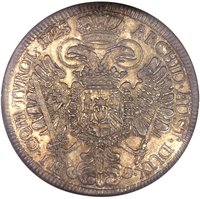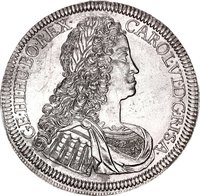
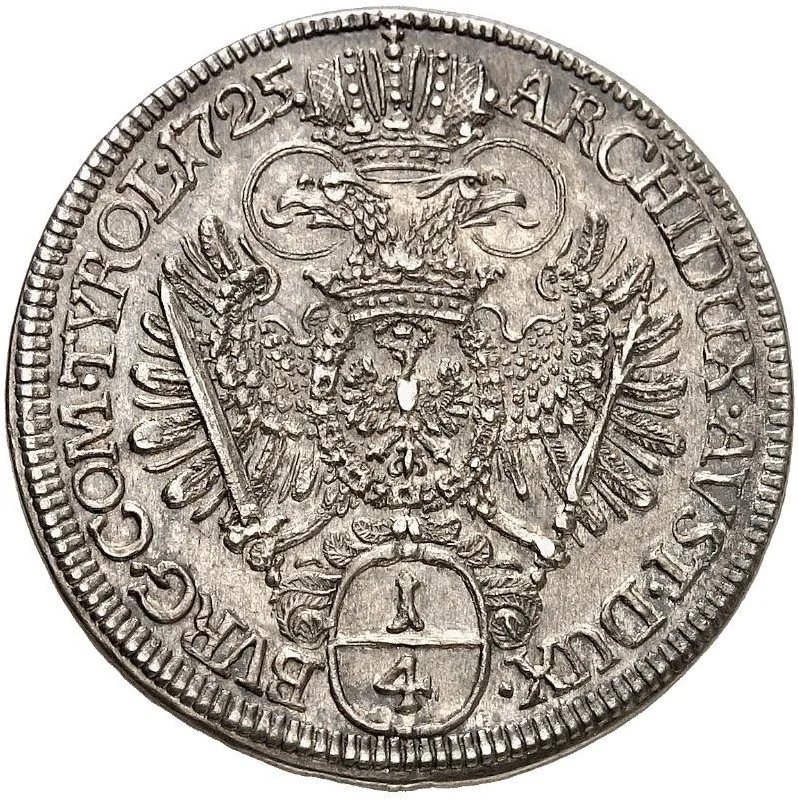


In 1725, the County of Tyrol, a hereditary possession of the Habsburg Monarchy, operated within a complex and fragmented monetary landscape typical of the Holy Roman Empire. The region did not have a uniform, sovereign currency but was a zone of circulation for multiple coinages. The official basis was the
Tyrolean Konventionsfuß, a silver standard tied to the wider
South German Konventionsmünzfuß established in 1753 (retroactively defining earlier practices), which valued 10 guilders (
Gulden) from a Cologne mark of fine silver. However, in daily practice, this standard competed with a plethora of physical coins: older Tyrolean issues, coins from other German states, and particularly strong influence from neighbouring Italian mints, especially Venetian ducats and soldi, due to Tyrol's vital trade routes over the Brenner Pass.
This multiplicity led to chronic problems of currency debasement and confusion. Local authorities, the Habsburg state, and even foreign entities issued coins of varying silver content, leading to Gresham's Law in action where "bad" debased money drove "good" full-weight coinage out of circulation. The situation was exacerbated by the financial demands of the Habsburg state, which was engaged in major conflicts like the War of the Spanish Succession (ended 1714) and preparing for future wars, creating pressure to manipulate coinage for seigniorage profit. For merchants and peasants alike, this meant uncertainty in transactions, constant need for money changers, and the risk of receiving payment in depreciated currency.
Consequently, the year 1725 fell within a period of ongoing monetary adjustment and struggle for control. While not the year of a major reform, it was part of the decades-long prelude to the more standardized
Convention Monetary System of 1753. The economic health of Tyrol, dependent on mining, transit trade, and agriculture, was therefore hindered by this unstable and inefficient monetary environment, prompting local estates and the central government in Vienna to seek greater standardization, a goal that would only be partially achieved later in the 18th century.