

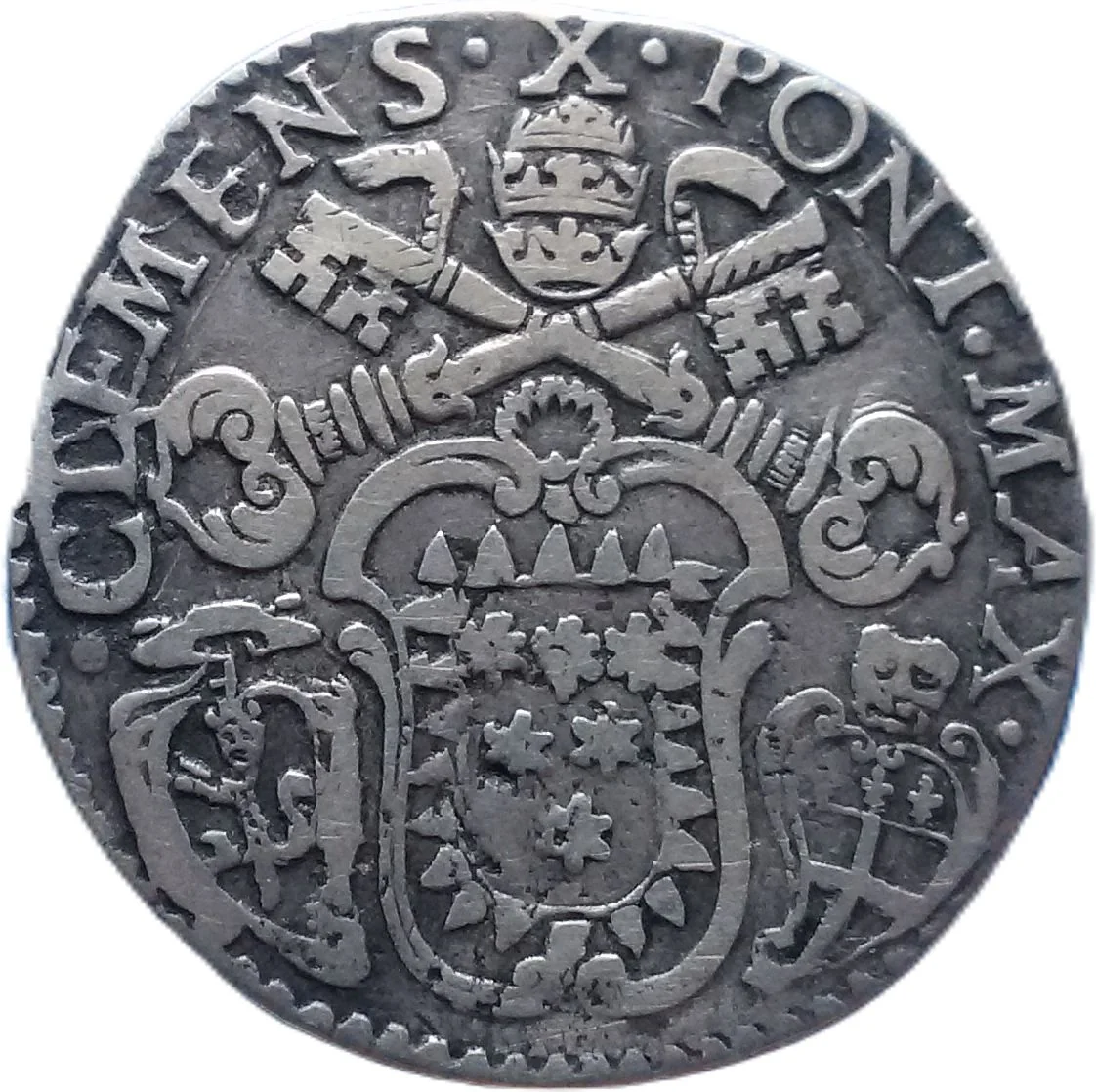
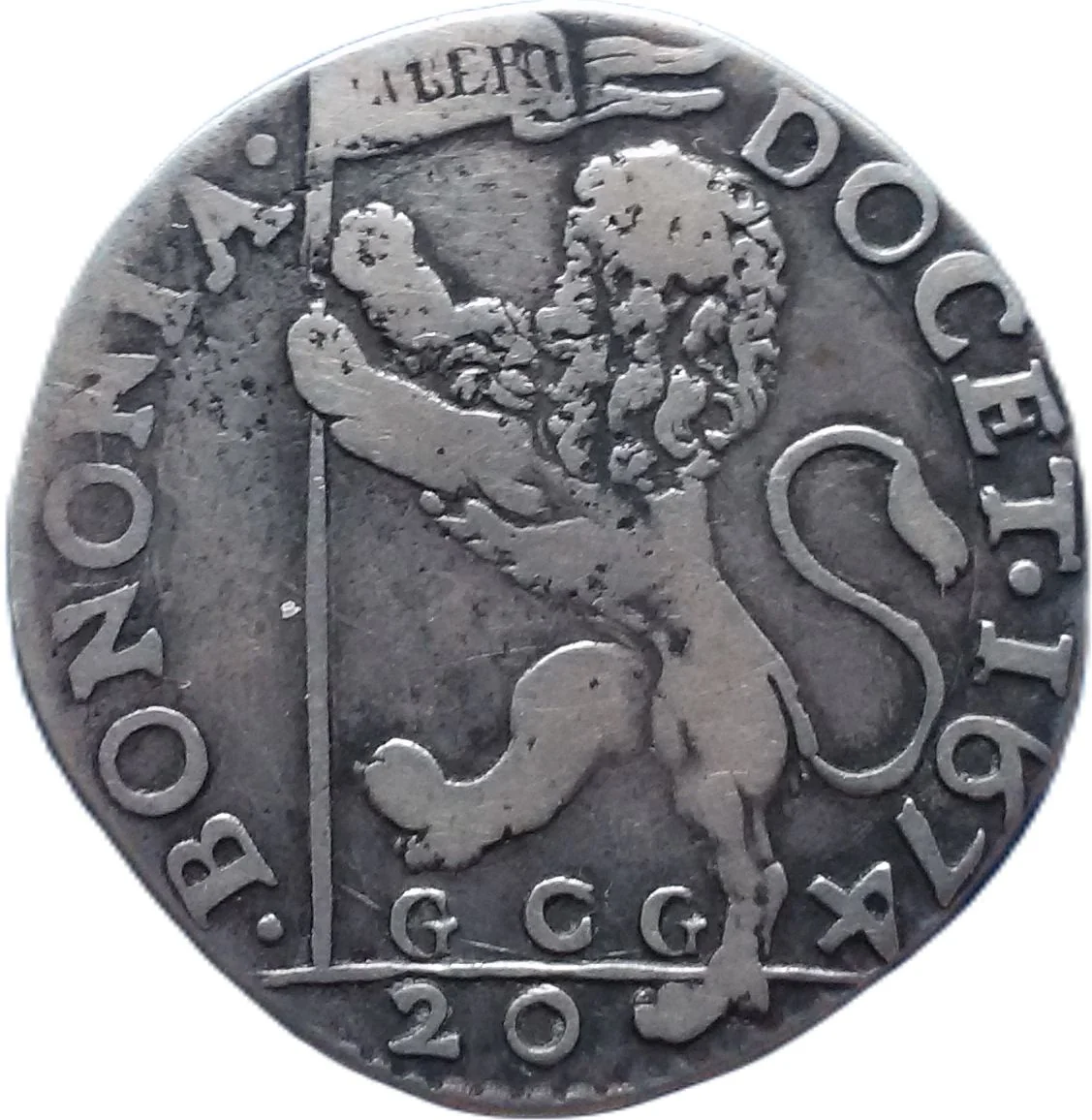
20 bolognini – Bologna
Add to wishlist
Italy
Obverse
Reverse
Description:
Lion rampant left, holding a banner inscribed "LIBERT."
Inscription:
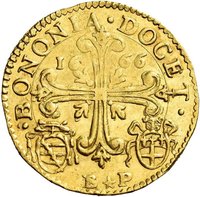
· BONONIA · DOCET · 1674
GCG
20
GCG
20
Script: Latin
Edge
Plain
Mints
| Name | Mark |
|---|---|
| Bologna | — |
Mintings
| Year | Mint Mark | Mintage | Quality | Collection |
|---|---|---|---|---|
| 1673 | — | — | ||
| 1674 | — | — |
Historical background
In 1673, Bologna operated within the complex monetary landscape of the Papal States, to which it belonged. The city’s commerce relied on a bimetallic system of gold scudi and silver paoli, but the reality was one of profound instability. Decades of debasement by various Italian mints and a flood of underweight foreign coins, particularly Spanish silver, had created chronic confusion. Shopkeepers and merchants needed constant, published tariffe (exchange lists) to navigate the daily fluctuating values between dozens of circulating coins, from the local bolognino to the Venetian ducat. This monetary chaos stifled trade, bred distrust in everyday transactions, and effectively taxed the populace through uncertainty.
The situation was exacerbated by Bologna’s unique political status as a papal legation with lingering communal institutions. While the Pope’s authorities in Rome set broad monetary policy, local Senate officials grappled with enforcement. A key problem was the aggio, the premium for "good" undebased money over the officially debased coinage. This premium was volatile and manipulated by money changers (banchieri), who played an essential yet resented role as the daily arbiters of coin quality. Consequently, prices were often quoted in the stable imaginary lira di bolognini, a unit of account, while physical payment involved arduous negotiation over the actual metal content of the coins tendered.
By 1673, pressures for reform were mounting. The monetary disorder hindered the city’s prosperous silk and textile trades, which required reliable credit and stable contracts. While a comprehensive solution would not arrive until later papal reforms, the year fell within a period of intense local scrutiny and complaint. The Bolognese Senate likely engaged in ongoing, frustrating correspondence with Rome, seeking the authority to cleanse the currency circulation or standardize rates, all while citizens and businesses devised their own pragmatic, if inefficient, methods to cope with a marketplace where the value of money itself was a daily gamble.
The situation was exacerbated by Bologna’s unique political status as a papal legation with lingering communal institutions. While the Pope’s authorities in Rome set broad monetary policy, local Senate officials grappled with enforcement. A key problem was the aggio, the premium for "good" undebased money over the officially debased coinage. This premium was volatile and manipulated by money changers (banchieri), who played an essential yet resented role as the daily arbiters of coin quality. Consequently, prices were often quoted in the stable imaginary lira di bolognini, a unit of account, while physical payment involved arduous negotiation over the actual metal content of the coins tendered.
By 1673, pressures for reform were mounting. The monetary disorder hindered the city’s prosperous silk and textile trades, which required reliable credit and stable contracts. While a comprehensive solution would not arrive until later papal reforms, the year fell within a period of intense local scrutiny and complaint. The Bolognese Senate likely engaged in ongoing, frustrating correspondence with Rome, seeking the authority to cleanse the currency circulation or standardize rates, all while citizens and businesses devised their own pragmatic, if inefficient, methods to cope with a marketplace where the value of money itself was a daily gamble.
✨ Legendary