

2 Bolognini – Bologna
Italy
Context
Years: 1676–1689
Country: Italy 
Issuer: Bologna
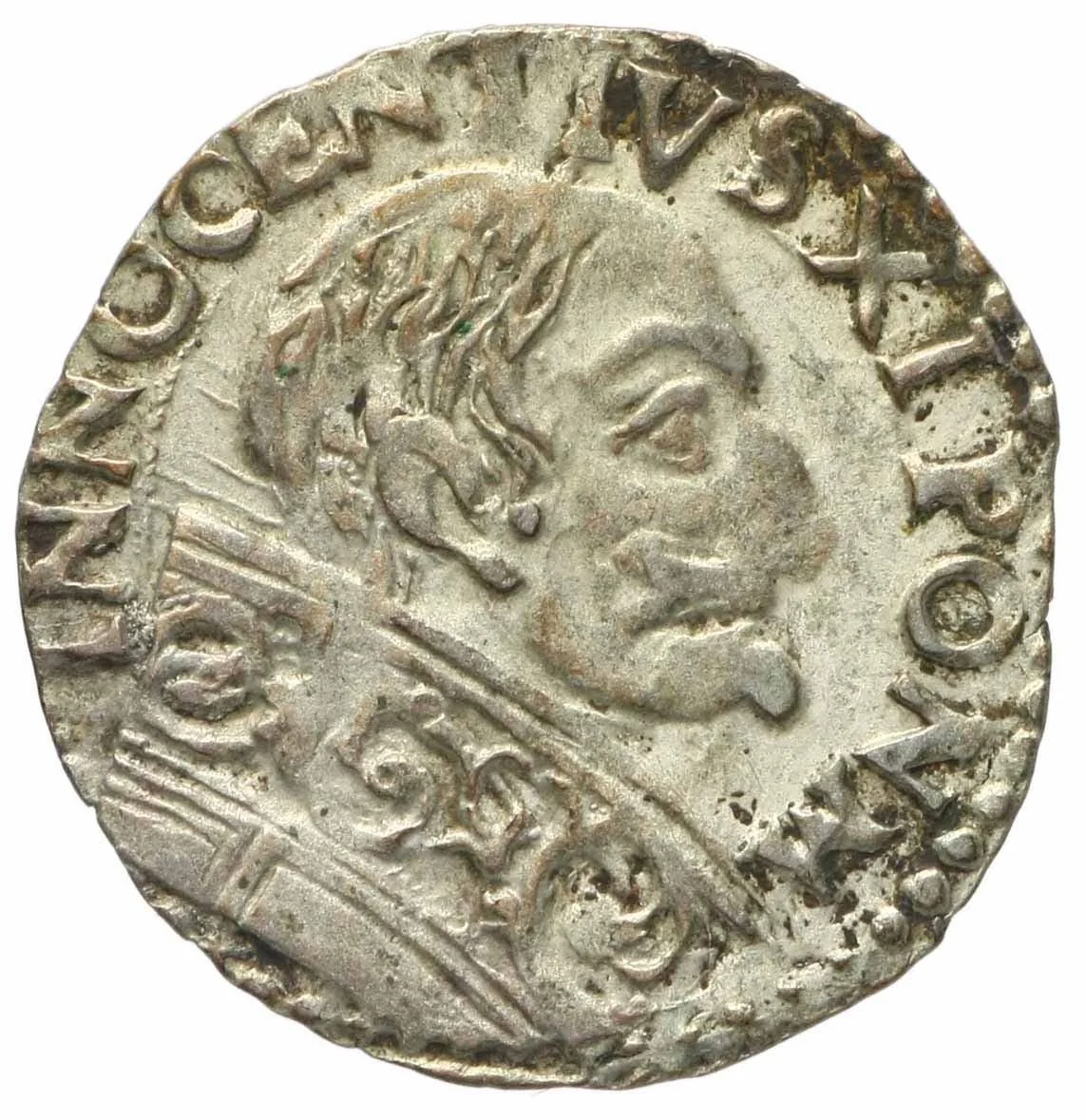
Ruler: Innocent XI
Currency:
(1534—1835)
Demonetized: Yes
Material
References
KM: #Click to copy to clipboard89
Numista: #320694
Obverse
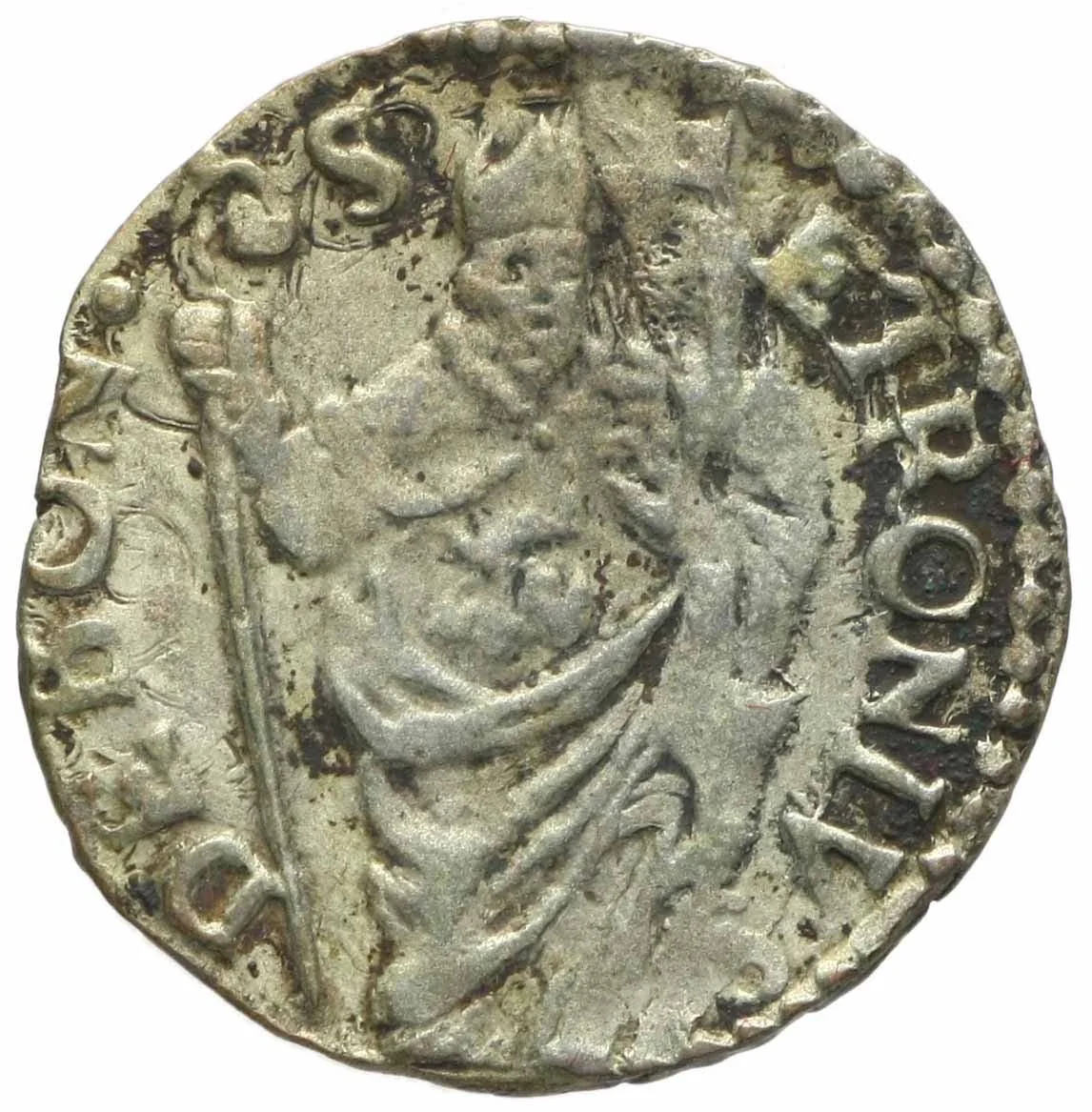
Reverse
Description:
Saint Petronius holding a pastoral scepter and a model of the city.
Inscription:
S PETRONIVS DE BON •
Script: Latin
Edge
Plain
Categories
| Mustache/Beard |
| Person> Monarch |
| Person> Religious figure |
| Geography> Town |
| Religion> Religious objects |
Mints
| Name | Mark |
|---|---|
| Bologna | — |
Mintings
| Year | Mint Mark | Mintage | Quality | Collection |
|---|---|---|---|---|
| — | — | — |
Historical background
In 1676, Bologna operated within the complex monetary landscape of the Papal States, to which it belonged. The city did not mint its own coinage but used a mix of currencies, primarily the Papal scudo and the Bolognese lira. The lira was a unit of account, not a physical coin, used for local bookkeeping, wages, and smaller transactions. Its value was pegged to the silver-based Papal scudo, with one scudo officially equaling roughly 3.4 lire. However, this relationship was often unstable due to the fluctuating silver content in coins from various Italian and foreign states that circulated freely.
The practical reality was one of chronic confusion and debasement. Alongside Papal issues, coins from other Italian mints, Spanish silver reales, and even clipped or worn older coins all circulated simultaneously. This led to frequent "cries" (grida) from the city's magistrates, attempting to fix the value of these myriad coins in terms of the Bolognese lira. The system was vulnerable to speculation, as traders and money-changers exploited differences between the official exchange rates and the actual metal content, creating persistent inflationary pressures on everyday prices.
This monetary instability reflected broader economic strains. Bologna's traditional textile industries were in decline, and its economy was increasingly reliant on agriculture and papal administration. The difficulty in establishing a reliable medium of exchange hampered commerce and created social tension, as artisans and laborers paid in devalued coin found their purchasing power eroded. Thus, the currency situation of 1676 was not merely a technical financial issue but a symptom of Bologna's struggle to maintain economic vitality within the shifting political and economic dynamics of late 17th-century Italy.
The practical reality was one of chronic confusion and debasement. Alongside Papal issues, coins from other Italian mints, Spanish silver reales, and even clipped or worn older coins all circulated simultaneously. This led to frequent "cries" (grida) from the city's magistrates, attempting to fix the value of these myriad coins in terms of the Bolognese lira. The system was vulnerable to speculation, as traders and money-changers exploited differences between the official exchange rates and the actual metal content, creating persistent inflationary pressures on everyday prices.
This monetary instability reflected broader economic strains. Bologna's traditional textile industries were in decline, and its economy was increasingly reliant on agriculture and papal administration. The difficulty in establishing a reliable medium of exchange hampered commerce and created social tension, as artisans and laborers paid in devalued coin found their purchasing power eroded. Thus, the currency situation of 1676 was not merely a technical financial issue but a symptom of Bologna's struggle to maintain economic vitality within the shifting political and economic dynamics of late 17th-century Italy.
✨ Legendary