

4 Reales – Spain
Spain
Context

Material
Diameter: 30 mm
Weight: 13 g
Silver weight: 12.10 g
Thickness: 2 mm
Shape: Irregular round
Composition: 93.1% Silver
Magnetic: No
Technique: Hammered
References
KM: #Click to copy to clipboard36
Numista: #111684
Value
Bullion value: $34.07
Obverse
Description:
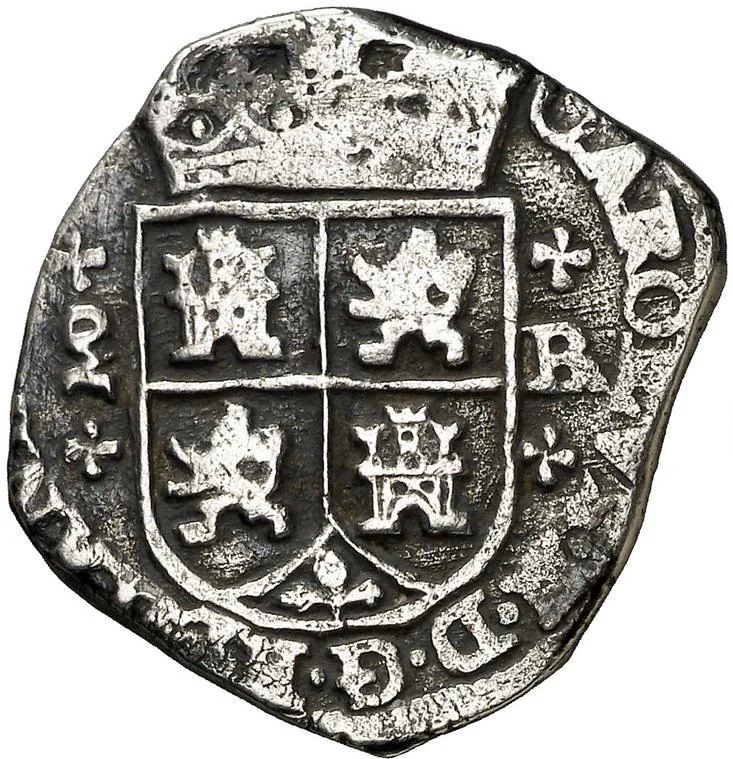
Royal arms of Spain.
Inscription:
CAROLVS · II · D · G · HISPANIAR · REX
MD BR
MD BR
Script: Latin
Reverse
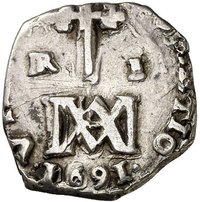
Description:
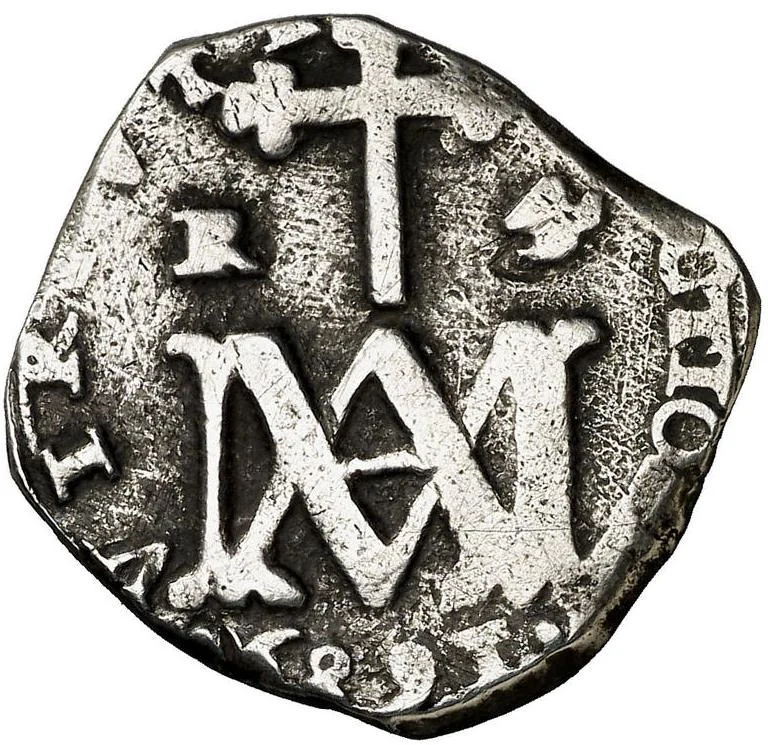
MA monogram with trilobed cross above.
Inscription:
VIRTVTE PROTECTIONE 1689
R 4
MA
R 4
MA
Script: Latin
Edge
Mints
| Name | Mark |
|---|---|
| Royal Mint of Madrid | (MD) |
| Royal Mint of Seville | S |
Mintings
| Year | Mint Mark | Mintage | Quality | Collection |
|---|---|---|---|---|
| 1689 | MDBR | — | ||
| 1689 | SM | — | ||
| 1690 | MDBR | — | ||
| 1692 | SM | — | ||
| 1693 | MDBR | — |
Historical background
In 1689, Spain's currency system was in a state of profound crisis, a direct consequence of decades of economic mismanagement and the relentless financial demands of its global empire. The primary issue was the severe debasement of the ubiquitous vellón coinage—copper or billon (copper with a trace of silver) money used for everyday transactions. Successive governments, particularly under Philip IV, had repeatedly manipulated the vellón's face value to generate short-term revenue for funding wars, especially the costly conflicts like the Thirty Years' War and the ongoing struggles against France. This created a complex and unstable system where the intrinsic metal value of coins was far lower than their nominal value, leading to rampant inflation, public mistrust, and economic distortion.
The situation was further complicated by a chronic shortage of high-value silver and gold currency, such as the real de a ocho or escudo. These precious coins were either hoarded domestically or, more significantly, drained from the kingdom to pay for foreign military campaigns and to service debts to international bankers. This created a damaging monetary duality: a flooded, depreciating currency for the common people and a scarce, sound currency for international trade and state finance. Attempts at reform, like the drastic Mendizábal devaluation of 1680, had provided only temporary relief and were often followed by new debasements, eroding confidence in the Crown's financial authority.
Therefore, in 1689, early in the reign of the ineffectual Charles II, the monetary landscape was one of confusion and inflationary pressure. Prices were unstable, trade was hampered, and the Crown's ability to raise revenue was severely compromised. This financial weakness directly limited Spain's strategic capabilities in the Nine Years' War (1688-1697), where it faced a powerful France. The currency crisis was both a symptom and a cause of Spain's broader 17th-century decline, reflecting a state that was fiscally exhausted and struggling to maintain its imperial commitments with a broken economic foundation.
The situation was further complicated by a chronic shortage of high-value silver and gold currency, such as the real de a ocho or escudo. These precious coins were either hoarded domestically or, more significantly, drained from the kingdom to pay for foreign military campaigns and to service debts to international bankers. This created a damaging monetary duality: a flooded, depreciating currency for the common people and a scarce, sound currency for international trade and state finance. Attempts at reform, like the drastic Mendizábal devaluation of 1680, had provided only temporary relief and were often followed by new debasements, eroding confidence in the Crown's financial authority.
Therefore, in 1689, early in the reign of the ineffectual Charles II, the monetary landscape was one of confusion and inflationary pressure. Prices were unstable, trade was hampered, and the Crown's ability to raise revenue was severely compromised. This financial weakness directly limited Spain's strategic capabilities in the Nine Years' War (1688-1697), where it faced a powerful France. The currency crisis was both a symptom and a cause of Spain's broader 17th-century decline, reflecting a state that was fiscally exhausted and struggling to maintain its imperial commitments with a broken economic foundation.

✨ Legendary