

1 Real – Spain
Spain

Material
Weight: 3.4 g
Silver weight: 3.17 g
Shape: Irregular round
Composition: 93.1% Silver
Magnetic: No
Technique: Milled
References
KM: #Click to copy to clipboard21
Numista: #111655
Value
Bullion value: $9.20
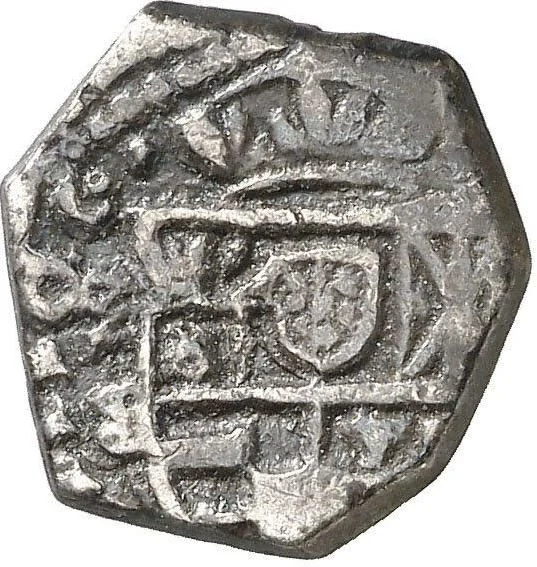
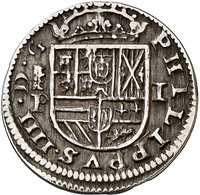
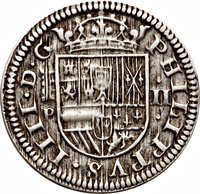
Obverse
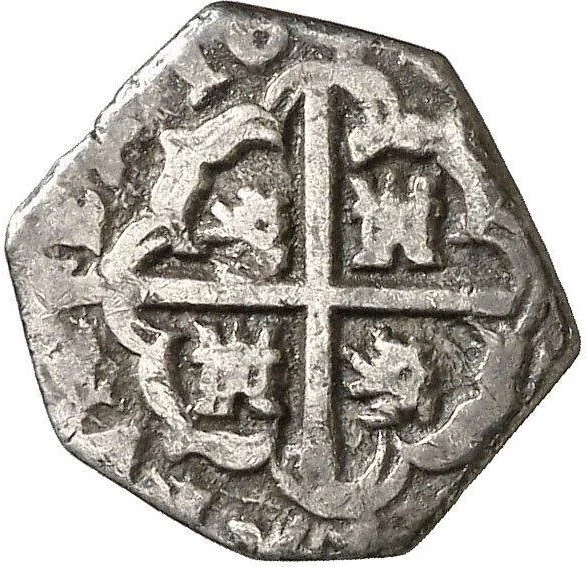
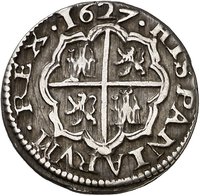
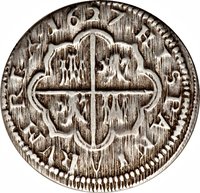
Reverse
Description:
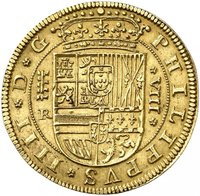
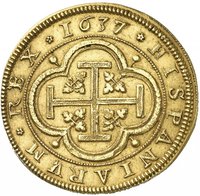
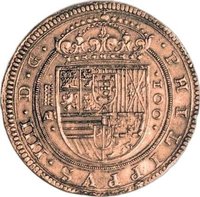
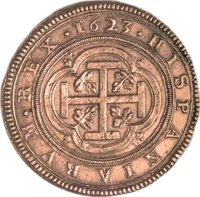
Castile and León's coat of arms in an octolobe.
Inscription:
HISPANIARVM REX 1642
Script: Latin
Edge
Mints
| Name | Mark |
|---|---|
| Royal Mint of Madrid | (MD) |
Mintings
| Year | Mint Mark | Mintage | Quality | Collection |
|---|---|---|---|---|
| 1627 | MDV | — | ||
| 1628 | MDV | — | ||
| 1642 | MDB | — | ||
| 1651 | MDA | — |
Historical background
In 1627, the Spanish monarchy under Philip IV faced a severe financial crisis that was both a cause and a symptom of the broader "General Crisis" of the seventeenth century. Decades of relentless warfare—from the ongoing Eighty Years' War in the Netherlands to conflicts with England and France—had drained the royal treasury. The Crown's primary response for years had been to borrow vast sums from bankers (asientos) and then suspend payments, as it did in the 1607 bankruptcy. By 1627, the state was again insolvent, leading to another formal decree of bankruptcy (the third of Philip's reign). This act froze payments to Genoese bankers, the monarchy's chief creditors, shattering credit and forcing a desperate search for new revenue and monetary manipulation.
The currency situation was dire, characterized by a vicious cycle of debasement and inflation. To generate immediate cash, the Crown had repeatedly authorized the minting of vast quantities of low-value copper coinage, the vellón. Initially containing some silver, by the 1620s it was pure copper, yet it was legally mandated to be accepted at face value equal to silver. This flood of intrinsically worthless coinage, combined with the arrival of American silver in smaller quantities, led to rampant inflation and Gresham's Law in action: good silver coins were hoarded or exported, leaving the economy awash in devalued copper. Prices soared, causing immense hardship for the populace, whose wages did not keep pace.
The government's attempted solution in 1627-28, engineered by the Count-Duke of Olivares, was the radical "arbitrista" scheme known as the Medio General. This involved the creation of a new copper currency, the moneda de vellón ligado, and the forced conversion of state debt into long-term, low-interest bonds secured against specific future revenues. While temporarily stabilizing the crown's relationship with its bankers, it did not address the root cause of the copper glut. The monetary chaos persisted, eroding public trust, disrupting commerce, and contributing to the social unrest that would culminate in the revolts of Catalonia and Portugal in the 1640s, ultimately threatening the very integrity of the Spanish Habsburg empire.
The currency situation was dire, characterized by a vicious cycle of debasement and inflation. To generate immediate cash, the Crown had repeatedly authorized the minting of vast quantities of low-value copper coinage, the vellón. Initially containing some silver, by the 1620s it was pure copper, yet it was legally mandated to be accepted at face value equal to silver. This flood of intrinsically worthless coinage, combined with the arrival of American silver in smaller quantities, led to rampant inflation and Gresham's Law in action: good silver coins were hoarded or exported, leaving the economy awash in devalued copper. Prices soared, causing immense hardship for the populace, whose wages did not keep pace.
The government's attempted solution in 1627-28, engineered by the Count-Duke of Olivares, was the radical "arbitrista" scheme known as the Medio General. This involved the creation of a new copper currency, the moneda de vellón ligado, and the forced conversion of state debt into long-term, low-interest bonds secured against specific future revenues. While temporarily stabilizing the crown's relationship with its bankers, it did not address the root cause of the copper glut. The monetary chaos persisted, eroding public trust, disrupting commerce, and contributing to the social unrest that would culminate in the revolts of Catalonia and Portugal in the 1640s, ultimately threatening the very integrity of the Spanish Habsburg empire.
Series: 1627 Spain circulation coins
✨ Legendary