

Spain
Context

Material
Diameter: 71 mm
Weight: 340 g
Gold weight: 311.78 g
Thickness: 5 mm
Shape: Round
Composition: 91.7% Gold
Magnetic: No
Technique: Roller milled
References
KM: #Click to copy to clipboard84
Numista: #111218
Value
Bullion value: $52004.26
Obverse
Description:
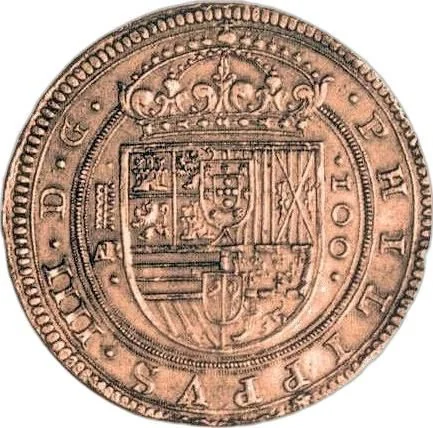
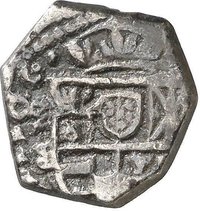
Spanish coat of arms with Portuguese arms, five-arched mint mark.
Inscription:
· PHILIPPVS · IIII · D · G ·
· AR ·
· 100 ·
· AR ·
· 100 ·
Script: Latin
Reverse
Description:
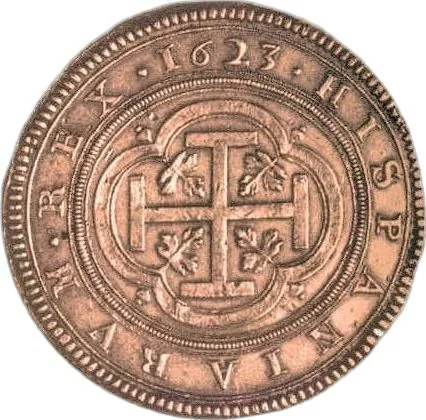
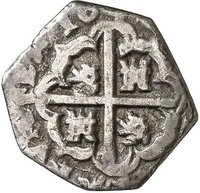
Jerusalem cross within a quatrefoil.
Inscription:
· 1623 · HISPANIARVM · REX
Script: Latin
Edge
Categories
| Symbol> Cross |
| Symbols> Coat of Arms |
Mints
| Name | Mark |
|---|---|
| Royal Mint of Segovia | — |
Mintings
| Year | Mint Mark | Mintage | Quality | Collection |
|---|---|---|---|---|
| 1623 | AR | 1 |
Historical background
In 1623, the Spanish monarchy under Philip IV faced a deepening monetary crisis rooted in decades of fiscal overextension. The vast expenditures of the Habsburg Empire, funding endless wars across Europe and the costly maintenance of its global empire, were financed through heavy borrowing and the exploitation of New World silver. However, silver imports from the Americas had begun a steady decline after their peak around 1600, while debt obligations soared. This created a severe structural deficit, forcing the crown to repeatedly resort to currency manipulation to meet its obligations, eroding economic stability.
The primary manifestation of this crisis was the severe inflation and the proliferation of debased coinage. The most notorious was the vellón currency—coins minted from a base alloy of copper with only a trace of silver. The crown had increasingly issued vast quantities of pure copper vellón with no precious metal content, effectively creating fiduciary money. This led to a classic "bad money drives out good" scenario (Gresham's Law), where full-weight silver coins were hoarded or exported, leaving the economy awash in depreciating copper. Prices skyrocketed, public trust in the currency collapsed, and economic activity was severely disrupted.
Confronted with this turmoil, the government of the Count-Duke of Olivares enacted a drastic monetary reform in 1623. This policy aimed to restore confidence by suddenly demonetizing the pure copper vellón and reintroducing a new, slightly silver-alloyed vellón coin. However, the move was poorly planned and executed, causing immediate hardship. It failed to address the crown's underlying debt and deficit spending, and the temporary stabilization was short-lived. The reform of 1623 thus proved to be merely a desperate and unsuccessful intervention in a prolonged crisis that would continue to plague Spain throughout the 17th century, emblematic of the empire's broader political and economic decline.
The primary manifestation of this crisis was the severe inflation and the proliferation of debased coinage. The most notorious was the vellón currency—coins minted from a base alloy of copper with only a trace of silver. The crown had increasingly issued vast quantities of pure copper vellón with no precious metal content, effectively creating fiduciary money. This led to a classic "bad money drives out good" scenario (Gresham's Law), where full-weight silver coins were hoarded or exported, leaving the economy awash in depreciating copper. Prices skyrocketed, public trust in the currency collapsed, and economic activity was severely disrupted.
Confronted with this turmoil, the government of the Count-Duke of Olivares enacted a drastic monetary reform in 1623. This policy aimed to restore confidence by suddenly demonetizing the pure copper vellón and reintroducing a new, slightly silver-alloyed vellón coin. However, the move was poorly planned and executed, causing immediate hardship. It failed to address the crown's underlying debt and deficit spending, and the temporary stabilization was short-lived. The reform of 1623 thus proved to be merely a desperate and unsuccessful intervention in a prolonged crisis that would continue to plague Spain throughout the 17th century, emblematic of the empire's broader political and economic decline.
✨ Legendary