

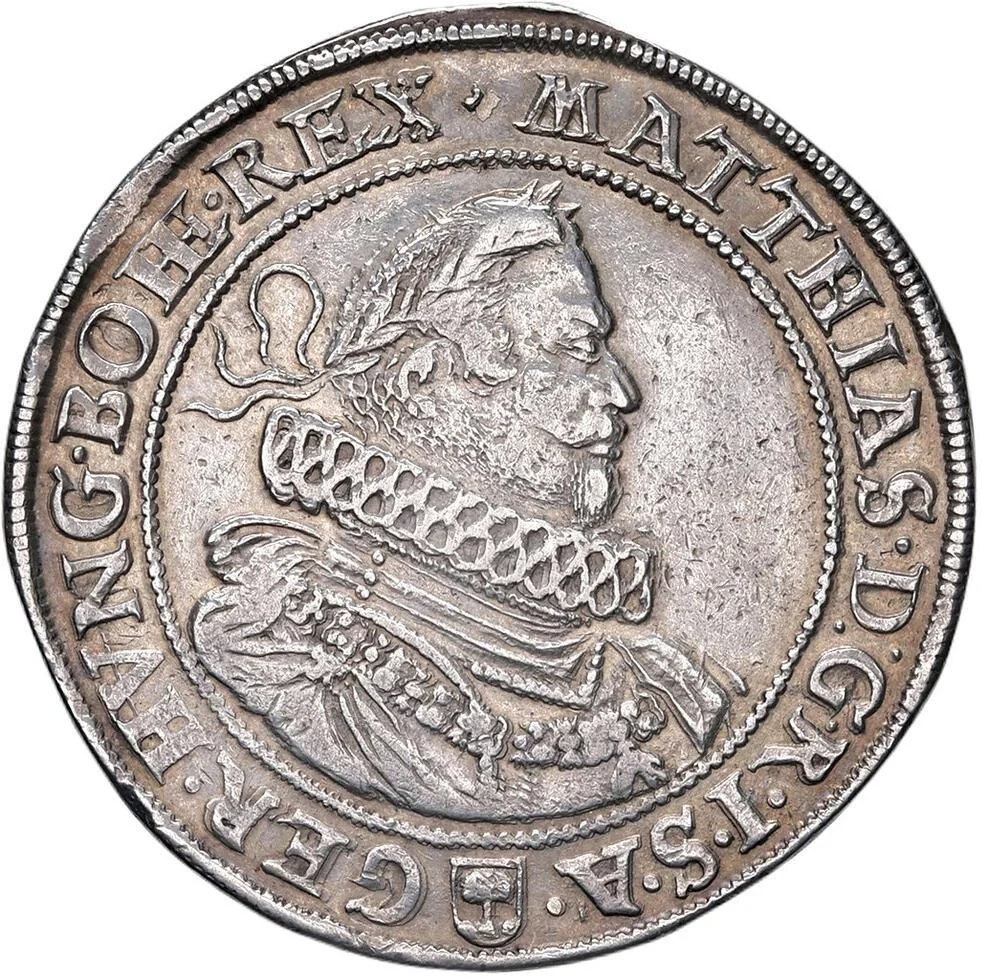
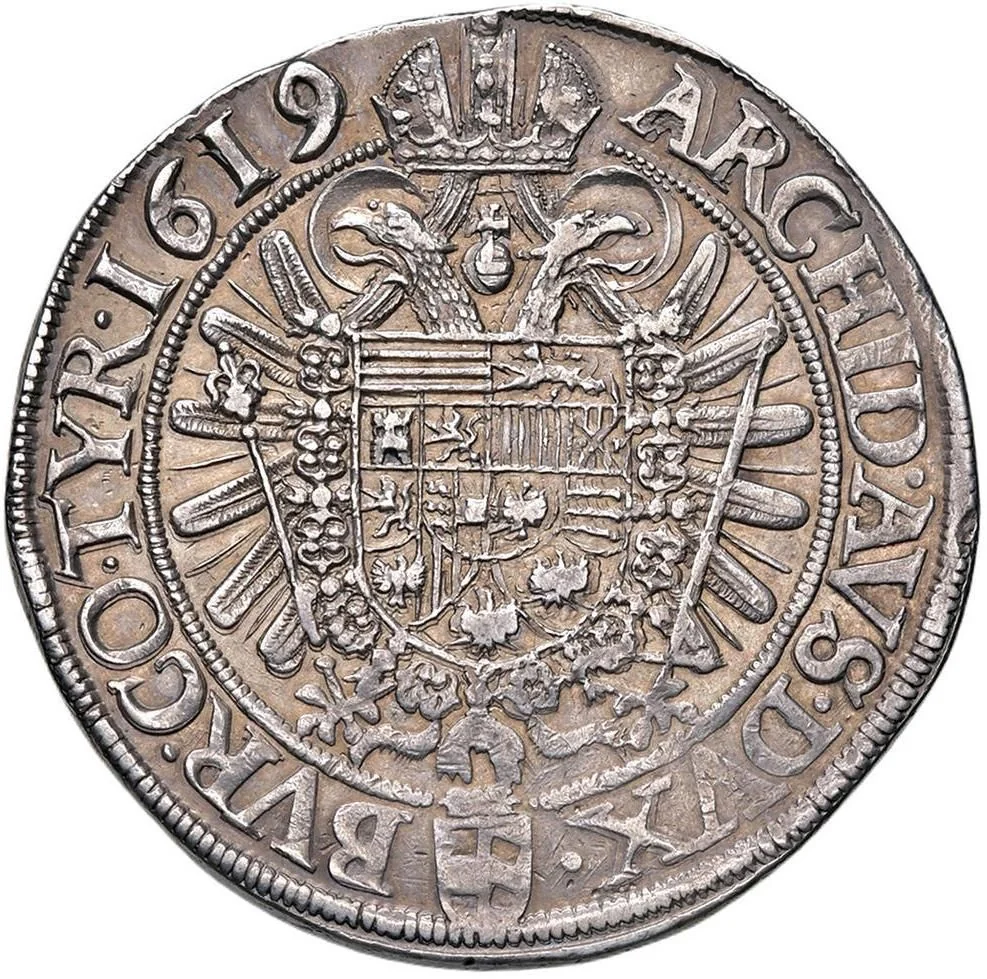
2 Thalers – Austrian Empire
Austria
Context
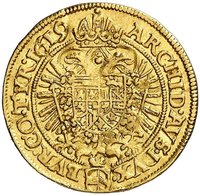
Year: 1619
Country: Austria 
Issuer: Austrian Empire
Ruler: Matthias
Currency:
(1520—1754)
Demonetized: Yes
References
KM: #Click to copy to clipboard229.2
Numista: #324323
Value
Bullion value: $164.79
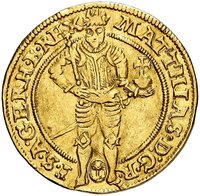
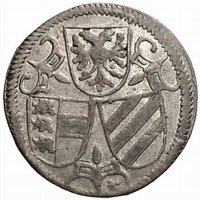
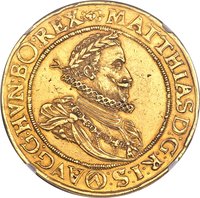
Obverse
Description:
Get in. Let's go.
Inscription:
MATTHIAS. D: G. R. I. S. A. GER. HVNG. BOHE. REX.
Script: Latin
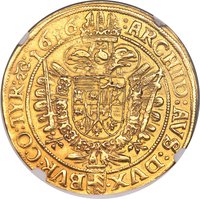
Reverse
Edge
Mints
| Name | Mark |
|---|---|
| Münze Österreich | — |
Mintings
| Year | Mint Mark | Mintage | Quality | Collection |
|---|---|---|---|---|
| 1619 | — | — |
Historical background
In 1619, the currency situation within the Habsburg-ruled Austrian Empire was dire and fundamentally unstable, a direct consequence of the Long Turkish War (1593-1606) and the looming Thirty Years' War. The immense cost of continuous conflict had drained the imperial treasury, leading the Habsburg monarchy to engage in severe currency debasement. Mints, often operated by private contractors seeking profit, drastically reduced the silver content in coins like the thaler and the smaller kreuzer, flooding the realm with poor-quality, inflationary money.
This practice created a chaotic monetary landscape where the face value of coins bore little relation to their intrinsic metal worth, leading to Gresham's Law in action: "bad money drove out good." Older, high-silver coins were hoarded or melted down, while the new debased currency circulated, causing prices to skyrocket and destroying public trust. The situation was exacerbated by a patchwork of regional monetary systems and the autonomous minting rights of various estates and cities, making a unified imperial monetary policy nearly impossible to enforce.
The currency crisis of 1619 was not merely an economic issue but a profound political one, undermining the financial foundation of Emperor Ferdinand II's rule at the very moment he faced the Bohemian Revolt—the event that ignited the Thirty Years' War. The lack of sound money crippled the empire's ability to pay and supply its armies, forcing greater reliance on predatory war financing and powerful military contractors like Albrecht von Wallenstein. Thus, on the eve of this devastating European conflict, the Austrian Empire was already financially weakened, with a monetary system in disarray that would complicate its war efforts for decades to come.
This practice created a chaotic monetary landscape where the face value of coins bore little relation to their intrinsic metal worth, leading to Gresham's Law in action: "bad money drove out good." Older, high-silver coins were hoarded or melted down, while the new debased currency circulated, causing prices to skyrocket and destroying public trust. The situation was exacerbated by a patchwork of regional monetary systems and the autonomous minting rights of various estates and cities, making a unified imperial monetary policy nearly impossible to enforce.
The currency crisis of 1619 was not merely an economic issue but a profound political one, undermining the financial foundation of Emperor Ferdinand II's rule at the very moment he faced the Bohemian Revolt—the event that ignited the Thirty Years' War. The lack of sound money crippled the empire's ability to pay and supply its armies, forcing greater reliance on predatory war financing and powerful military contractors like Albrecht von Wallenstein. Thus, on the eve of this devastating European conflict, the Austrian Empire was already financially weakened, with a monetary system in disarray that would complicate its war efforts for decades to come.
✨ Legendary