

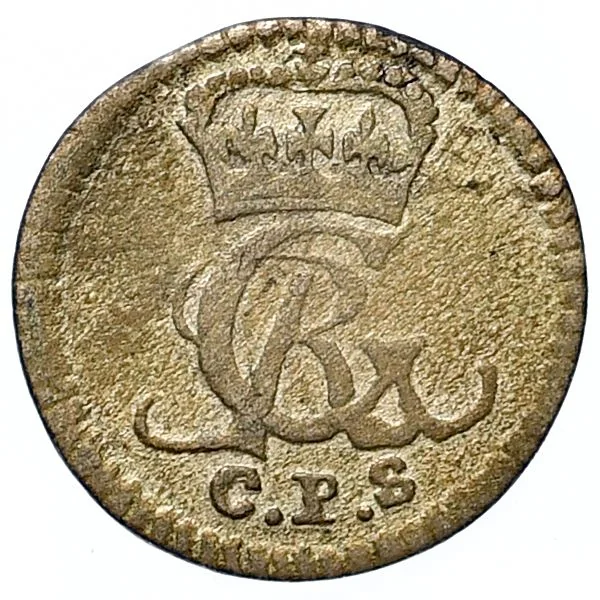
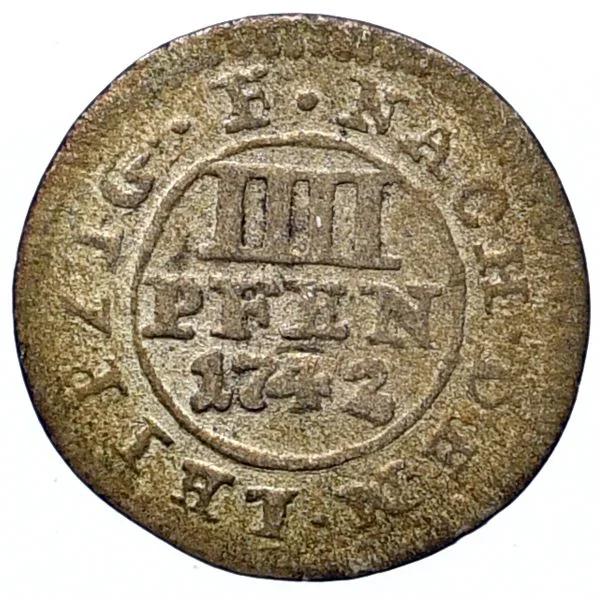
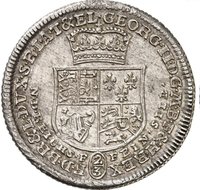
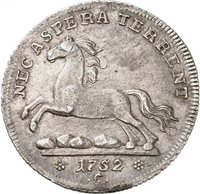
4 Pfennigs – Brunswick-Lüneburg-Calenberg-Hannover
Germany

Mints
| Name | Mark |
|---|---|
| Clausthal | — |
Mintings
| Year | Mint Mark | Mintage | Quality | Collection |
|---|---|---|---|---|
| 1739 | — | — | ||
| 1740 | — | — | ||
| 1741 | — | — | ||
| 1742 | — | — | ||
| 1743 | — | — | ||
| 1744 | — | — | ||
| 1745 | — | — | ||
| 1754 | — | — | ||
| 1755 | — | — | ||
| 1759 | — | — |
Historical background
In 1739, the currency situation in the Duchy of Brunswick-Lüneburg, specifically the Principality of Calenberg (with its capital in Hanover), was characterized by significant complexity and instability. The region operated within the fragmented monetary system of the Holy Roman Empire, where numerous states issued their own coinage. Within Brunswick-Lüneburg itself, different sub-principalities often minted separate coins, leading to a circulation of varied domestic and foreign specie, including Reichsthalers, Gute Groschen, and Mariengroschen. The value of these coins was not strictly intrinsic but was set by periodic minting ordinances (Münzedikte), which attempted to fix exchange rates between the multitude of coins in use.
This period was one of particular monetary stress due to the practices of Kippermünze (debased coinage). To finance state expenditures, especially for the ambitious court of Elector George II (who was also King of Great Britain and Ireland), the Hanoverian mints had periodically reduced the silver content in smaller denomination coins. This led to inflation, a loss of public confidence, and the hoarding of older, full-value coins (Gresham's Law in action). Consequently, trade was hampered by uncertainty, as merchants and subjects had to navigate a confusing landscape of coins with fluctuating real value against the official Kurant (accounting) money.
The year 1739 falls within a decade of attempted reform. In 1737/38, a new minting ordinance had been issued to stabilize the system by defining the relationship between the Reichsthaler and the local currency unit, the Gute Groschen. However, the success of these measures was limited. The underlying structural issues—political fragmentation, fiscal pressure, and the influx of foreign coins—persisted. Therefore, in 1739, the monetary environment remained in a fragile state, caught between the lingering effects of past debasements and the ongoing struggle of the Hanoverian government to impose order and credibility on its currency ahead of the more comprehensive reforms that would follow later in the century.
This period was one of particular monetary stress due to the practices of Kippermünze (debased coinage). To finance state expenditures, especially for the ambitious court of Elector George II (who was also King of Great Britain and Ireland), the Hanoverian mints had periodically reduced the silver content in smaller denomination coins. This led to inflation, a loss of public confidence, and the hoarding of older, full-value coins (Gresham's Law in action). Consequently, trade was hampered by uncertainty, as merchants and subjects had to navigate a confusing landscape of coins with fluctuating real value against the official Kurant (accounting) money.
The year 1739 falls within a decade of attempted reform. In 1737/38, a new minting ordinance had been issued to stabilize the system by defining the relationship between the Reichsthaler and the local currency unit, the Gute Groschen. However, the success of these measures was limited. The underlying structural issues—political fragmentation, fiscal pressure, and the influx of foreign coins—persisted. Therefore, in 1739, the monetary environment remained in a fragile state, caught between the lingering effects of past debasements and the ongoing struggle of the Hanoverian government to impose order and credibility on its currency ahead of the more comprehensive reforms that would follow later in the century.
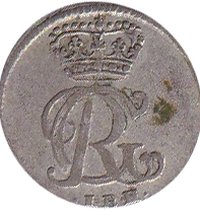
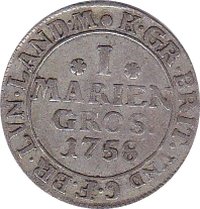
✨ Legendary