

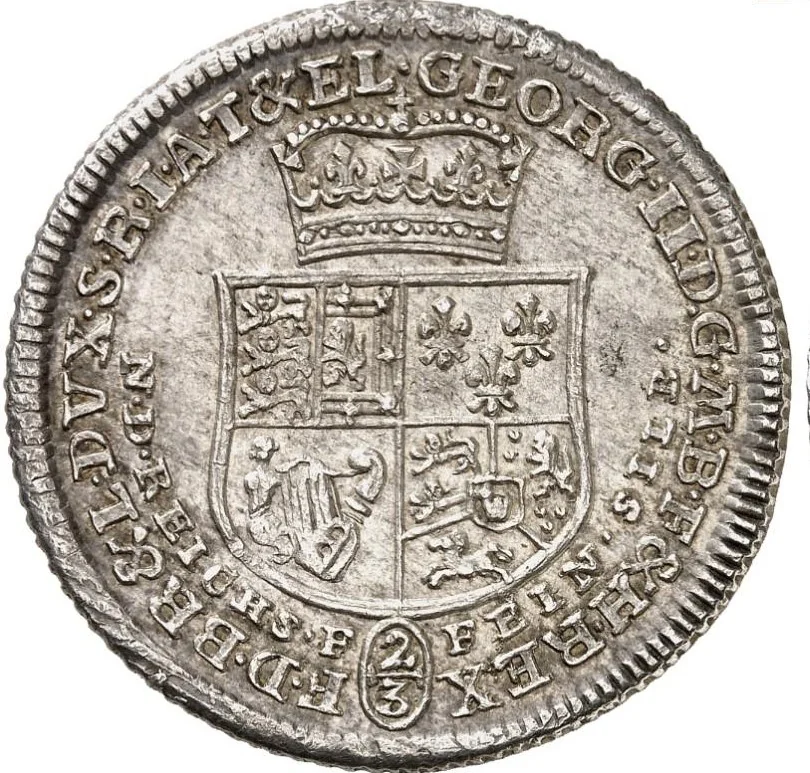
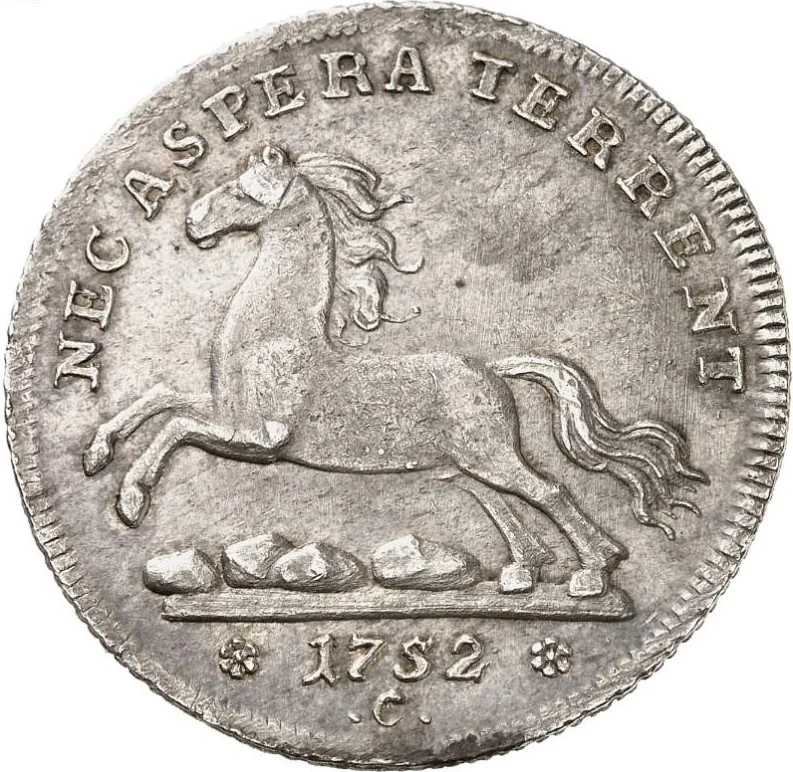

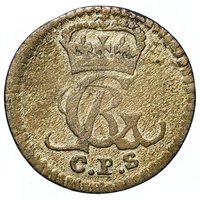
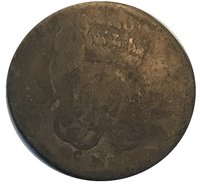
Obverse
Description:
Quartered arms with crown, value beneath.
Inscription:
GEORG • II • D • G • M • B • F & H • REX • - F • D • B • & L • DVX • S • B • I • A • T • & EL •,
N. D. REICHS. F FEIN SILB
2/3
N. D. REICHS. F FEIN SILB
2/3
Script: Latin
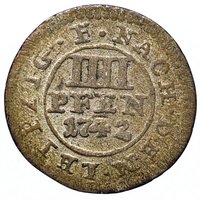
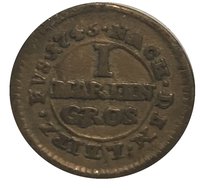
Reverse
Edge
Mints
| Name | Mark |
|---|---|
| Clausthal | — |
Mintings
| Year | Mint Mark | Mintage | Quality | Collection |
|---|---|---|---|---|
| 1740 | — | — | ||
| 1741 | — | — | ||
| 1742 | — | — | ||
| 1743 | — | — | ||
| 1744 | — | — | ||
| 1745 | — | — | ||
| 1746 | — | — | ||
| 1747 | — | — | ||
| 1748 | — | — | ||
| 1749 | — | — | ||
| 1750 | — | — | ||
| 1751 | C | — | ||
| 1752 | C | — | ||
| 1753 | — | — | ||
| 1754 | — | — | ||
| 1755 | — | — | ||
| 1757 | — | — | ||
| 1758 | — | — | ||
| 1759 | — | — | ||
| 1760 | — | — |
Historical background
In 1740, the currency situation in the Duchy of Brunswick-Lüneburg, specifically the Principality of Calenberg (with its capital in Hanover), was characterized by significant complexity and instability. The Holy Roman Empire was a mosaic of over 300 states, each with the right to mint coinage, leading to a chaotic system where hundreds of different coins circulated simultaneously. Within the Electorate of Hanover (elevated in 1692), the monetary system was a confusing blend of local Reichsthaler, Gute Groschen, and Mariengroschen, alongside a heavy influx of foreign coins, particularly from neighboring Brunswick-Wolfenbüttel and various northern German states. This proliferation of currencies of varying intrinsic values made trade cumbersome and fostered widespread counterfeiting and currency debasement.
The root of the problem lay in the Augsburg Imperial Coinage Ordinance of 1559, which was hopelessly outdated and unenforced. While it established a theoretical standard (the Reichsthaler), individual princes routinely violated its provisions by issuing lightweight or debased coinage to profit from seigniorage (the difference between the face value and metal cost), often to finance state debts or military expenditures. For Hanover, which was in personal union with Great Britain since 1714, this created a persistent tension between its local German financial obligations and the more sophisticated fiscal-military system of its British ally. The need to fund administrative costs and maintain its status within the Empire pressured the Hanoverian treasury to occasionally engage in the same manipulative practices it decried in others.
Consequently, by 1740, merchants and the public faced daily uncertainty. The value of money was not fixed; it depended on intricate and fluctuating exchange rates between coin types, their physical condition, and their place of origin. This environment hindered economic development, complicated tax collection, and eroded public trust. The situation was ripe for reform, setting the stage for future attempts at standardization, which would gradually gain momentum later in the 18th century as enlightened administrators sought to impose order on the monetary chaos for the sake of economic efficiency and state revenue.
The root of the problem lay in the Augsburg Imperial Coinage Ordinance of 1559, which was hopelessly outdated and unenforced. While it established a theoretical standard (the Reichsthaler), individual princes routinely violated its provisions by issuing lightweight or debased coinage to profit from seigniorage (the difference between the face value and metal cost), often to finance state debts or military expenditures. For Hanover, which was in personal union with Great Britain since 1714, this created a persistent tension between its local German financial obligations and the more sophisticated fiscal-military system of its British ally. The need to fund administrative costs and maintain its status within the Empire pressured the Hanoverian treasury to occasionally engage in the same manipulative practices it decried in others.
Consequently, by 1740, merchants and the public faced daily uncertainty. The value of money was not fixed; it depended on intricate and fluctuating exchange rates between coin types, their physical condition, and their place of origin. This environment hindered economic development, complicated tax collection, and eroded public trust. The situation was ripe for reform, setting the stage for future attempts at standardization, which would gradually gain momentum later in the 18th century as enlightened administrators sought to impose order on the monetary chaos for the sake of economic efficiency and state revenue.
✨ Legendary