

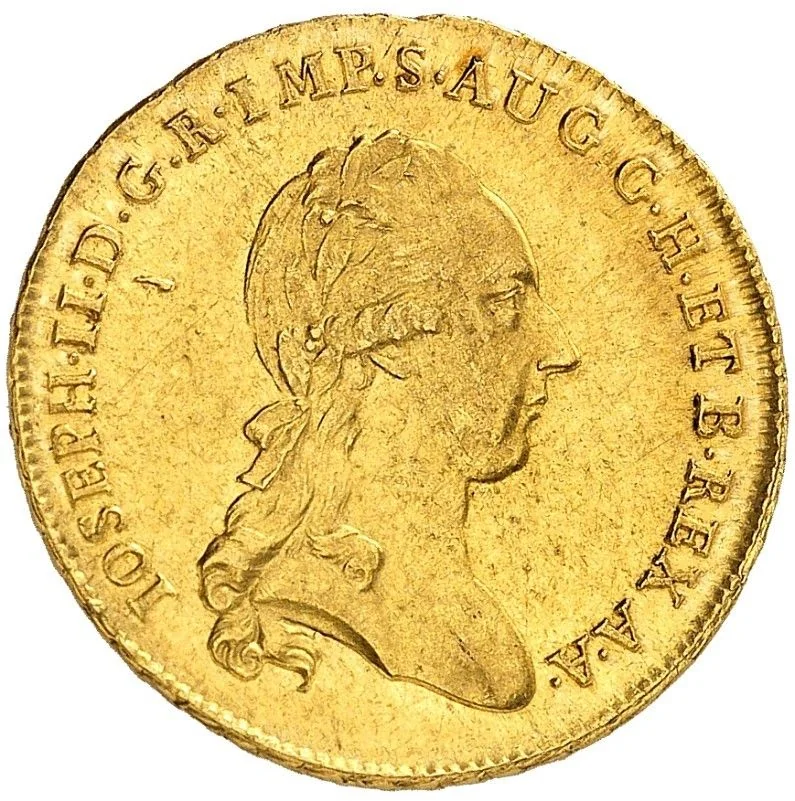
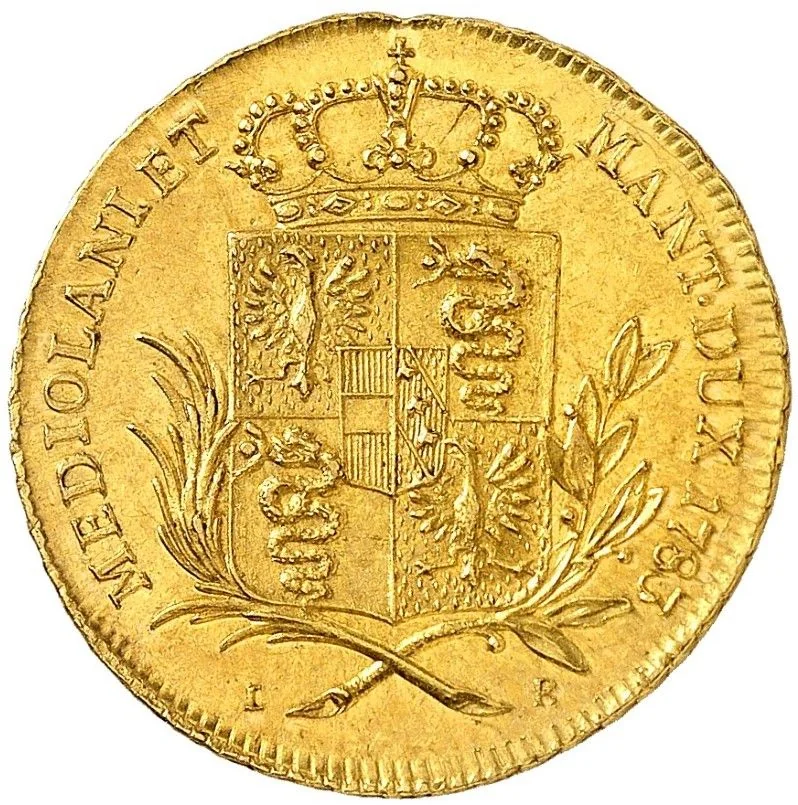

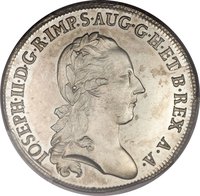
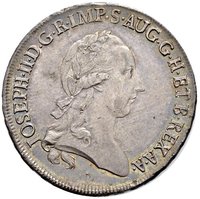
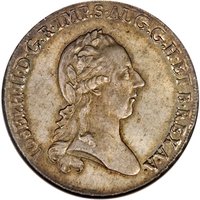
Obverse
Description:
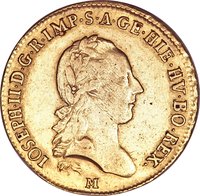
Laureate head right.
Inscription:
IOSEPH. II. D.G. R. IMP. S. AUG. G. H. ET. B. REX. A. A.
Script: Latin
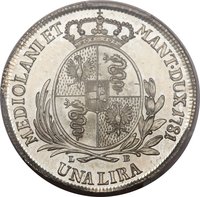
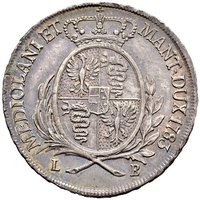
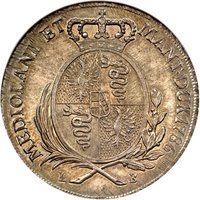
Reverse
Description:
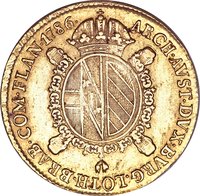
Quartered shield with central shield, crossed branches below, dated legend.
Inscription:
MEDIOLANI ET - MANT. DUX. 1783
L B
L B
Script: Latin
Edge
Categories
| Object> Armour |
| Symbols> Coat of Arms |
Mints
| Name | Mark |
|---|---|
| Milan | LB |
Historical background
In 1781, Milan operated under the complex monetary system of the Habsburg Lombardy, a province of the Austrian Empire. The official currency was the Milanese lira (divided into 20 soldi or 240 denari), which was tied to the Conventionsthaler, a large silver coin used across the German lands of the Habsburg monarchy. This system created a bimetallic reality where both silver and gold coins circulated, including the Austrian ducat and various foreign coins from neighbouring states like Venice and Piedmont, reflecting Milan's role as a vital commercial crossroads.
The currency situation was marked by persistent instability and confusion. Chronic shortages of small-denomination coins hampered daily trade for the common people, while merchants and the state dealt with the fluctuating values between gold and silver. Furthermore, widespread clipping and counterfeiting of coins eroded public trust in the money supply. These problems were symptomatic of deeper issues: the costs of imperial administration, military expenditures, and the challenges of integrating a prosperous but fiscally distinct territory into the broader Habsburg financial structure.
Authorities in Vienna and the local Milanese government were aware of these monetary disorders. The period saw ongoing, but largely ineffective, attempts at reform and regulation. The situation would ultimately contribute to the push for a more unified and rational monetary system, a goal that would be partially realized under Emperor Joseph II later in the decade, though full stabilization remained elusive amidst the broader pressures of imperial finance and impending European wars.
The currency situation was marked by persistent instability and confusion. Chronic shortages of small-denomination coins hampered daily trade for the common people, while merchants and the state dealt with the fluctuating values between gold and silver. Furthermore, widespread clipping and counterfeiting of coins eroded public trust in the money supply. These problems were symptomatic of deeper issues: the costs of imperial administration, military expenditures, and the challenges of integrating a prosperous but fiscally distinct territory into the broader Habsburg financial structure.
Authorities in Vienna and the local Milanese government were aware of these monetary disorders. The period saw ongoing, but largely ineffective, attempts at reform and regulation. The situation would ultimately contribute to the push for a more unified and rational monetary system, a goal that would be partially realized under Emperor Joseph II later in the decade, though full stabilization remained elusive amidst the broader pressures of imperial finance and impending European wars.
Series: 1781 Milan circulation coins
✨ Legendary