

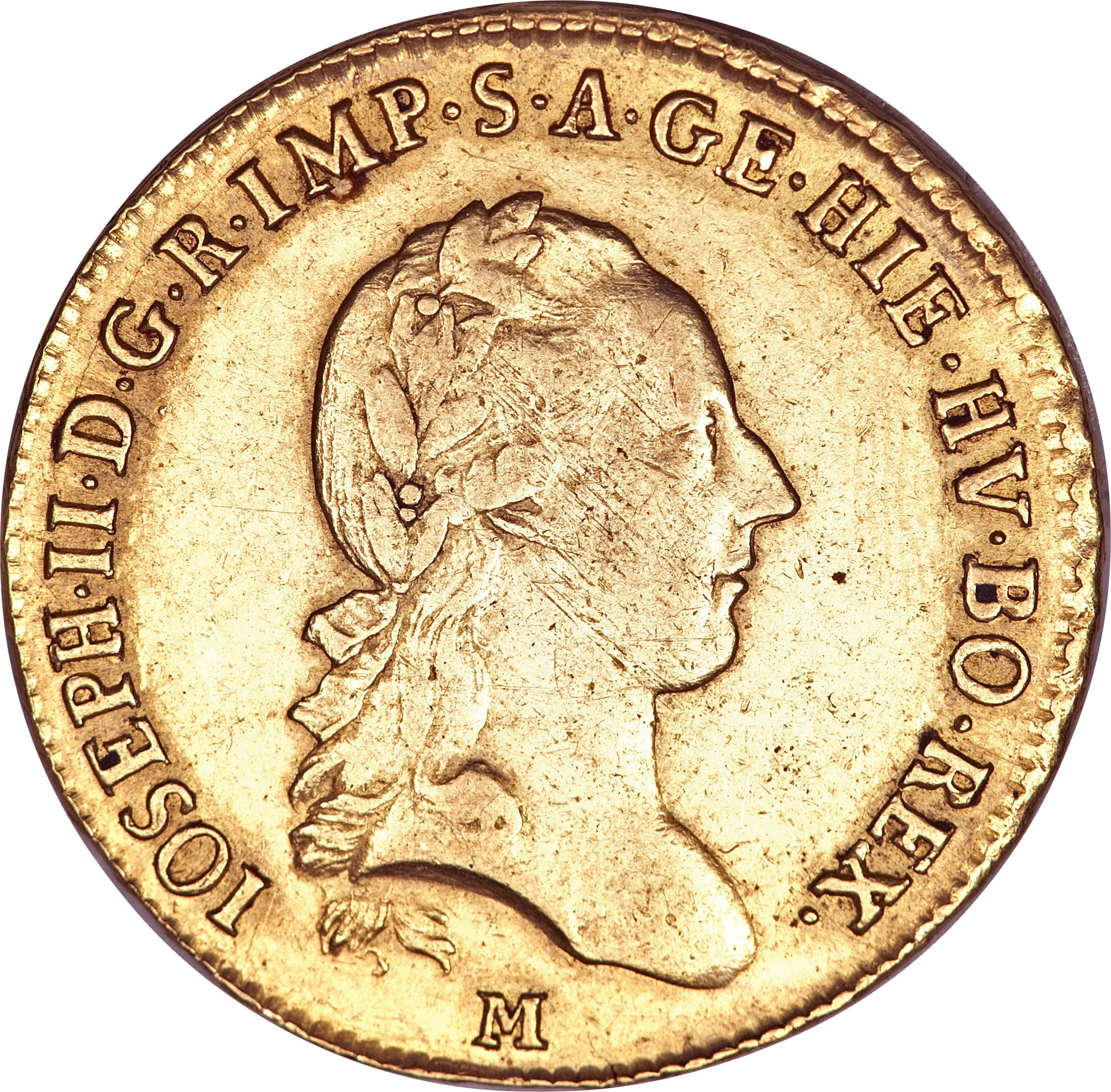
Obverse
Description:
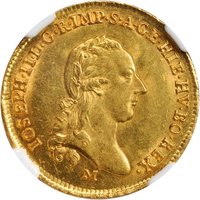
Weak strike above mintmark.
Inscription:
IOSEPH·II·D·G·R·IMP·S·A·GE·HIE·HV·BO·REX·
M
M
Script: Latin
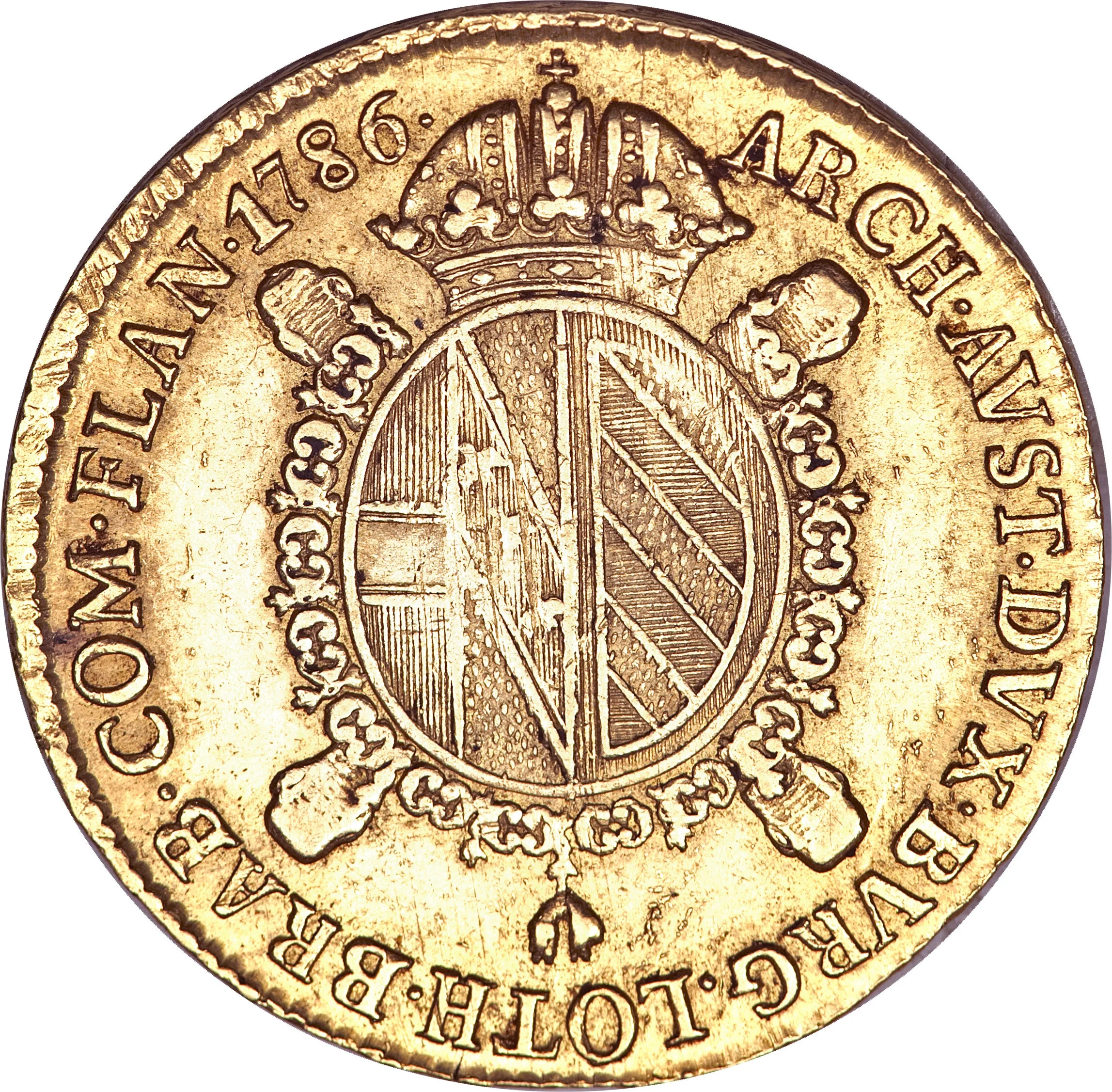
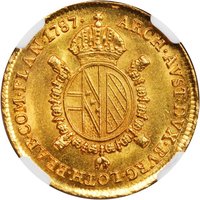
Reverse
Description:
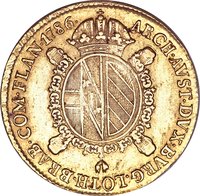
Crowned oval shield.
Inscription:
ARCH·AVST·DVX·BVRG·LOTH·BRAB·COM·FLAN·1786·
Script: Latin
Edge
Mints
| Name | Mark |
|---|---|
| Milan | M |
Historical background
In 1786, Milan operated under a complex and often frustrating monetary system, a legacy of its position as the capital of the Duchy of Milan within the Austrian Habsburg Empire. The official currency was the Milanese lira (divided into 20 soldi or 240 denari), which was tied to the Conventionsthaler, a large silver coin standard used across the Habsburg territories. However, the daily reality for merchants and citizens was a chaotic jumble of circulating coinage. Alongside domestic issues, old Spanish coins, Venetian ducats, French louis d'or, and various German and Italian state currencies all passed through the markets, their values fluctuating based on metal content and dubious exchange rates.
This proliferation of foreign and debased coins created significant economic friction. Exchange was a specialist's game, prone to confusion and fraud, hindering trade and complicating tax collection for the Austrian administration. The core problem was a chronic shortage of high-quality, small-denomination coins for everyday transactions. This scarcity led to frequent clipping and counterfeiting of existing coins, further eroding public trust in the currency. While Vienna sought monetary stability, the local economy suffered from a lack of uniform, reliable specie.
The year 1786 fell within the reformist reign of Emperor Joseph II, whose centralizing policies included attempts to standardize the imperial monetary system. In Milan, this meant ongoing, but slow and often resisted, efforts to recall old and foreign coins and replace them with new, standardized Habsburg currency. Thus, the monetary situation was one of transition—caught between the old world of disparate medieval currencies and a modern, state-controlled system, resulting in a period of palpable instability for Milan's bustling commercial life.
This proliferation of foreign and debased coins created significant economic friction. Exchange was a specialist's game, prone to confusion and fraud, hindering trade and complicating tax collection for the Austrian administration. The core problem was a chronic shortage of high-quality, small-denomination coins for everyday transactions. This scarcity led to frequent clipping and counterfeiting of existing coins, further eroding public trust in the currency. While Vienna sought monetary stability, the local economy suffered from a lack of uniform, reliable specie.
The year 1786 fell within the reformist reign of Emperor Joseph II, whose centralizing policies included attempts to standardize the imperial monetary system. In Milan, this meant ongoing, but slow and often resisted, efforts to recall old and foreign coins and replace them with new, standardized Habsburg currency. Thus, the monetary situation was one of transition—caught between the old world of disparate medieval currencies and a modern, state-controlled system, resulting in a period of palpable instability for Milan's bustling commercial life.
💎 Extremely Rare