


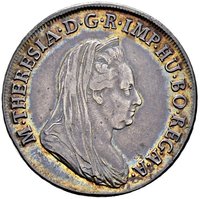
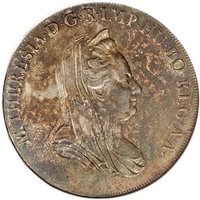
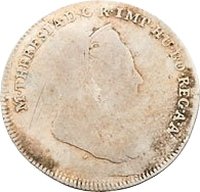
Obverse
Description:
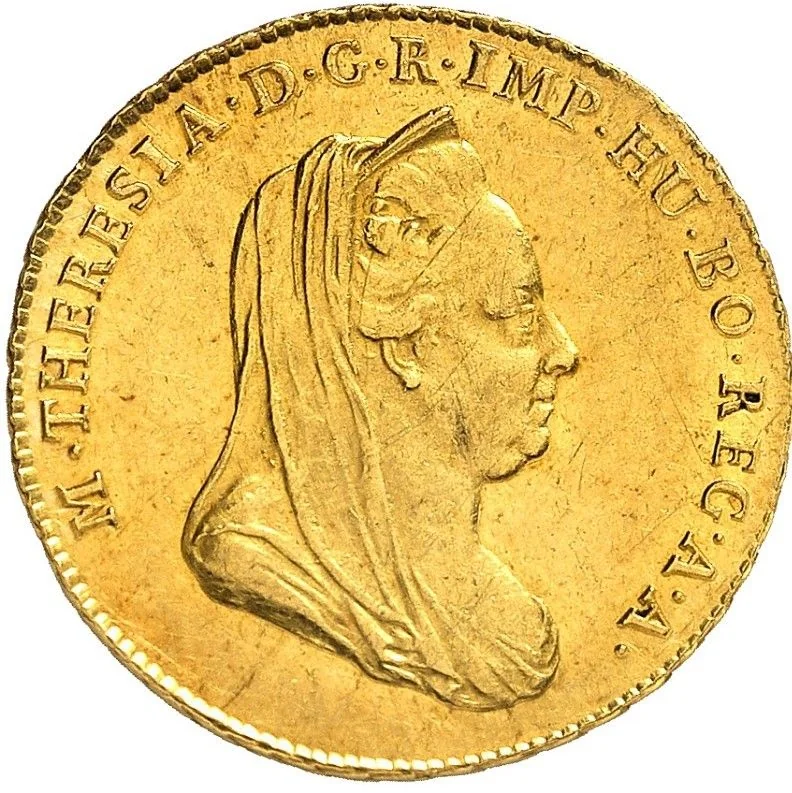
Veiled profile bust.
Inscription:
M. THERESIA. D.G. R. IMP. HU. BO. REG. A. A.
Script: Latin
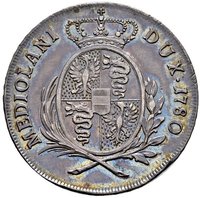
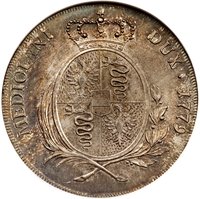
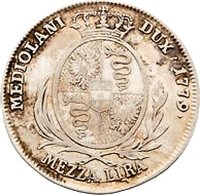
Reverse
Description:
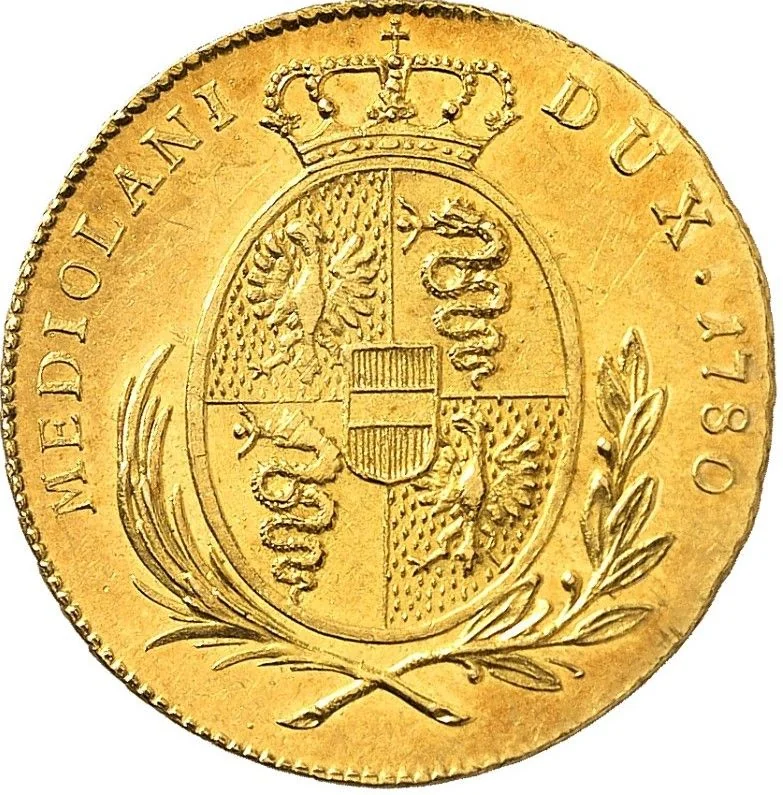
Quartered shield with central shield, crossed branches below, dated legend.
Inscription:
MEDIOLANI - DUX. 1780
Script: Latin
Edge
Categories
| Object> Armour |
| Symbols> Coat of Arms |
Mints
| Name | Mark |
|---|---|
| Milan | — |
Mintings
| Year | Mint Mark | Mintage | Quality | Collection |
|---|---|---|---|---|
| 1778 | — | — | ||
| 1779 | — | — | ||
| 1780 | — | — |
Historical background
In 1778, Milan operated under a complex and often strained monetary system, typical of the ancien régime in Europe. The Duchy of Milan was then a possession of the Habsburg Monarchy, governed from Vienna under the enlightened but centralizing rule of Empress Maria Theresa. The official currency was the Milanese lira (divided into 20 soldi or 240 denari), which was tied to the Conventionsthaler, a large silver coin used across the Habsburg lands. However, the circulation was a chaotic mix of domestic and foreign coins, including Spanish doubloons, Venetian ducats, and French louis d'or, all valued by their precious metal content and subject to fluctuating exchange rates.
This multiplicity created significant practical problems for commerce and daily life. The value of coins was not always clearly marked, leading to confusion and fraud. Furthermore, the government frequently issued decrees to adjust the official exchange rates (corso) of various coins in an attempt to control the money supply and stabilize the economy, but these often had disruptive effects. Merchants and bankers had to constantly refer to published bulletins to know the current legal value of a coin, making transactions slow and uncertain.
The underlying tension was between Vienna's desire for monetary uniformity and control, and the reality of a thriving commercial hub deeply integrated into international trade networks. While the Habsburg authorities sought to impose the Conventionsthaler standard, the portability and wide acceptance of gold coins like the zechin (sequin) made them the preferred medium for large-scale trade and finance. Thus, Milan's currency situation in 1778 was one of managed disorder, caught between imperial reform and the pragmatic needs of a mercantile society.
This multiplicity created significant practical problems for commerce and daily life. The value of coins was not always clearly marked, leading to confusion and fraud. Furthermore, the government frequently issued decrees to adjust the official exchange rates (corso) of various coins in an attempt to control the money supply and stabilize the economy, but these often had disruptive effects. Merchants and bankers had to constantly refer to published bulletins to know the current legal value of a coin, making transactions slow and uncertain.
The underlying tension was between Vienna's desire for monetary uniformity and control, and the reality of a thriving commercial hub deeply integrated into international trade networks. While the Habsburg authorities sought to impose the Conventionsthaler standard, the portability and wide acceptance of gold coins like the zechin (sequin) made them the preferred medium for large-scale trade and finance. Thus, Milan's currency situation in 1778 was one of managed disorder, caught between imperial reform and the pragmatic needs of a mercantile society.
Series: 1778 Milan circulation coins
✨ Legendary