

10 Soldi – Milan
Italy
Context

Material
Diameter: 24 mm
Weight: 3.1 g
Silver weight: 1.71 g
Shape: Round
Composition: 55.2% Silver
Standard: Gold tenth ounce
Magnetic: No
Alignment: Coin alignment
flip
References
KM: #Click to copy to clipboard200
Numista: #24429
Value
Bullion value: $4.84
Obverse
Description:
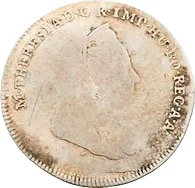
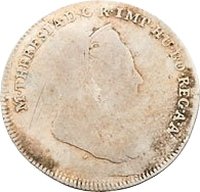
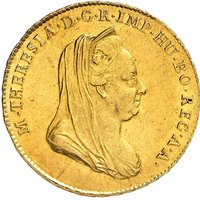
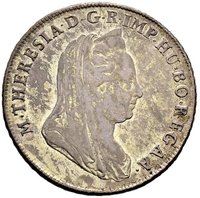
Bust of Maria Theresia facing right.
Inscription:
M·THERESIA·D·G·R·IMP·HU·BO·REG·A·A·
Script: Latin
Reverse
Description:
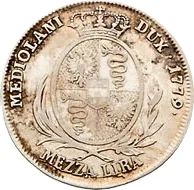
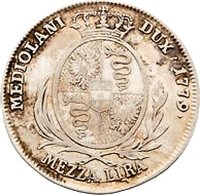
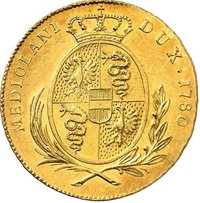
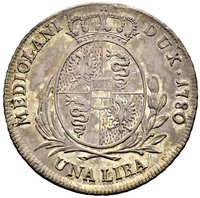
Crowned coat of arms above value.
Inscription:
MADIOLANI DUX · 1779 ·
MEZZA LIRA
MEZZA LIRA
Script: Latin
Edge
Leaves
Mints
| Name | Mark |
|---|---|
| Milan | — |
Mintings
| Year | Mint Mark | Mintage | Quality | Collection |
|---|---|---|---|---|
| 1779 | — | — |
Historical background
In 1779, Milan operated under a complex and often chaotic monetary system, a legacy of its position as the capital of the Duchy of Milan within the Austrian Habsburg Empire. The official currency was the Milanese lira, subdivided into 20 soldi or 240 denari, but this was just the unit of account. In practice, a multitude of physical coins circulated simultaneously, including domestic issues from the Milan Mint, various Austrian thalers and kreuzers, and a significant influx of foreign coins from neighbouring Italian states like Savoy, Venice, and Genoa, as well as Spanish and French silver. This proliferation created constant challenges for merchants and citizens alike.
The core problem was the lack of a fixed, reliable relationship between these coins' metal content and their declared value in lire. The authorities frequently issued proclamations adjusting the exchange rates (cridas), attempting to align the circulating specie with the theoretical monetary standard and to prevent the outflow of full-weight silver coins. However, these adjustments were often reactive and destabilizing, leading to confusion, arbitrage, and a tendency for "good" full-bodied coinage to be hoarded or exported, leaving a degraded mix of lighter coins in daily circulation—a classic example of Gresham's Law.
This monetary instability reflected broader economic tensions. While Milan was a prosperous commercial and agricultural centre, its financial system was strained by imperial fiscal demands from Vienna and the costs of maintaining Austrian administration. The confusion in the currency market acted as a friction on trade and credit, prompting calls from reform-minded economists and merchants for a unified, state-controlled coinage. However, a true resolution would not come until the Napoleonic reforms of the early 19th century, which swept away the old system entirely.
The core problem was the lack of a fixed, reliable relationship between these coins' metal content and their declared value in lire. The authorities frequently issued proclamations adjusting the exchange rates (cridas), attempting to align the circulating specie with the theoretical monetary standard and to prevent the outflow of full-weight silver coins. However, these adjustments were often reactive and destabilizing, leading to confusion, arbitrage, and a tendency for "good" full-bodied coinage to be hoarded or exported, leaving a degraded mix of lighter coins in daily circulation—a classic example of Gresham's Law.
This monetary instability reflected broader economic tensions. While Milan was a prosperous commercial and agricultural centre, its financial system was strained by imperial fiscal demands from Vienna and the costs of maintaining Austrian administration. The confusion in the currency market acted as a friction on trade and credit, prompting calls from reform-minded economists and merchants for a unified, state-controlled coinage. However, a true resolution would not come until the Napoleonic reforms of the early 19th century, which swept away the old system entirely.
✨ Legendary