

6 copper öre – Sweden
Add to wishlist
Sweden
Context
Years: 1790–1791
Issuer: Sweden
Ruler: Gustav III
Currency:
(1719—1798)
Demonetized: Yes
Total mintage: 289,332
Material
References
KM: #
Numista: #31754
Obverse
Description:
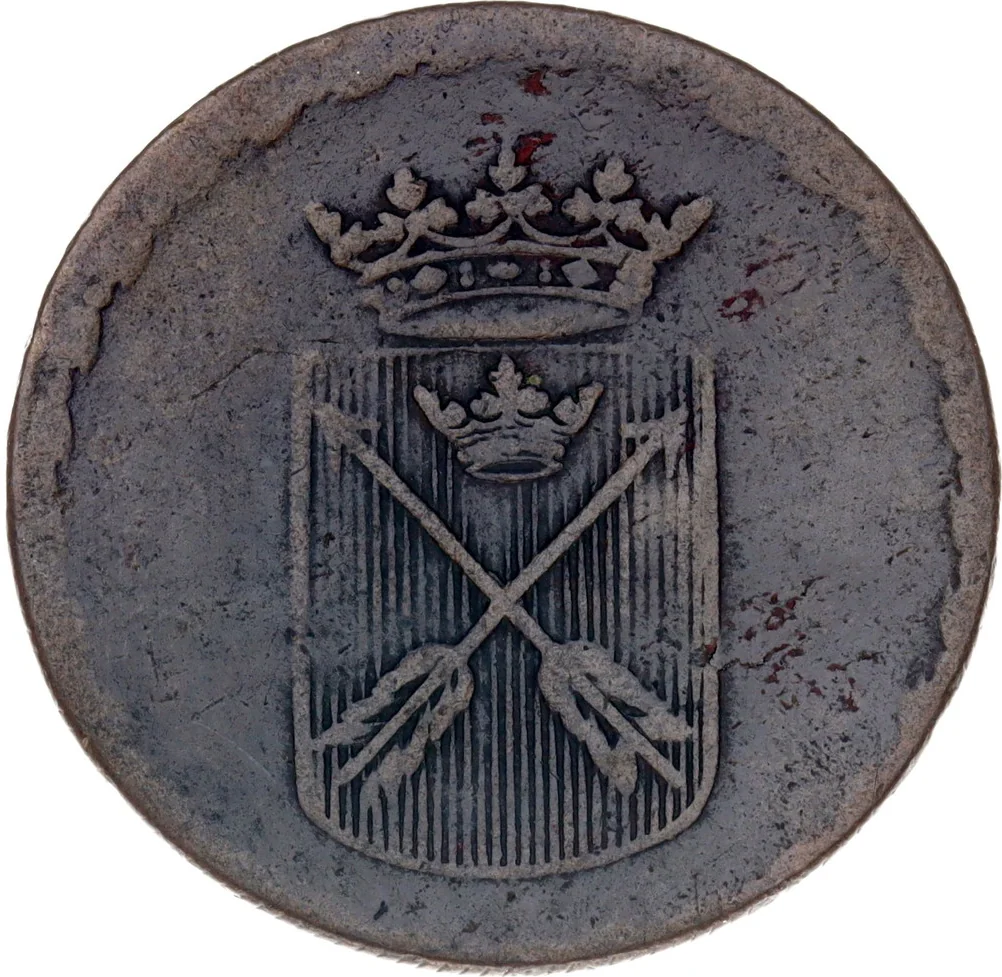
Shield with Dalarna’s crowned arms.
Reverse
Description:
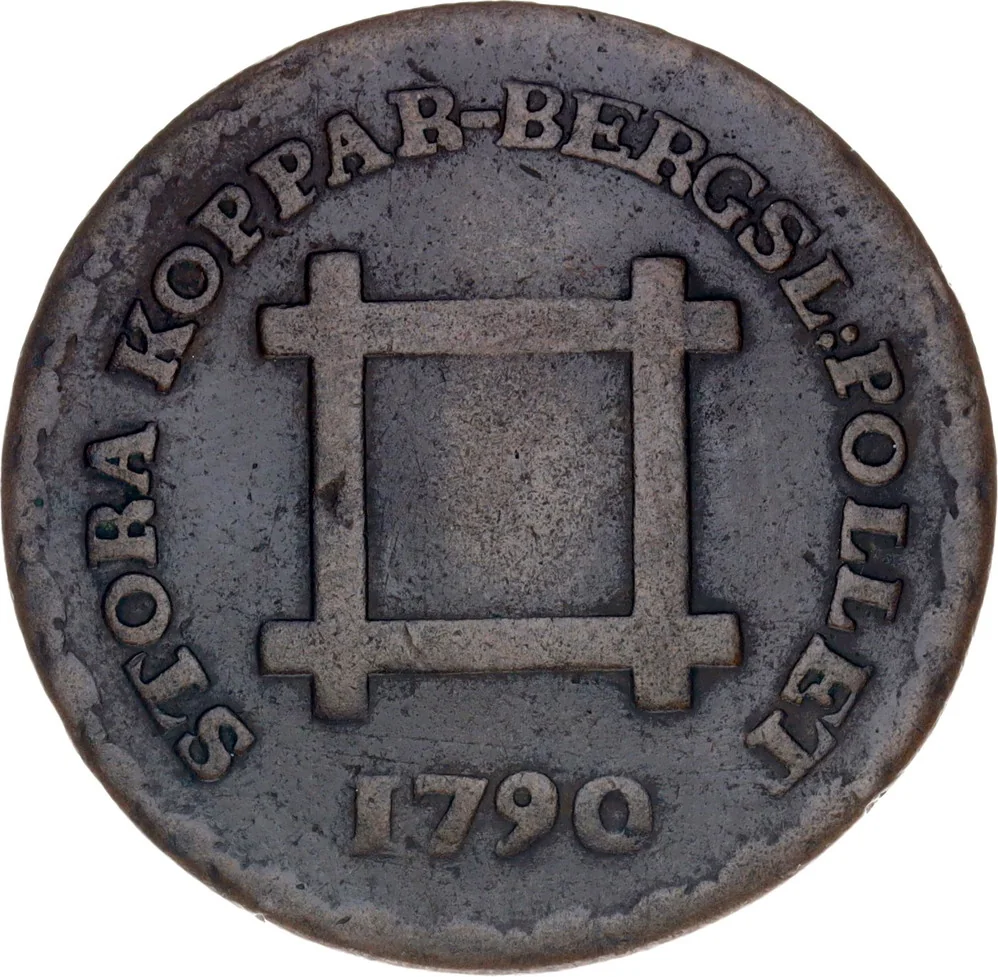
Square frame formed by intersecting bars. Edge lettering. Date beneath.
Inscription:
STORA KOPPAR-BERGSL : POLLET
1791
1791
Script: Latin
Edge
Diagonal milling
Mintings
| Year | Mint Mark | Mintage | Quality | Collection |
|---|---|---|---|---|
| 1790 | — | 145,940 | ||
| 1791 | — | 143,392 |
Historical background
In 1790, Sweden operated under a complex and strained monetary system, a legacy of the disastrous Riksdaler currency introduced earlier in the 18th century. The nation was effectively on a copper standard, where the large, cumbersome plåtmynt (plate money) formed the theoretical basis of value. However, decades of war financing, particularly under King Gustav III, had led to severe inflation and a proliferation of paper money. The Riksbank issued riksgäldssedlar (government debt notes), which were not backed by sufficient silver or copper reserves, causing them to circulate at a significant discount compared to the nominal metal coinage.
This created a chaotic dual-currency reality. Daily transactions were conducted in the depreciating paper notes, while contracts, state debts, and international trade were often stipulated in the stable but scarce silver riksdaler specie. The resulting exchange rate between the two currencies fluctuated wildly, causing uncertainty for merchants, creditors, and the general populace. The state's finances were deeply troubled, with the paper money essentially representing a form of sovereign debt that undermined public trust and complicated economic planning.
The situation in 1790 was one of precarious stability, maintained primarily by Gustav III's authoritarian control and the conclusion of the Russo-Swedish War (1788–1790). However, the fundamental structural problems of the monetary system remained unresolved. The excessive paper issue had devalued the currency, creating a heavy burden of debt for the crown and setting the stage for the major monetary crisis and eventual reform that would follow in the early 19th century under King Gustav IV Adolf.
This created a chaotic dual-currency reality. Daily transactions were conducted in the depreciating paper notes, while contracts, state debts, and international trade were often stipulated in the stable but scarce silver riksdaler specie. The resulting exchange rate between the two currencies fluctuated wildly, causing uncertainty for merchants, creditors, and the general populace. The state's finances were deeply troubled, with the paper money essentially representing a form of sovereign debt that undermined public trust and complicated economic planning.
The situation in 1790 was one of precarious stability, maintained primarily by Gustav III's authoritarian control and the conclusion of the Russo-Swedish War (1788–1790). However, the fundamental structural problems of the monetary system remained unresolved. The excessive paper issue had devalued the currency, creating a heavy burden of debt for the crown and setting the stage for the major monetary crisis and eventual reform that would follow in the early 19th century under King Gustav IV Adolf.
⭐ Rare