

1 Riksdaler – Sweden
Sweden
Context
Years: 1779–1792
Issuer: Sweden 
Ruler: Gustav III
Currency:
(1719—1798)
Demonetized: Yes
Total mintage: 3,512,233
Material
References
KM: #Click to copy to clipboard527
Numista: #37578
Value
Bullion value: $74.49
Obverse
Description:
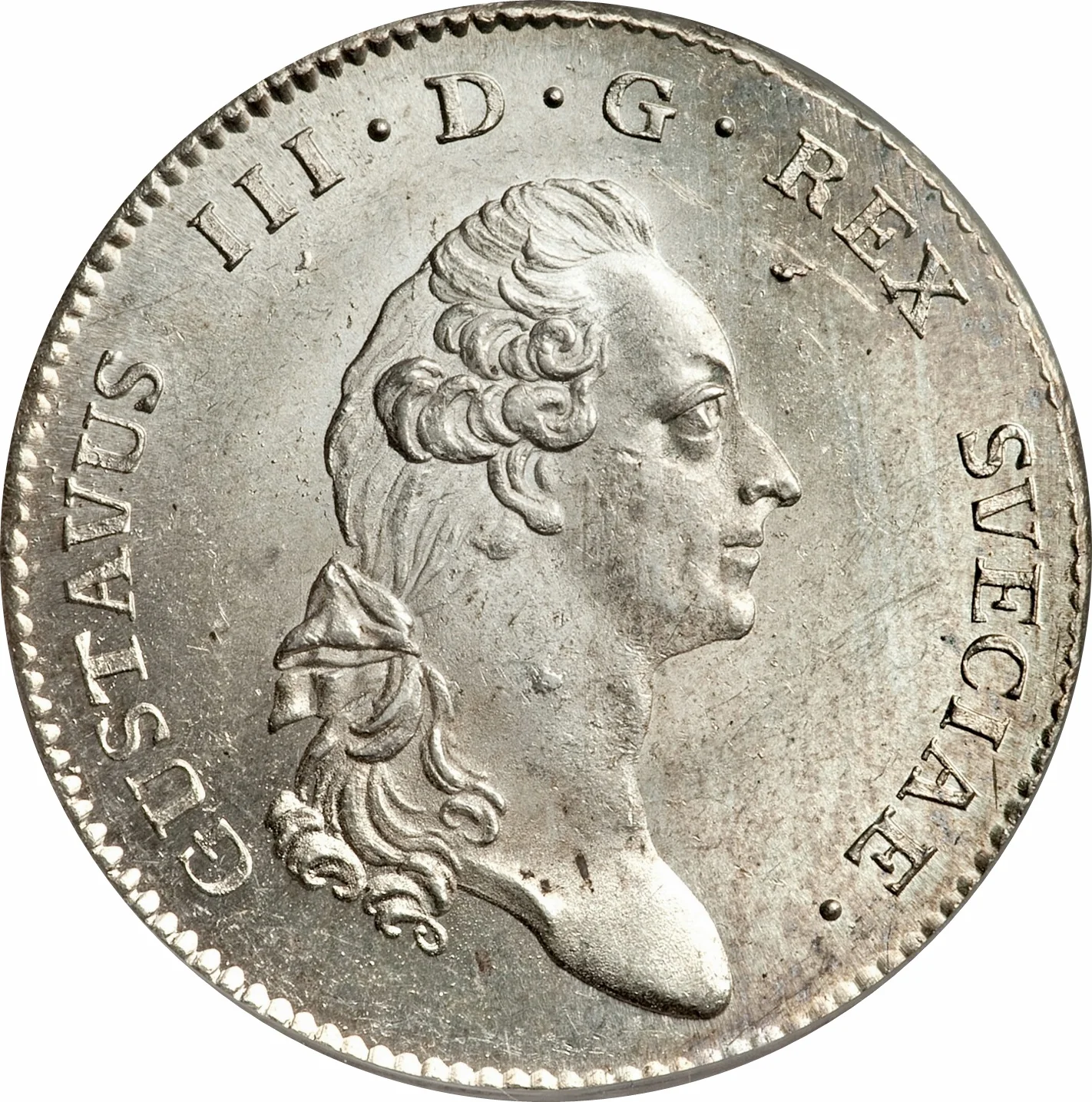
Bust of Gustav III facing right, encircled by legend.
Inscription:
GUSTAVUS III • D • G • REX • SVECIAE •
Script: Latin
Reverse
Description:
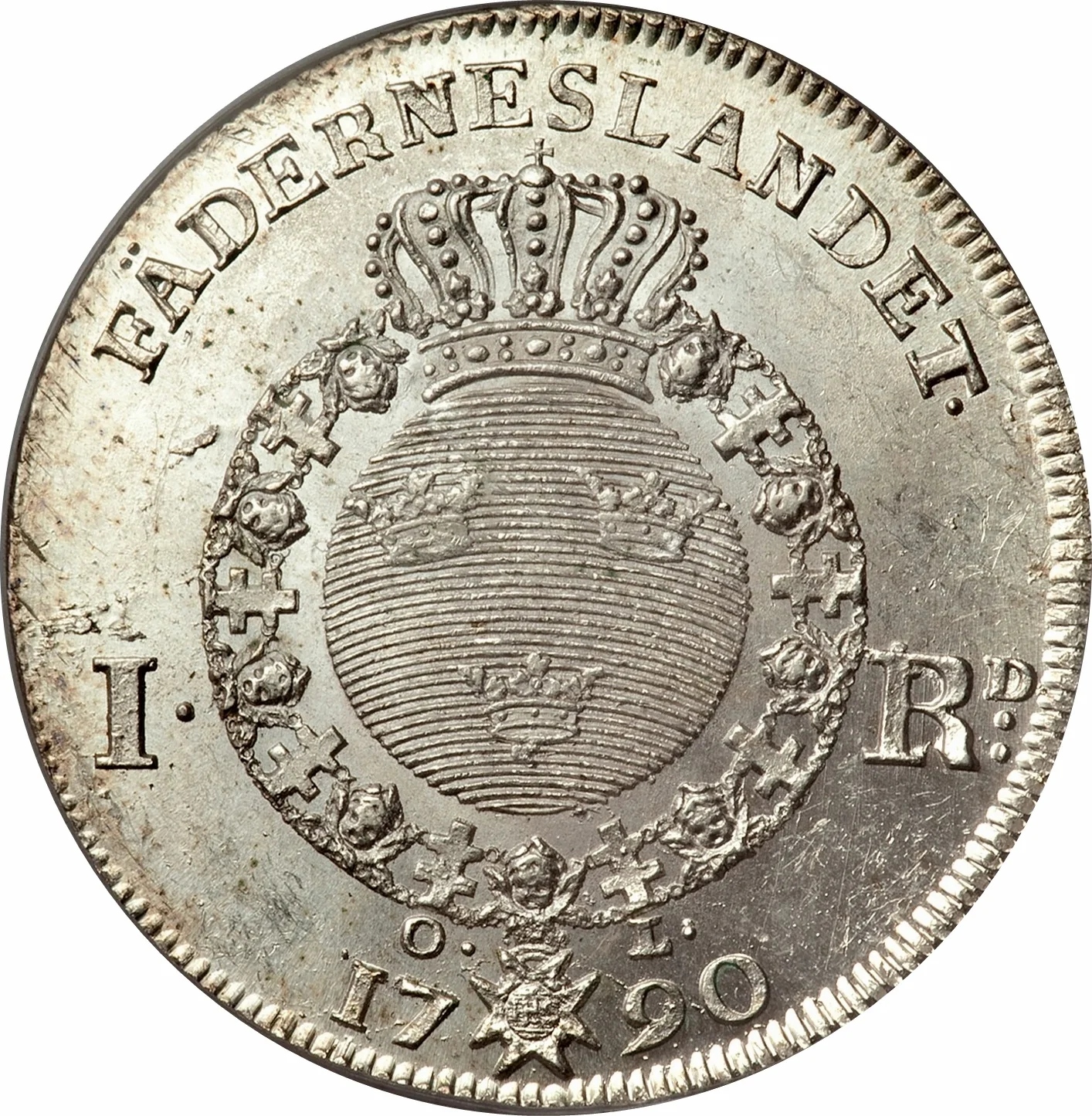
Swedish Three Crowns orb within the Seraphim chain. The pendant divides the date and mintmark; value flanks the orb. The King's motto is above the crown.
Inscription:
FÄDERNESLANDET •
I• RD:
O. L.
17 90
I• RD:
O. L.
17 90
Script: Latin
Edge
Lettering:MANIBUS NE LAEDAR AVARIS
Legend:
MANIBUS NE LAEDAR AVARIS
Categories
| Symbols> Coat of Arms |
Mints
| Name | Mark |
|---|---|
| Stockholm | — |
Mintings
| Year | Mint Mark | Mintage | Quality | Collection |
|---|---|---|---|---|
| 1779 | OL | 33,546 | ||
| 1780 | OL | — | ||
| 1781 | OL | 524,058 | ||
| 1782 | OL | 653,651 | ||
| 1783 | OL | 99,637 | ||
| 1787 | OL | 62,037 | ||
| 1788 | OL | 151,108 | ||
| 1790 | OL | 635,898 | ||
| 1791 | OL | 921,235 | ||
| 1792 | OL | 431,063 |
Historical background
In 1779, Sweden was navigating a complex and precarious monetary situation under the reign of King Gustav III. The nation's currency, the riksdaler, existed in a confusing dual system: there was the riksdaler specie, backed by silver, and the heavily depreciated paper money known as riksdaler banco, issued by the Riksens Ständers Bank (predecessor of the Riksbank). A severe shortage of silver, exacerbated by costly wars and economic policies, had led to over-issuance of banknotes, causing significant inflation and a wide, fluctuating gap between the value of the silver coin and the paper note.
This instability created profound practical difficulties. Domestic trade was hampered as merchants and the public struggled with uncertain values, while international commerce was particularly challenging because foreign traders demanded payment in precious metal. The government's attempts to manage the disparity through mandated exchange rates often failed, leading to a thriving black market for currency exchange. The situation eroded public trust in the paper currency and placed a heavy burden on the state's finances, as it struggled to service debts and fund operations with a devalued medium of exchange.
Consequently, the currency crisis of 1779 was not merely a financial issue but a central political and economic problem threatening the stability of the realm. It underscored the limitations of the young bank and highlighted the urgent need for monetary reform. While a full stabilization would not be achieved until the riksdaler riksgälds was introduced in the 1780s, the pressures of 1779 were a critical catalyst, pushing Gustav III's government toward more decisive, though not always successful, interventions to restore confidence in Sweden's monetary system.
This instability created profound practical difficulties. Domestic trade was hampered as merchants and the public struggled with uncertain values, while international commerce was particularly challenging because foreign traders demanded payment in precious metal. The government's attempts to manage the disparity through mandated exchange rates often failed, leading to a thriving black market for currency exchange. The situation eroded public trust in the paper currency and placed a heavy burden on the state's finances, as it struggled to service debts and fund operations with a devalued medium of exchange.
Consequently, the currency crisis of 1779 was not merely a financial issue but a central political and economic problem threatening the stability of the realm. It underscored the limitations of the young bank and highlighted the urgent need for monetary reform. While a full stabilization would not be achieved until the riksdaler riksgälds was introduced in the 1780s, the pressures of 1779 were a critical catalyst, pushing Gustav III's government toward more decisive, though not always successful, interventions to restore confidence in Sweden's monetary system.
⭐ Rare