

6 Kreuzers – Austrian Empire
Austria
Context
Years: 1674–1692
Country: Austria 
Issuer: Austrian Empire
Ruler: Leopold I
Currency:
(1520—1754)
Demonetized: Yes
Material
References
KM: #Click to copy to clipboard1185
Numista: #31677
Value
Bullion value: $10.11
Obverse
Description:
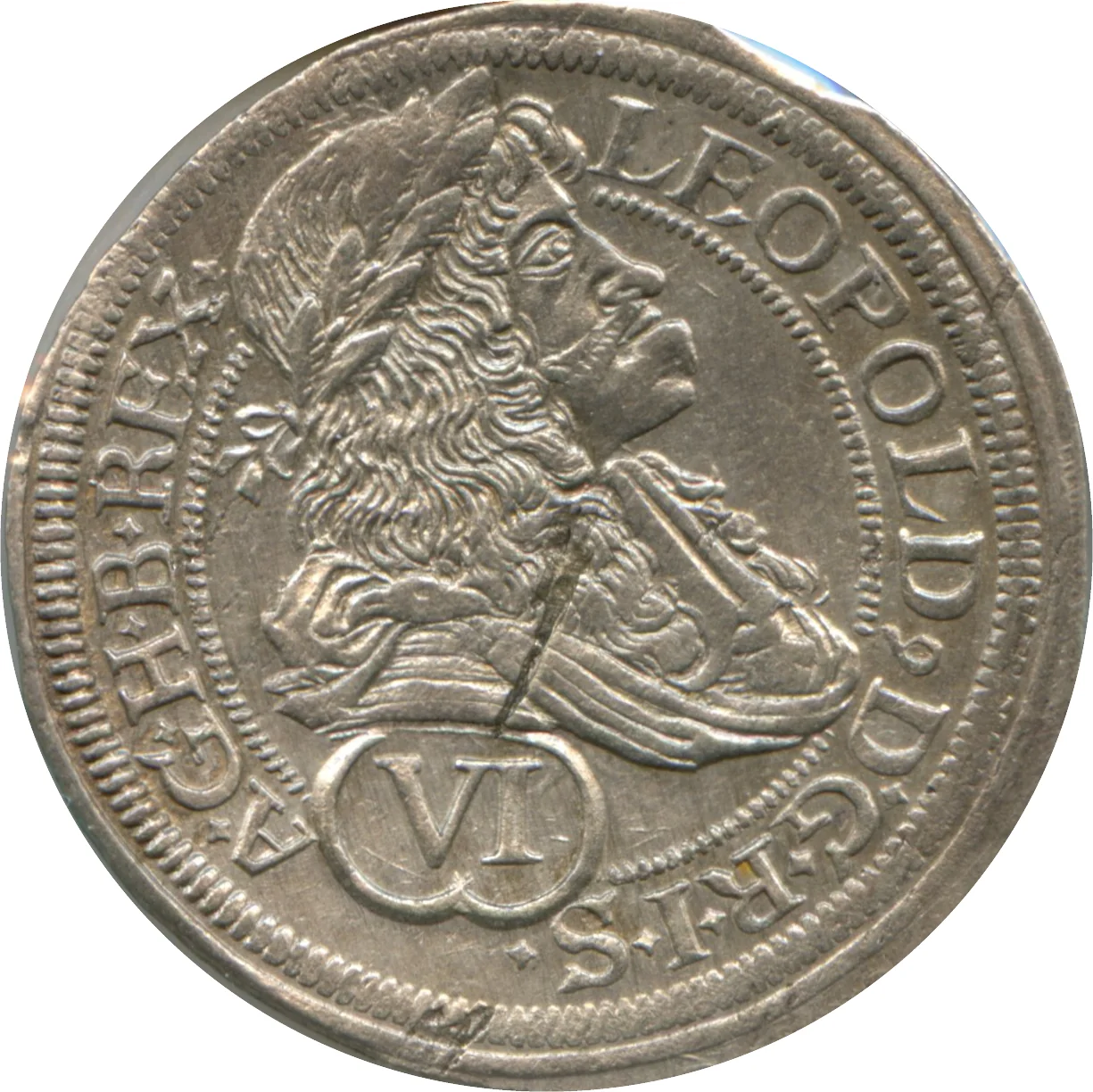
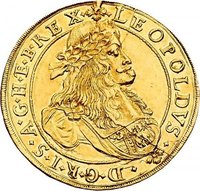
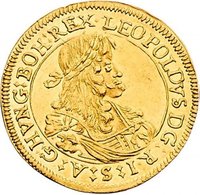
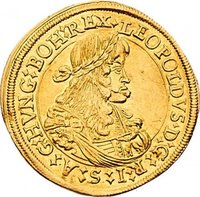
Leopold I in armor, facing right with the Golden Fleece. Framed roman numeral value below.
Inscription:
LEOPOLDVS.D.G.R.I.S (VI) A.G.H.B.REX
Script: Latin
Reverse
Description:
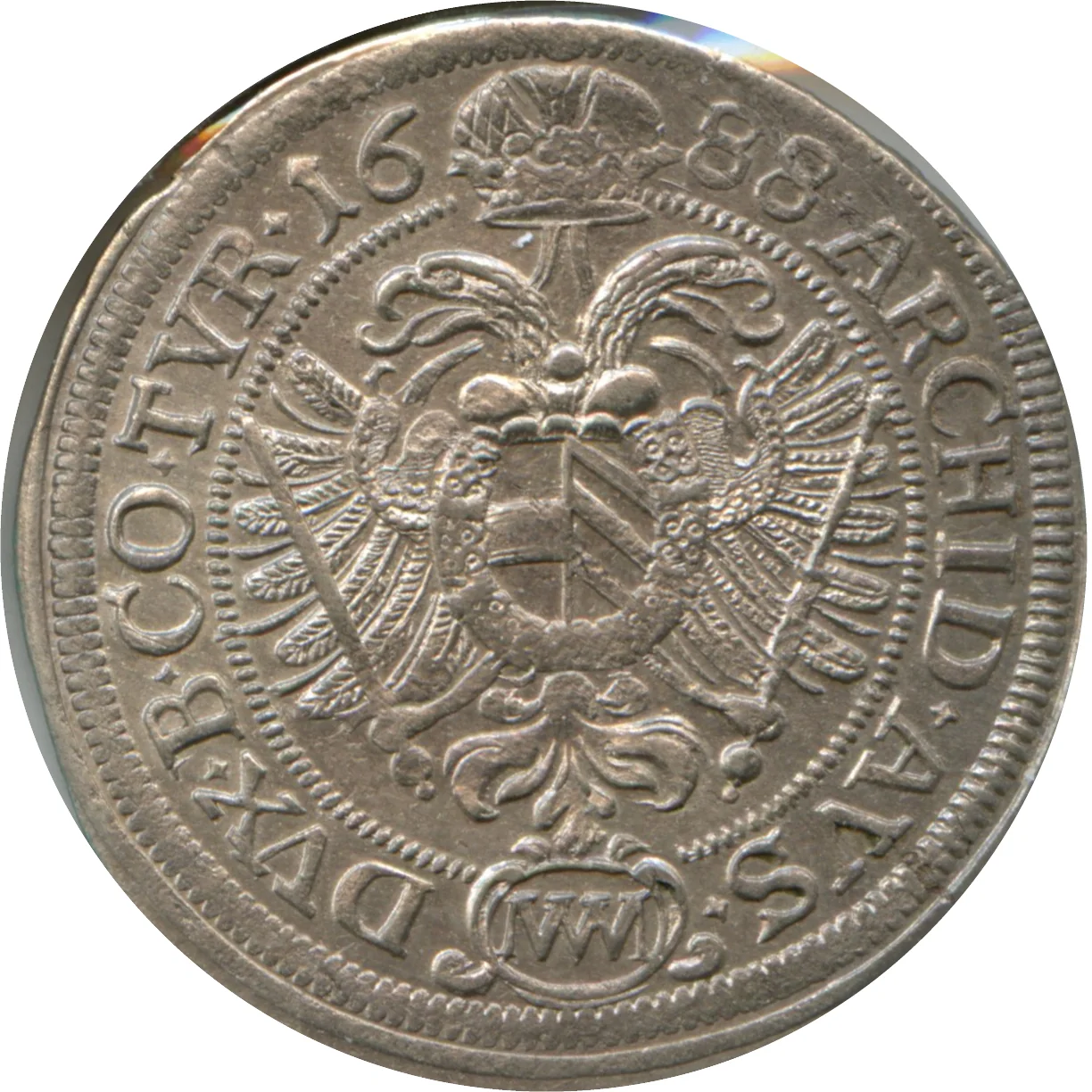
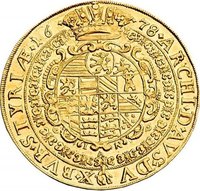
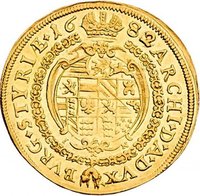
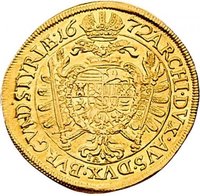
Imperial double-headed eagle bearing the arms of Austria and Burgundy, crowned, dividing the date.
Inscription:
ARCHID.AVS DVX.B.CO.TVR.16 81
Script: Latin
Edge
Mints
| Name | Mark |
|---|---|
| Münze Österreich | MM |
Mintings
Historical background
In 1674, the currency situation in the Austrian Habsburg monarchy was characterized by severe instability and debasement, a direct consequence of the immense financial strain of perpetual warfare. The empire was deeply engaged in the Franco-Dutch War (1672–1678) on the side of the Dutch Republic, while simultaneously fighting the Ottoman Empire on its eastern frontier. To fund these colossal military efforts, the state treasury, operating under the Hofkammer, repeatedly resorted to manipulating the coinage. This involved reducing the precious metal content in silver coins, such as the Reichsthaler and its fractional Groschen, while officially maintaining their old face value, a practice that generated short-term profit but eroded trust.
This monetary policy created a chaotic multi-currency environment. Older, full-weight coins were hoarded or exported (following Gresham's Law), while the newly minted, inferior coins flooded the market, driving inflation. The situation was further complicated by the empire's fragmented economic structure; individual crown lands like Bohemia and Hungary had their own minting rights and historic currencies, leading to complex and fluctuating exchange rates between them. For merchants and the common population, this meant uncertainty, loss of purchasing power, and the disruption of both local trade and long-distance commerce.
The authorities were aware of the damaging effects but felt trapped by fiscal necessity. Attempts at regulation, such as mandating acceptance of the debased coins at par, proved ineffective and unpopular. The year 1674 thus represents a point of acute crisis within a longer period of 17th-century monetary turmoil. It would ultimately take the reforms of the following century, particularly under Empress Maria Theresa, to establish a more unified and stable monetary system, but in 1674, the primary reality was one of inflationary finance funding the survival of the empire at great cost to its economic coherence.
This monetary policy created a chaotic multi-currency environment. Older, full-weight coins were hoarded or exported (following Gresham's Law), while the newly minted, inferior coins flooded the market, driving inflation. The situation was further complicated by the empire's fragmented economic structure; individual crown lands like Bohemia and Hungary had their own minting rights and historic currencies, leading to complex and fluctuating exchange rates between them. For merchants and the common population, this meant uncertainty, loss of purchasing power, and the disruption of both local trade and long-distance commerce.
The authorities were aware of the damaging effects but felt trapped by fiscal necessity. Attempts at regulation, such as mandating acceptance of the debased coins at par, proved ineffective and unpopular. The year 1674 thus represents a point of acute crisis within a longer period of 17th-century monetary turmoil. It would ultimately take the reforms of the following century, particularly under Empress Maria Theresa, to establish a more unified and stable monetary system, but in 1674, the primary reality was one of inflationary finance funding the survival of the empire at great cost to its economic coherence.
🌟 Limited