

2 Ducats – Austrian Empire
Austria
Context
Year: 1672
Country: Austria 
Issuer: Austrian Empire
Ruler: Leopold I
Currency:
(1520—1754)
Demonetized: Yes
References
KM: #Click to copy to clipboard1276
Numista: #89488
Value
Bullion value: $1132.21
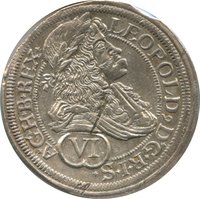
Obverse
Description:
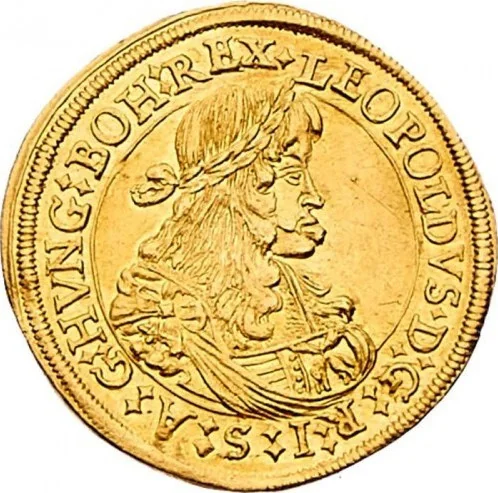
Laureate facing right, smooth hair. Inner circle, legend around (starts at 1h). Diamond punctuation.
Inscription:
LEOPOLDVS D G R I S A G HVNG BOH REX
Script: Latin
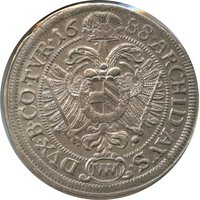
Reverse
Description:
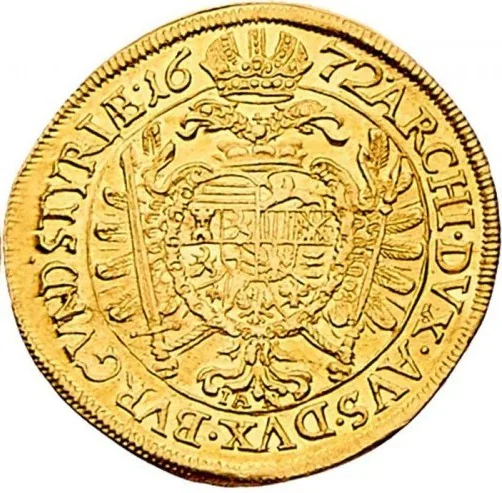
Imperial double-headed eagle with sword and sceptre, central composite arms in an oval shield, encircled by the Golden Fleece chain. Mint marks below the tail; date flanking the crown.
Inscription:
ARCHI DVX AVS DVX BVRGVND STYRIÆ 1672
Script: Latin
Edge
Mints
| Name | Mark |
|---|---|
| Graz | — |
Mintings
| Year | Mint Mark | Mintage | Quality | Collection |
|---|---|---|---|---|
| 1672 | IAN | — |
Historical background
In 1672, the currency system of the Habsburg Monarchy, often referred to as the Austrian Empire, was in a state of profound crisis and transition. The primary unit of account was the Gulden (florin), divided into 60 Kreuzer, but the reality of circulating coinage was chaotic. Decades of financial strain, particularly from the ongoing wars against the Ottoman Empire and involvement in European conflicts like the Franco-Dutch War, had forced the state to repeatedly debase its coinage. This meant reducing the precious metal content in coins like the Kreuzer and Taler to create more money from the same silver reserves, a short-term fix that eroded public trust and sparked rampant inflation.
The situation was exacerbated by a flood of inferior, lightweight coins from both official mints and neighboring German states, which circulated alongside older, full-weight coins. This led to Gresham's Law in practice, where "bad money drives out good"—people hoarded the older, valuable coins and used the new debased ones for daily transactions. The result was a disastrous disparity between the official Banco money of account used for government finance and the constantly depreciating current money used in the marketplace, causing severe hardship for soldiers paid in weak currency and peasants required to pay taxes in sound money.
Recognizing the threat this posed to state revenue and economic stability, Emperor Leopold I's government was actively seeking reform. This period set the stage for significant, though initially unstable, monetary interventions. In 1671, authorities had attempted a devaluation by re-tariffing coins, and the major monetary reform spearheaded by Count Georg Ludwig von Sinzendorf was imminent, culminating in the Münzpatent of 1673. This edict aimed to standardize the coinage, introduce new Reichsthaler coins, and stabilize the relationship between various monetary units, marking a critical, if not immediately fully successful, step toward restoring monetary order in the Habsburg realms.
The situation was exacerbated by a flood of inferior, lightweight coins from both official mints and neighboring German states, which circulated alongside older, full-weight coins. This led to Gresham's Law in practice, where "bad money drives out good"—people hoarded the older, valuable coins and used the new debased ones for daily transactions. The result was a disastrous disparity between the official Banco money of account used for government finance and the constantly depreciating current money used in the marketplace, causing severe hardship for soldiers paid in weak currency and peasants required to pay taxes in sound money.
Recognizing the threat this posed to state revenue and economic stability, Emperor Leopold I's government was actively seeking reform. This period set the stage for significant, though initially unstable, monetary interventions. In 1671, authorities had attempted a devaluation by re-tariffing coins, and the major monetary reform spearheaded by Count Georg Ludwig von Sinzendorf was imminent, culminating in the Münzpatent of 1673. This edict aimed to standardize the coinage, introduce new Reichsthaler coins, and stabilize the relationship between various monetary units, marking a critical, if not immediately fully successful, step toward restoring monetary order in the Habsburg realms.
✨ Legendary