

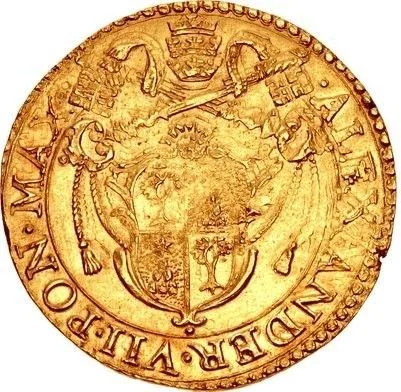
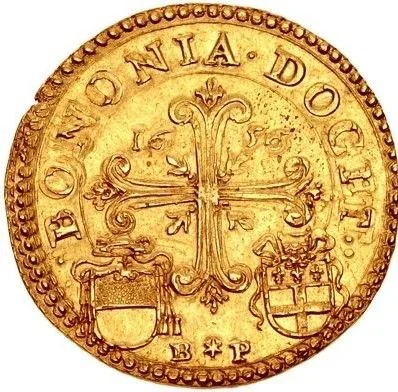
4 Scudi – Bologna
Italy
Context
Years: 1655–1657
Country: Italy 
Issuer: Bologna
Ruler: Alexander VII
Currency:
(1534—1835)
Demonetized: Yes
Material
References
KM: #Click to copy to clipboard55
Numista: #315686
Value
Bullion value: $2168.15
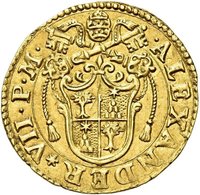
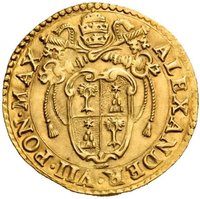
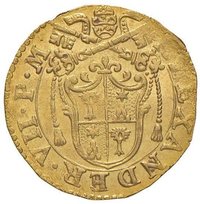
Obverse
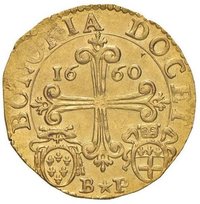
Reverse
Description:
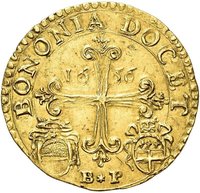
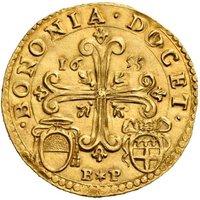
Floriate cross divides date, two shields below.
Inscription:
BONONIA DOCIT
1656
B P
1656
B P
Script: Latin
Edge
Mints
| Name | Mark |
|---|---|
| Bologna | — |
Mintings
| Year | Mint Mark | Mintage | Quality | Collection |
|---|---|---|---|---|
| 1655 | — | — | ||
| 1656 | — | — | ||
| 1657 | — | — |
Historical background
In 1655, Bologna operated within the complex monetary landscape of the Papal States, to which it belonged. The city’s commerce relied on a dual system of real and imaginary money. The primary real coin was the Papal scudo (or piastra), a large silver coin, alongside its fractional units like giuli and baiochi. However, daily accounting and contracts were often denominated in lire, soldi, and denari—an imaginary money of account (the lira bolognese) that existed only on paper and represented a stable notational benchmark against which the fluctuating metal content of actual coins was measured.
This period was one of significant monetary strain. The mid-17th century saw widespread debasement and "crying up" of coins across Italy due to the pressures of the Thirty Years' War and regional economic competition. While the Papal Mint in Rome set standards, the value of silver scudi in Bologna could differ from their nominal worth in lire, leading to frequent official edicts (grida) that attempted to fix exchange rates between coin species and the money of account. These proclamations, often reactive, aimed to curb speculation and stabilize local markets but revealed the constant tension between official decrees and market realities.
For Bolognese merchants, artisans, and citizens, this environment created practical challenges. Prices and wages required careful negotiation to specify whether payment was in "good silver" (argento buono) or in other, potentially debased, coinage. The instability incentivized hoarding of full-weight silver, further distorting circulation. Thus, the currency situation in 1655 Bologna was characterized by a fragile balance between the theoretical stability of the money of account and the tangible volatility of metallic coins, requiring constant vigilance in both commerce and civic administration to mitigate the economic disruptions of monetary uncertainty.
This period was one of significant monetary strain. The mid-17th century saw widespread debasement and "crying up" of coins across Italy due to the pressures of the Thirty Years' War and regional economic competition. While the Papal Mint in Rome set standards, the value of silver scudi in Bologna could differ from their nominal worth in lire, leading to frequent official edicts (grida) that attempted to fix exchange rates between coin species and the money of account. These proclamations, often reactive, aimed to curb speculation and stabilize local markets but revealed the constant tension between official decrees and market realities.
For Bolognese merchants, artisans, and citizens, this environment created practical challenges. Prices and wages required careful negotiation to specify whether payment was in "good silver" (argento buono) or in other, potentially debased, coinage. The instability incentivized hoarding of full-weight silver, further distorting circulation. Thus, the currency situation in 1655 Bologna was characterized by a fragile balance between the theoretical stability of the money of account and the tangible volatility of metallic coins, requiring constant vigilance in both commerce and civic administration to mitigate the economic disruptions of monetary uncertainty.
✨ Legendary