

1 Scudo – Bologna
Italy
Context
Years: 1658–1662
Country: Italy 
Issuer: Bologna
Ruler: Alexander VII
Currency:
(1534—1835)
Demonetized: Yes
References
KM: #Click to copy to clipboard57
Numista: #365321
Value
Bullion value: $540.06
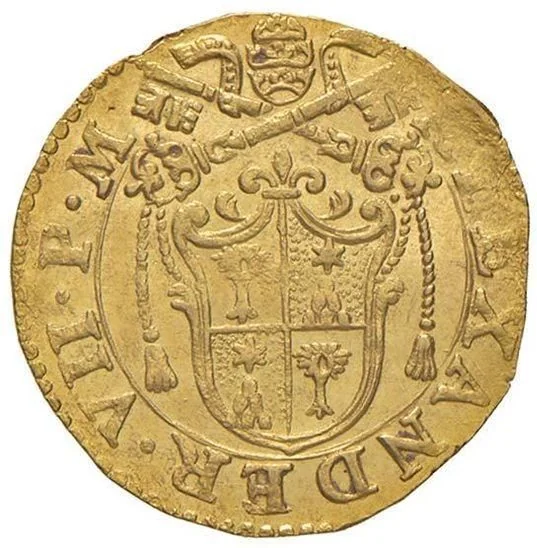
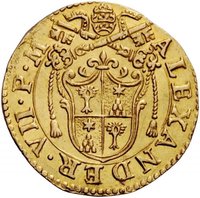
Obverse
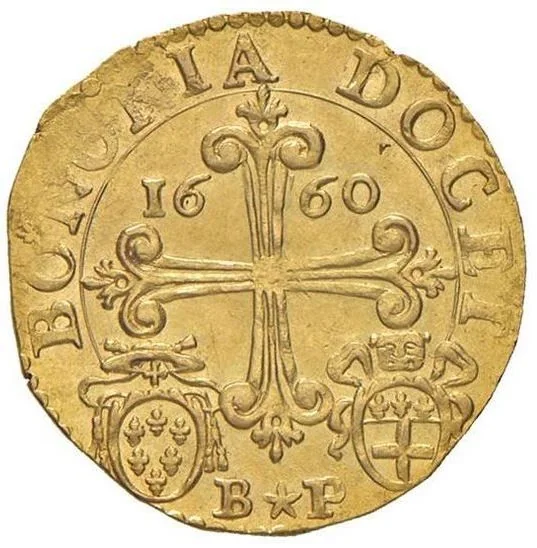
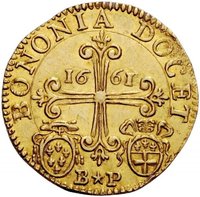
Reverse
Description:
Floriate cross divides date, two small shields below.
Inscription:
BONONIA DOCET
16 60
B P
16 60
B P
Script: Latin
Edge
Mints
| Name | Mark |
|---|---|
| Bologna | — |
Mintings
| Year | Mint Mark | Mintage | Quality | Collection |
|---|---|---|---|---|
| 1658 | — | — | ||
| 1659 | — | — | ||
| 1660 | — | — | ||
| 1661 | — | — | ||
| 1662 | — | — |
Historical background
In 1658, Bologna operated within the complex monetary ecosystem of the Papal States, to which it belonged. Officially, the city used a bimetallic system based on the Papal scudo (gold) and the giulio (silver), with a plethora of smaller copper and billon coins for daily market transactions. However, the reality was one of significant instability and confusion. Decades of debasement by various Italian states and the influx of foreign coins, particularly Spanish silver reales and copper moneta nera from nearby territories, created a chaotic circulation where the intrinsic metal value of a coin often differed sharply from its official face value.
This monetary disorder was exacerbated by the severe economic pressures of the mid-17th century, known as the "General Crisis." The lingering effects of the 1640 plague, which halved Bologna's population, depressed local production and trade. Furthermore, the massive costs of fortifying the city against potential military threats during the Franco-Spanish War strained civic finances. In response, the papal authorities and the local Senato frequently issued proclamations to adjust exchange rates and outlaw certain foreign coins, attempts that provided only temporary relief and highlighted their inability to enforce a uniform currency.
Consequently, daily commerce in Bologna's markets relied heavily on the constant appraisal and negotiation of coin values. Money changers (banchi di cambio) played a crucial, almost authoritarian role in determining actual worth, while ordinary citizens and merchants faced uncertainty and loss. The situation in 1658 was thus characterized by a widening gap between official monetary policy and on-the-ground practice, a chronic shortage of reliable small change, and an economy struggling to function amidst a fog of financial distrust that hindered recovery from decades of demographic and economic shock.
This monetary disorder was exacerbated by the severe economic pressures of the mid-17th century, known as the "General Crisis." The lingering effects of the 1640 plague, which halved Bologna's population, depressed local production and trade. Furthermore, the massive costs of fortifying the city against potential military threats during the Franco-Spanish War strained civic finances. In response, the papal authorities and the local Senato frequently issued proclamations to adjust exchange rates and outlaw certain foreign coins, attempts that provided only temporary relief and highlighted their inability to enforce a uniform currency.
Consequently, daily commerce in Bologna's markets relied heavily on the constant appraisal and negotiation of coin values. Money changers (banchi di cambio) played a crucial, almost authoritarian role in determining actual worth, while ordinary citizens and merchants faced uncertainty and loss. The situation in 1658 was thus characterized by a widening gap between official monetary policy and on-the-ground practice, a chronic shortage of reliable small change, and an economy struggling to function amidst a fog of financial distrust that hindered recovery from decades of demographic and economic shock.
✨ Legendary