

1 Mohur – Mughal Empire
India
Context
Year: 1623
Islamic (Hijri) Year: 1032
Country: India 
Issuer: Mughal Empire
Ruler: Jahangir I
Currency:
(1540—1842)
Demonetized: Yes
Material
References
KM: #Click to copy to clipboard180.12
Numista: #315564
Value
Bullion value: $1801.83
Obverse
Description:
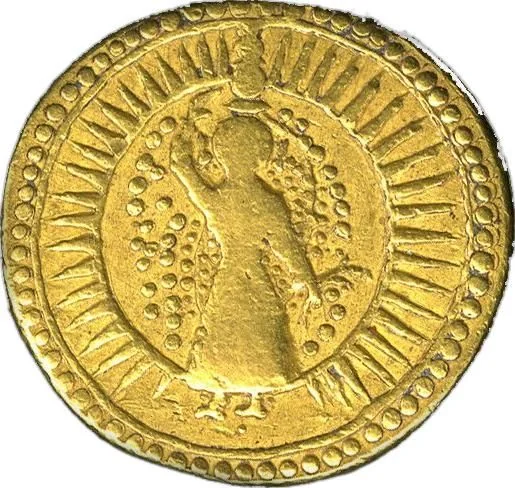
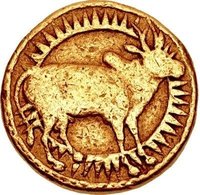
Solar Virgo
Reverse
Inscription:
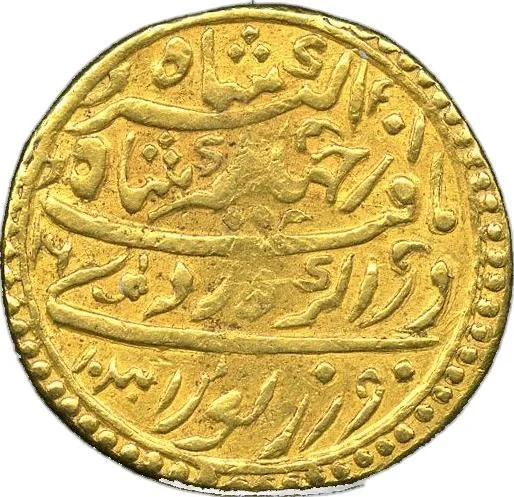
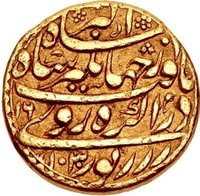
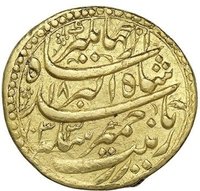
zar zewar dar Agra ruye yaft az Jahangir Shah Akbar Shah
Edge
Mints
| Name | Mark |
|---|---|
| Lahore | — |
Mintings
| Year | Mint Mark | Mintage | Quality | Collection |
|---|---|---|---|---|
| 1623 | — | — |
Historical background
In 1623, the Mughal Empire's currency system was a well-established bimetallic structure centered on the silver rupee and the gold mohur, with a vast quantity of copper dam facilitating everyday local trade. The system was highly centralized and efficient, with imperial mints (sikkas) across the subcontinent producing coins of remarkable purity and consistency, bearing the name and titles of Emperor Jahangir. This standardization, enforced by the state, enabled seamless commercial and revenue transactions across the empire, underpinning its immense economic integration and administrative cohesion.
However, this period also presented significant monetary challenges. A major factor was the continuous outward drain of silver bullion to pay for luxury imports from the Near East and Europe, particularly fine spices, silks, and horses. This drain was not yet catastrophic, but it created persistent pressure on the silver supply. Furthermore, the empire was grappling with the economic and military strain of Jahangir's later reign, including the costly Deccan campaigns and the rebellion of his son, Prince Khurram (the future Shah Jahan). These conflicts diverted resources and potentially disrupted regional trade and revenue flows, testing the stability of the currency system.
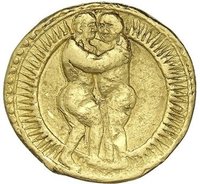
Notably, the year 1623 falls within the distinctive period when Jahangir issued his famous "zodiac" mohurs—exquisite gold coins featuring images of the twelve zodiac signs—a practice begun around 1611. While these were exceptional pieces, they symbolize the emperor's personal interest in coinage as an instrument of sovereignty and prestige. The general currency in circulation, however, remained the robust and trusted silver rupee, which continued to be the backbone of the empire's economy, even as underlying pressures from bullion flows and political unrest simmered beneath the surface of a still-formidable monetary regime.
However, this period also presented significant monetary challenges. A major factor was the continuous outward drain of silver bullion to pay for luxury imports from the Near East and Europe, particularly fine spices, silks, and horses. This drain was not yet catastrophic, but it created persistent pressure on the silver supply. Furthermore, the empire was grappling with the economic and military strain of Jahangir's later reign, including the costly Deccan campaigns and the rebellion of his son, Prince Khurram (the future Shah Jahan). These conflicts diverted resources and potentially disrupted regional trade and revenue flows, testing the stability of the currency system.
Notably, the year 1623 falls within the distinctive period when Jahangir issued his famous "zodiac" mohurs—exquisite gold coins featuring images of the twelve zodiac signs—a practice begun around 1611. While these were exceptional pieces, they symbolize the emperor's personal interest in coinage as an instrument of sovereignty and prestige. The general currency in circulation, however, remained the robust and trusted silver rupee, which continued to be the backbone of the empire's economy, even as underlying pressures from bullion flows and political unrest simmered beneath the surface of a still-formidable monetary regime.
✨ Legendary