

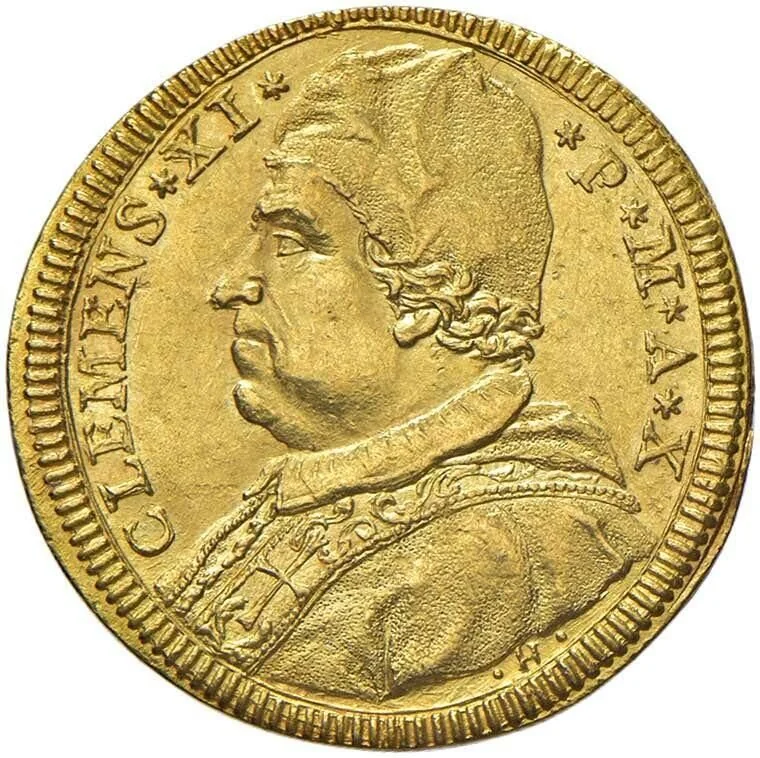
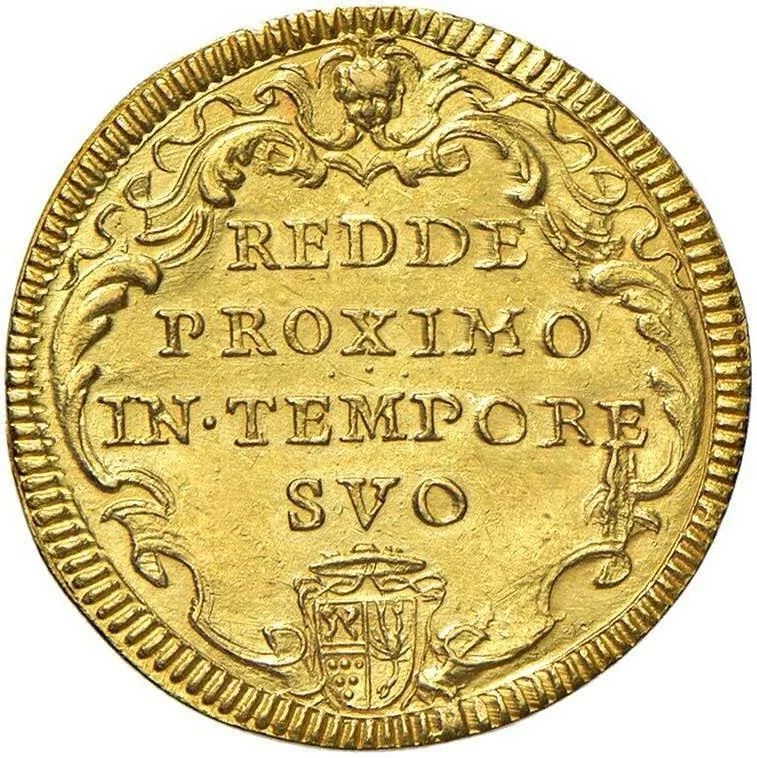
1 Doppia – Papal States
Vatican City
Context
Year: 1710
Country: Vatican City 
Issuer: Papal States
Ruler: Clement XI
Currency:
(1534—1835)
Demonetized: Yes
References
KM: #Click to copy to clipboard739
Numista: #314529
Value
Bullion value: $1153.10
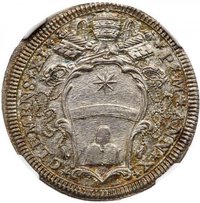
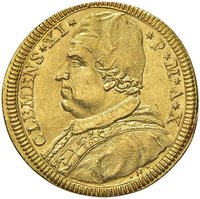
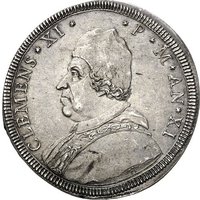
Obverse
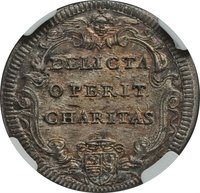
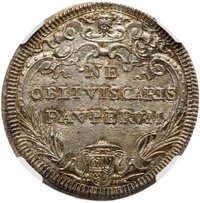
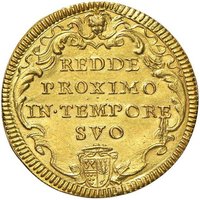
Reverse
Edge
Mints
| Name | Mark |
|---|---|
| Rome | — |
Mintings
| Year | Mint Mark | Mintage | Quality | Collection |
|---|---|---|---|---|
| 1710 | — | — |
Historical background
In 1710, the Papal States under Pope Clement XI faced a complex and deteriorating monetary situation, typical of many Italian states in this period. The primary unit of account was the scudo (plural: scudi), a silver coin, but the reality of daily transactions was dominated by a chaotic mix of physical currency. This included not only papal-issued coins of varying silver purity but also a flood of foreign coins from Spain, France, and other Italian states, as well as heavily debased local copper baiocchi and quattrini. The system was fundamentally bimetallic, but frequent adjustments to the gold-to-silver ratio created instability and confusion.
The core problem was chronic debasement and fiscal pressure. Successive popes had resorted to reducing the silver content in coins to generate seigniorage revenue to fund government expenses, military ventures, and grand artistic projects. This practice, combined with the circulation of underweight foreign coins, led to severe inflation, particularly in the price of basic goods. "Good" full-weight coins were often hoarded or exported, leaving the populace to transact with inferior currency—a classic example of Gresham's Law. The papal treasury, the Camera Apostolica, struggled to manage this instability while financing the state's debts and administrative costs.
Efforts at reform were piecemeal and largely ineffective in 1710. Clement XI, like his predecessors, issued edicts to fix exchange rates between the various coins in an attempt to impose order, but these official tariffs often failed to reflect market realities. Consequently, money changers (banchieri) wielded significant power, determining actual exchange rates and further complicating commerce. This monetary confusion mirrored the broader political and economic stagnation of the Papal States, whose fiscal tools were inadequate for managing a pre-modern economy in an increasingly interconnected European financial system.
The core problem was chronic debasement and fiscal pressure. Successive popes had resorted to reducing the silver content in coins to generate seigniorage revenue to fund government expenses, military ventures, and grand artistic projects. This practice, combined with the circulation of underweight foreign coins, led to severe inflation, particularly in the price of basic goods. "Good" full-weight coins were often hoarded or exported, leaving the populace to transact with inferior currency—a classic example of Gresham's Law. The papal treasury, the Camera Apostolica, struggled to manage this instability while financing the state's debts and administrative costs.
Efforts at reform were piecemeal and largely ineffective in 1710. Clement XI, like his predecessors, issued edicts to fix exchange rates between the various coins in an attempt to impose order, but these official tariffs often failed to reflect market realities. Consequently, money changers (banchieri) wielded significant power, determining actual exchange rates and further complicating commerce. This monetary confusion mirrored the broader political and economic stagnation of the Papal States, whose fiscal tools were inadequate for managing a pre-modern economy in an increasingly interconnected European financial system.
✨ Legendary