

½ Piastra – Papal States
Vatican City
Context
Year: 1711
Country: Vatican City 
Issuer: Papal States
Ruler: Clement XI
Currency:
(1534—1835)
Demonetized: Yes
Material
References
KM: #Click to copy to clipboard742
Numista: #130502
Value
Bullion value: $41.00
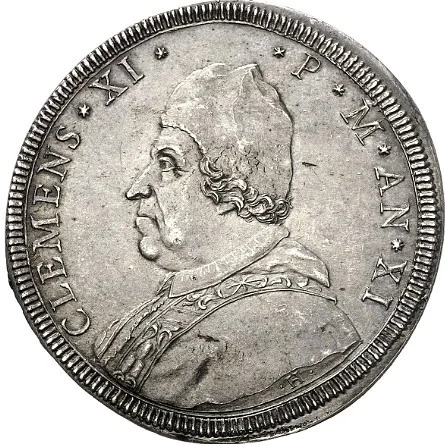
Obverse
Description:
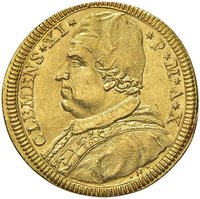
Bust left, capped.
Inscription:
CLEMENS · XI · · P · M · AN · XI
Script: Latin
Engraver: Giovanni Hamerani
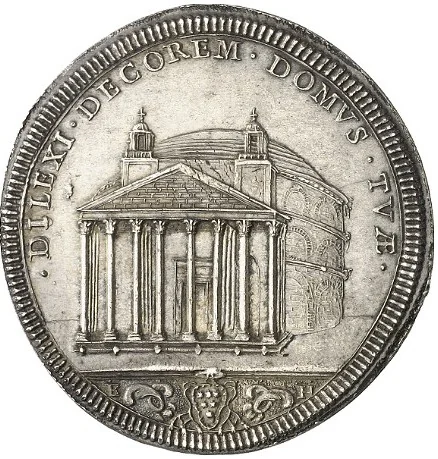
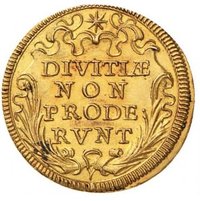
Reverse
Description:
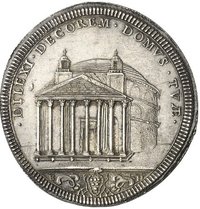
A temple to all the gods.
Inscription:
· DILEXI · DECOREM · DOMVS · TVÆ ·
Script: Latin
Edge
Mintings
| Year | Mint Mark | Mintage | Quality | Collection |
|---|---|---|---|---|
| 1711 | — | — |
Historical background
In 1711, the Papal States operated under a complex and debased monetary system typical of many Italian states in the early 18th century. The primary unit of account was the scudo (plural: scudi), which existed in both silver (scudo di moneta) and gold (scudo d'oro) forms, but the circulating coinage was a chaotic mix. The actual coins in people's hands were often low-value copper and billon (debased silver) pieces, such as baiocchi and quattrini, with their values officially set in relation to the scudo. However, chronic state deficits, driven by lavish court expenditures and administrative costs, led to repeated manipulations. The papal mint frequently reduced the precious metal content of coins to generate seigniorage revenue, a practice that caused inflation, eroded public trust, and created confusion in commerce.
This period fell within the prolonged reign of Pope Clement XI (1700-1721), whose papacy was financially strained by the War of the Spanish Succession. Although the Papal States sought neutrality, it was a costly endeavor requiring fortifications, diplomacy, and tributes to deter invading armies. These external pressures exacerbated the internal fiscal weaknesses, leading to increased debt and further reliance on currency debasement as a short-term fiscal tool. Consequently, the discrepancy between the official "money of account" and the actual "money in circulation" widened, with fluctuating exchange rates between copper, silver, and gold coins creating a thriving business for money-changers and complicating everyday transactions.
The monetary chaos of 1711 was not an isolated crisis but a persistent feature of the era, reflecting the broader economic decline of the Papal States. The system hindered trade and economic development, as merchants and citizens faced uncertainty in value. While there were occasional attempts at reform, a comprehensive stabilization of the currency would not be achieved until later in the century, most notably under Pope Pius VI in the 1790s. Thus, in 1711, the papal lira, scudo, and bajocco formed a fragile and unstable monetary hierarchy that mirrored the temporal and financial vulnerabilities of the pontifical government.
This period fell within the prolonged reign of Pope Clement XI (1700-1721), whose papacy was financially strained by the War of the Spanish Succession. Although the Papal States sought neutrality, it was a costly endeavor requiring fortifications, diplomacy, and tributes to deter invading armies. These external pressures exacerbated the internal fiscal weaknesses, leading to increased debt and further reliance on currency debasement as a short-term fiscal tool. Consequently, the discrepancy between the official "money of account" and the actual "money in circulation" widened, with fluctuating exchange rates between copper, silver, and gold coins creating a thriving business for money-changers and complicating everyday transactions.
The monetary chaos of 1711 was not an isolated crisis but a persistent feature of the era, reflecting the broader economic decline of the Papal States. The system hindered trade and economic development, as merchants and citizens faced uncertainty in value. While there were occasional attempts at reform, a comprehensive stabilization of the currency would not be achieved until later in the century, most notably under Pope Pius VI in the 1790s. Thus, in 1711, the papal lira, scudo, and bajocco formed a fragile and unstable monetary hierarchy that mirrored the temporal and financial vulnerabilities of the pontifical government.
✨ Legendary