

1 Quarto – Philippines
Philippines
Context
Years: 1771–1783
Issuer: Philippines 
Ruler: Charles III
Currency:
(1700—1857)
Subdivision: 1 Quarto = ¼ Real
Demonetized: Yes
Material
References
KM: #Click to copy to clipboard2
Numista: #311973
Obverse
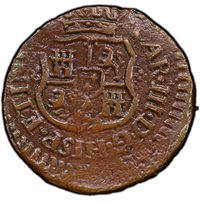
Description:
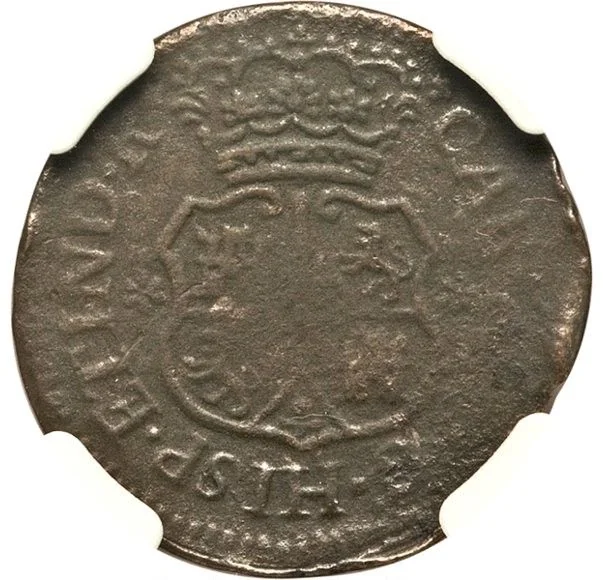
Crowned coat of arms between elongated six-pointed stars.
Inscription:
CAR · III D · G · HISP · ET IND · R ·
Script: Latin
Reverse
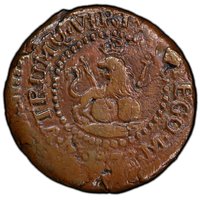
Description:
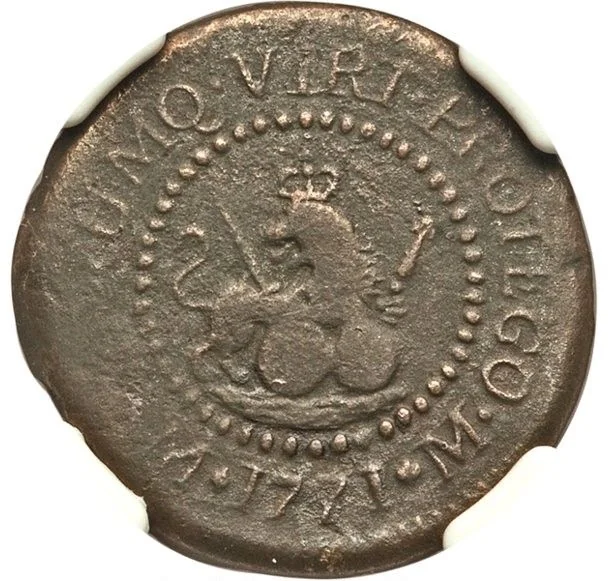
Crowned lion guarding two globes, waves below, within beaded circle.
Inscription:
VTRUMQ · VIRT · PROTEGO · M · 1771 · M
Script: Latin
Edge
Categories
| Animal> Feline |
| Symbols> Coat of Arms |
Mints
| Name | Mark |
|---|---|
| Manila | M |
Historical background
In 1771, the Philippines operated under a complex and strained monetary system as a colony of the Spanish Empire. The official currency was the Spanish silver peso or "real de a ocho," but a chronic shortage of circulating coinage was the defining economic problem. This scarcity was due to Manila's role as a trade entrepôt; vast quantities of Mexican-minted silver pesos arrived annually on the famed Manila Galleon from Acapulco, but were swiftly exported to China and other Asian ports to pay for silks, porcelain, and spices, leaving the local economy perpetually starved of hard currency.
To facilitate everyday transactions, a system of alternative and often inadequate currencies filled the void. The Spanish colonial government frequently resorted to issuing paper decrees, promissory notes, and crude lead or copper tokens called "barrillas" for small change, which were unpopular and prone to counterfeiting. Furthermore, a multitude of foreign coins—chiefly Spanish-American pesos but also coins from other European empires and even Chinese sycee silver—circulated with varying acceptance and valuation, leading to confusion and commercial friction.
This monetary instability directly impacted all levels of society in 1771. It hampered internal trade, complicated tax collection for the colonial administration, and created opportunities for usury and exploitation. The situation underscored the colony's economic vulnerability, being utterly dependent on the annual galleon arrival and trapped in a cycle where its primary function was to drain silver from the Americas to Asia, neglecting the development of a robust, self-sufficient domestic economy with a stable medium of exchange.
To facilitate everyday transactions, a system of alternative and often inadequate currencies filled the void. The Spanish colonial government frequently resorted to issuing paper decrees, promissory notes, and crude lead or copper tokens called "barrillas" for small change, which were unpopular and prone to counterfeiting. Furthermore, a multitude of foreign coins—chiefly Spanish-American pesos but also coins from other European empires and even Chinese sycee silver—circulated with varying acceptance and valuation, leading to confusion and commercial friction.
This monetary instability directly impacted all levels of society in 1771. It hampered internal trade, complicated tax collection for the colonial administration, and created opportunities for usury and exploitation. The situation underscored the colony's economic vulnerability, being utterly dependent on the annual galleon arrival and trapped in a cycle where its primary function was to drain silver from the Americas to Asia, neglecting the development of a robust, self-sufficient domestic economy with a stable medium of exchange.
✨ Legendary