

1 thaler – Brunswick-Lüneburg-Calenberg-Hannover
Add to wishlist
Germany
Context
Material
References
KM: #
Numista: #278659
Value
Bullion value: $72.95
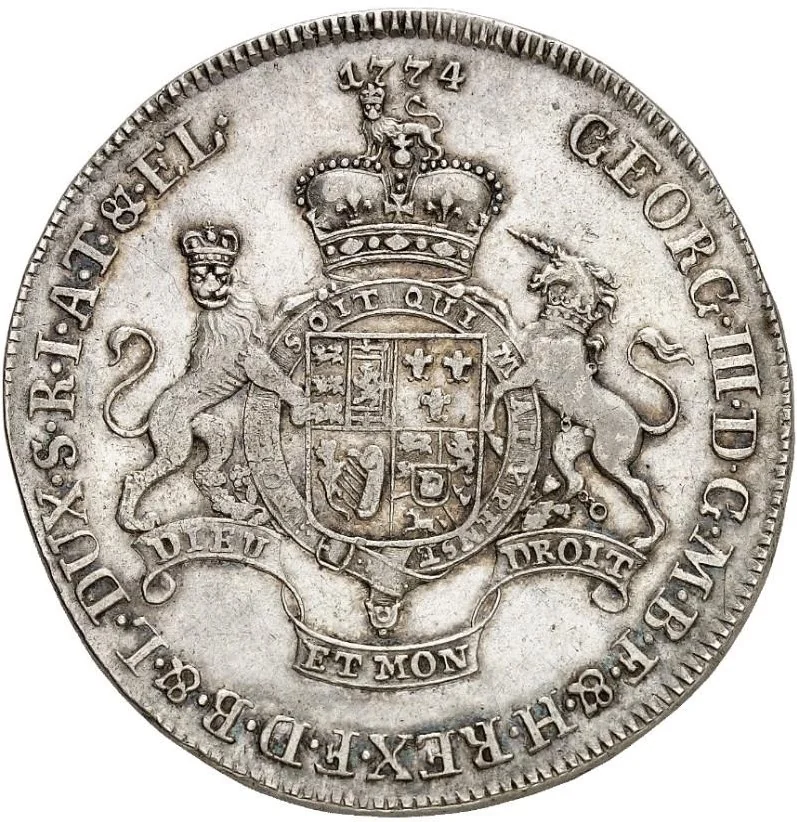
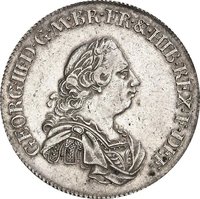
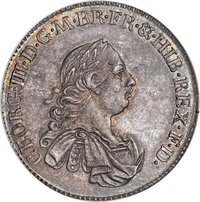
Obverse
Description:
Lion and unicorn supported arms.
Inscription:
1774
GEORG III D G M B F & H REX F D B & L DUX S R I A T & EL
HONI SOIT QUI MAL Y PENSE
DIEU ET MON DROIT
GEORG III D G M B F & H REX F D B & L DUX S R I A T & EL
HONI SOIT QUI MAL Y PENSE
DIEU ET MON DROIT
Script: Latin
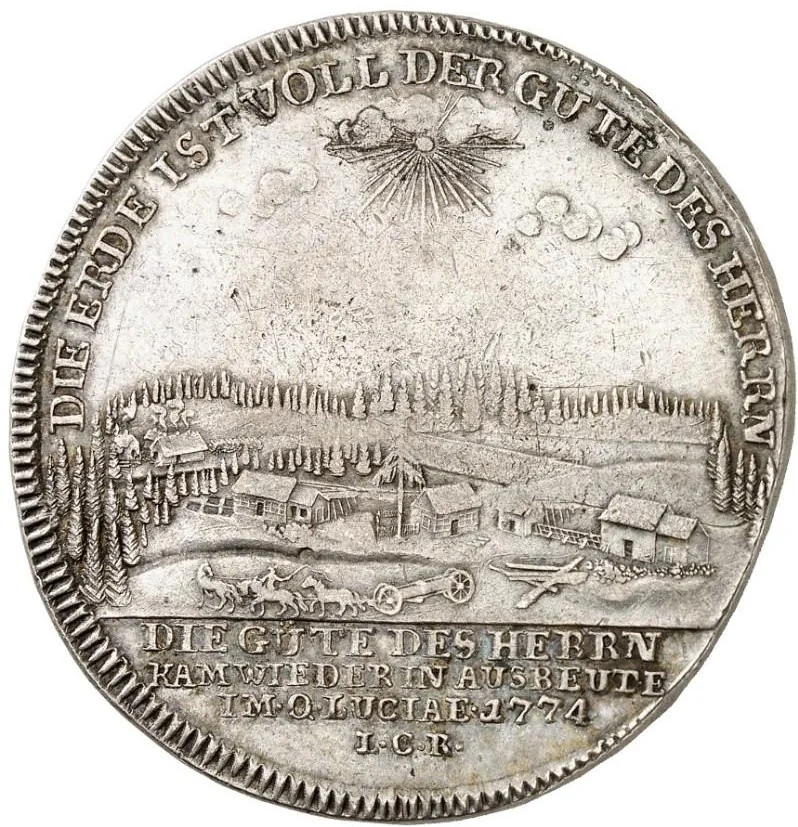
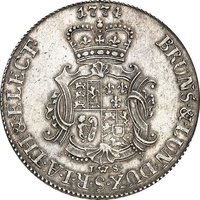
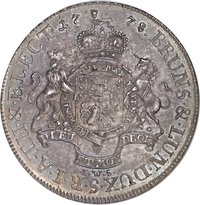
Reverse
Description:
Mine interior
Inscription:
DIE ERDE IST VOLL DER GÜTE DES HERRN
DIE GÜTE DES HERRN
KAM WIEDER IN AUSBEUTE
IM Q LUCIAE 1774
I C R
DIE GÜTE DES HERRN
KAM WIEDER IN AUSBEUTE
IM Q LUCIAE 1774
I C R
Script: Latin
Edge
Mints
| Name | Mark |
|---|---|
| Zellerfeld | — |
Mintings
| Year | Mint Mark | Mintage | Quality | Collection |
|---|---|---|---|---|
| 1774 | — | — |
Historical background
In 1774, the currency situation in the Duchy of Brunswick-Lüneburg, specifically the Principality of Calenberg (with its capital in Hanover), was characterized by significant complexity and fragmentation. The region operated within the wider monetary framework of the Holy Roman Empire, which meant a multitude of foreign and domestic coins circulated simultaneously. The official unit of account was the Reichsthaler, divided into 24 Gute Groschen or 36 Mariengroschen, but in practice, trade was conducted using a bewildering array of physical specie including Louis d'or, Friedrichs d'or, Thalers, and smaller regional coins from neighboring states. This proliferation led to constant difficulties in exchange and valuation, hampering commerce and state finance.
The root of this confusion lay in the absence of a unified, state-controlled coinage. While the Hanoverian rulers had the right of minting, the monetary system was still deeply influenced by the legacy of the Reichsmünzfuß (Imperial minting standard) and the practical dominance of large silver Thalers and gold coins from France and Prussia. Furthermore, the monetary needs of the Electorate of Hanover's personal union with Great Britain (since 1714) meant substantial financial flows and foreign coins entered the local economy, particularly through the subsidy payments for Hanoverian troops and the financial activities of the British crown. This international dimension added another layer of instability to the local currency market.
Consequently, the year 1774 fell within a period of ongoing monetary strain rather than reform. While some German states were beginning to move toward greater standardization, Hanover had not yet undertaken a major recoinage or established a definitive, exclusive currency. The situation created a thriving business for money changers (Wechsler) but posed a constant challenge for merchants, administrators, and the populace, who had to navigate daily transactions with coins of fluctuating metallic content and value. This fragmented system would persist until the Napoleonic era and the subsequent German monetary unions of the 19th century forced comprehensive modernization.
The root of this confusion lay in the absence of a unified, state-controlled coinage. While the Hanoverian rulers had the right of minting, the monetary system was still deeply influenced by the legacy of the Reichsmünzfuß (Imperial minting standard) and the practical dominance of large silver Thalers and gold coins from France and Prussia. Furthermore, the monetary needs of the Electorate of Hanover's personal union with Great Britain (since 1714) meant substantial financial flows and foreign coins entered the local economy, particularly through the subsidy payments for Hanoverian troops and the financial activities of the British crown. This international dimension added another layer of instability to the local currency market.
Consequently, the year 1774 fell within a period of ongoing monetary strain rather than reform. While some German states were beginning to move toward greater standardization, Hanover had not yet undertaken a major recoinage or established a definitive, exclusive currency. The situation created a thriving business for money changers (Wechsler) but posed a constant challenge for merchants, administrators, and the populace, who had to navigate daily transactions with coins of fluctuating metallic content and value. This fragmented system would persist until the Napoleonic era and the subsequent German monetary unions of the 19th century forced comprehensive modernization.
✨ Legendary