

1 Krone – Denmark
Denmark
Context

Material
References
KM: #Click to copy to clipboard365
Numista: #310721
Value
Bullion value: $42.95
Obverse
Description:
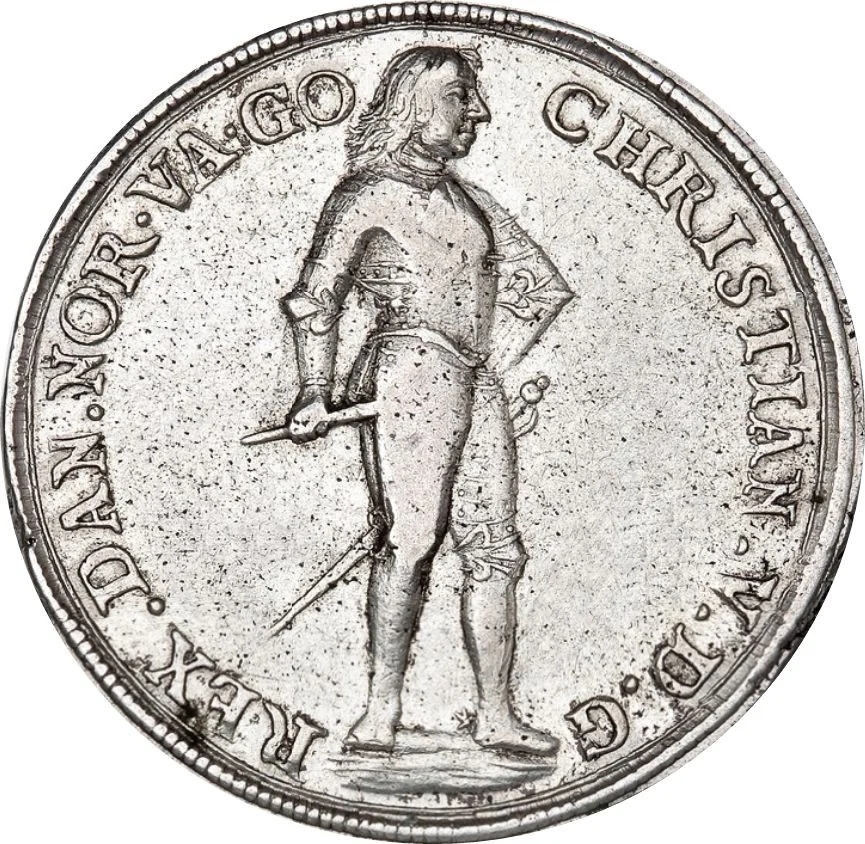
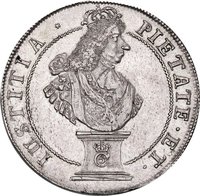
An armored, bare-headed king stands holding a command staff. Legend around the rim.
Inscription:
CHRISTIAN. V . D. G. | REX .DAN .NOR . VA . GO
Script: Latin
Reverse
Description:
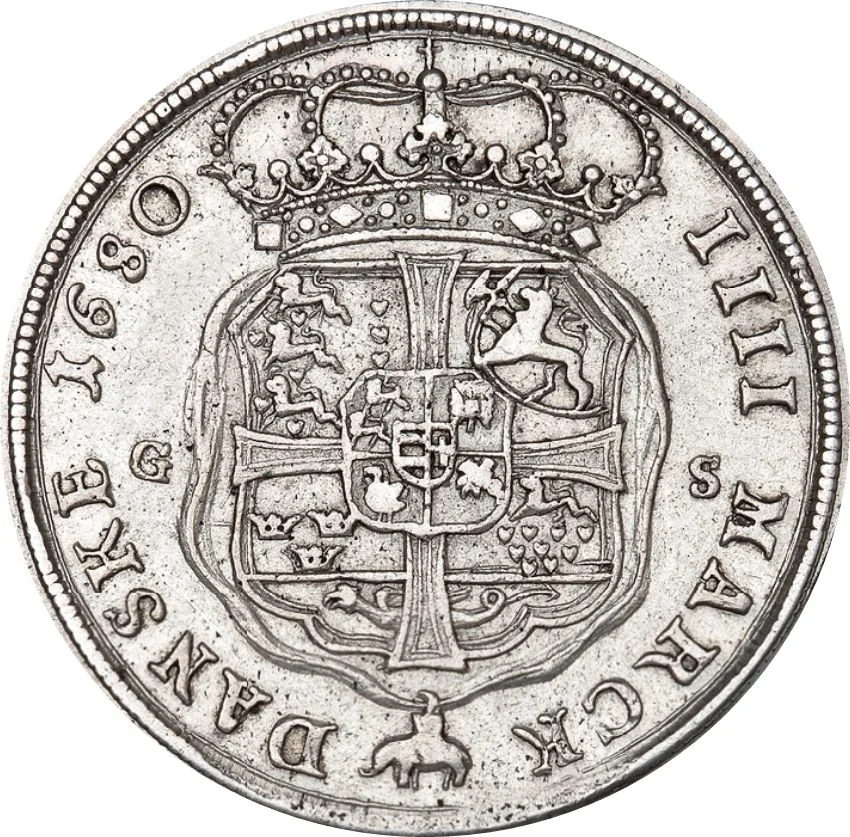
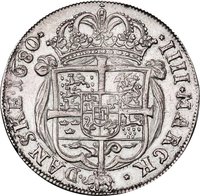
Crowned shield with Danish and regional arms, encircled by the Order of the Elephant's band. Mint marks flank the shield; value and date around the rim.
Inscription:
IIII MARCK | DANSK 1680
G | S
G | S
Script: Latin
Edge
Categories
| Symbols> Coat of Arms |
Mints
| Name | Mark |
|---|---|
| Copenhagen | GS |
Mintings
| Year | Mint Mark | Mintage | Quality | Collection |
|---|---|---|---|---|
| 1680 | GS | — |
Historical background
In 1680, Denmark operated under a silver-based monetary system, yet the state faced significant currency instability and a chronic shortage of sound coinage. The primary unit was the rigsdaler, valued against a fixed weight of fine silver, but decades of war and fiscal strain had led to the circulation of heavily debased coins. These included not only older, clipped, and worn Danish coins but also a multitude of foreign currencies, particularly from the German states, which circulated at fluctuating and often arbitrary values. This chaotic mix created confusion in commerce and facilitated widespread fraud, undermining both public trust and royal revenue.
The root cause lay in the policies of King Christian V’s government, which had repeatedly resorted to currency manipulation to finance state expenditures, especially during the Scanian War (1675-1679). The monarchy would issue new coins with a lower silver content but the same face value as the old, a practice known as debasement, effectively creating a hidden tax. However, this triggered Gresham’s Law, where "bad money drives out good"—people hoarded the older, full-weight silver coins and used the poorer ones for daily transactions, further draining the kingdom of its quality monetary stock and exacerbating the shortage.
Consequently, by 1680, the Danish economy suffered from a fragmented and unreliable currency, which hindered trade and economic recovery in the postwar period. Recognizing the crisis, the crown was on the cusp of major reform. This environment directly set the stage for the comprehensive Currency Regulation of 1683, which would standardize the monetary system, strictly define the species of coins allowed to circulate, and firmly re-establish the silver standard, bringing much-needed stability to the Danish state.
The root cause lay in the policies of King Christian V’s government, which had repeatedly resorted to currency manipulation to finance state expenditures, especially during the Scanian War (1675-1679). The monarchy would issue new coins with a lower silver content but the same face value as the old, a practice known as debasement, effectively creating a hidden tax. However, this triggered Gresham’s Law, where "bad money drives out good"—people hoarded the older, full-weight silver coins and used the poorer ones for daily transactions, further draining the kingdom of its quality monetary stock and exacerbating the shortage.
Consequently, by 1680, the Danish economy suffered from a fragmented and unreliable currency, which hindered trade and economic recovery in the postwar period. Recognizing the crisis, the crown was on the cusp of major reform. This environment directly set the stage for the comprehensive Currency Regulation of 1683, which would standardize the monetary system, strictly define the species of coins allowed to circulate, and firmly re-establish the silver standard, bringing much-needed stability to the Danish state.
✨ Legendary