

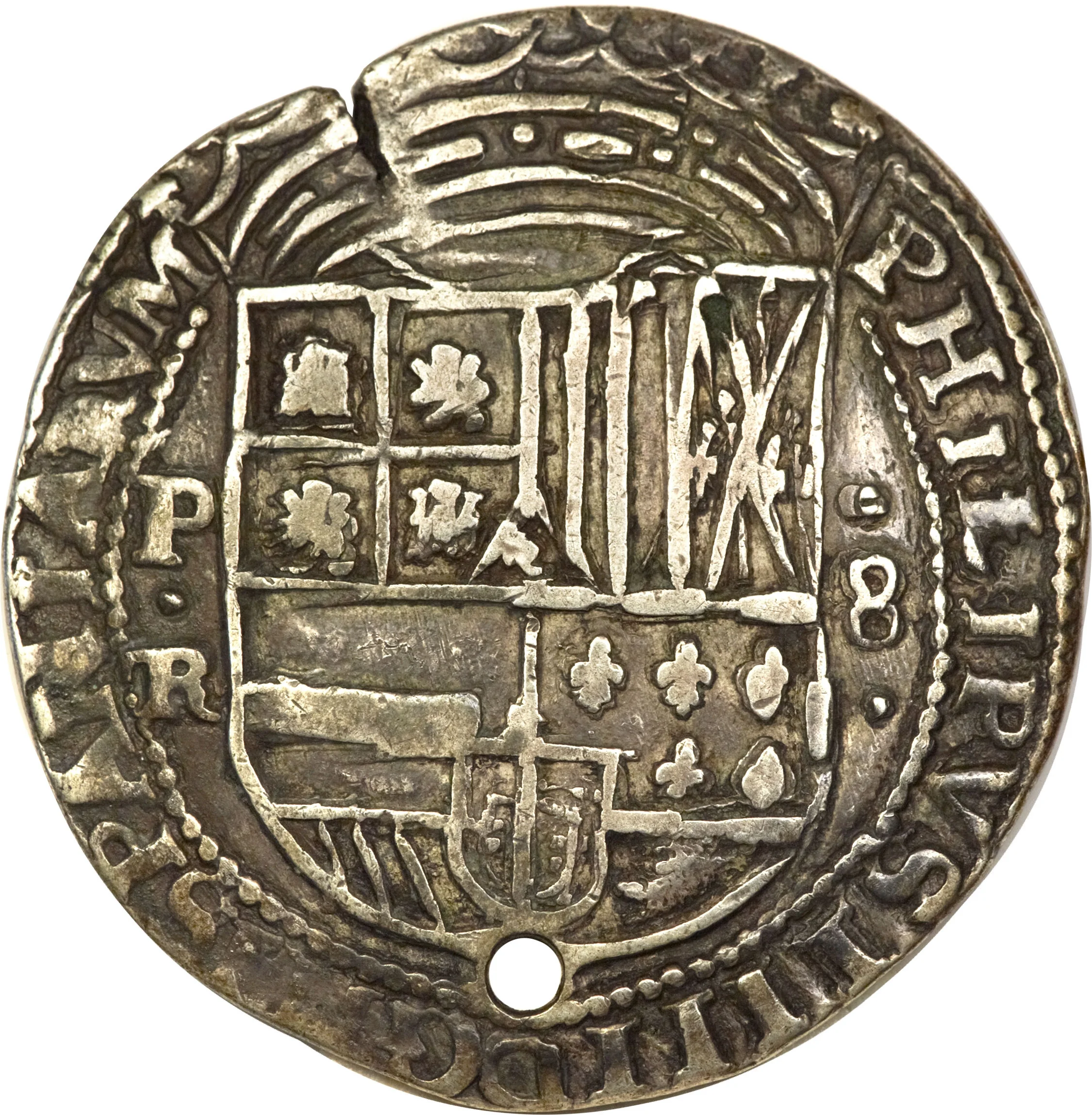

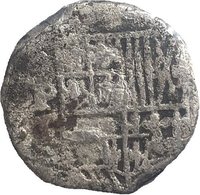
Obverse
Description:
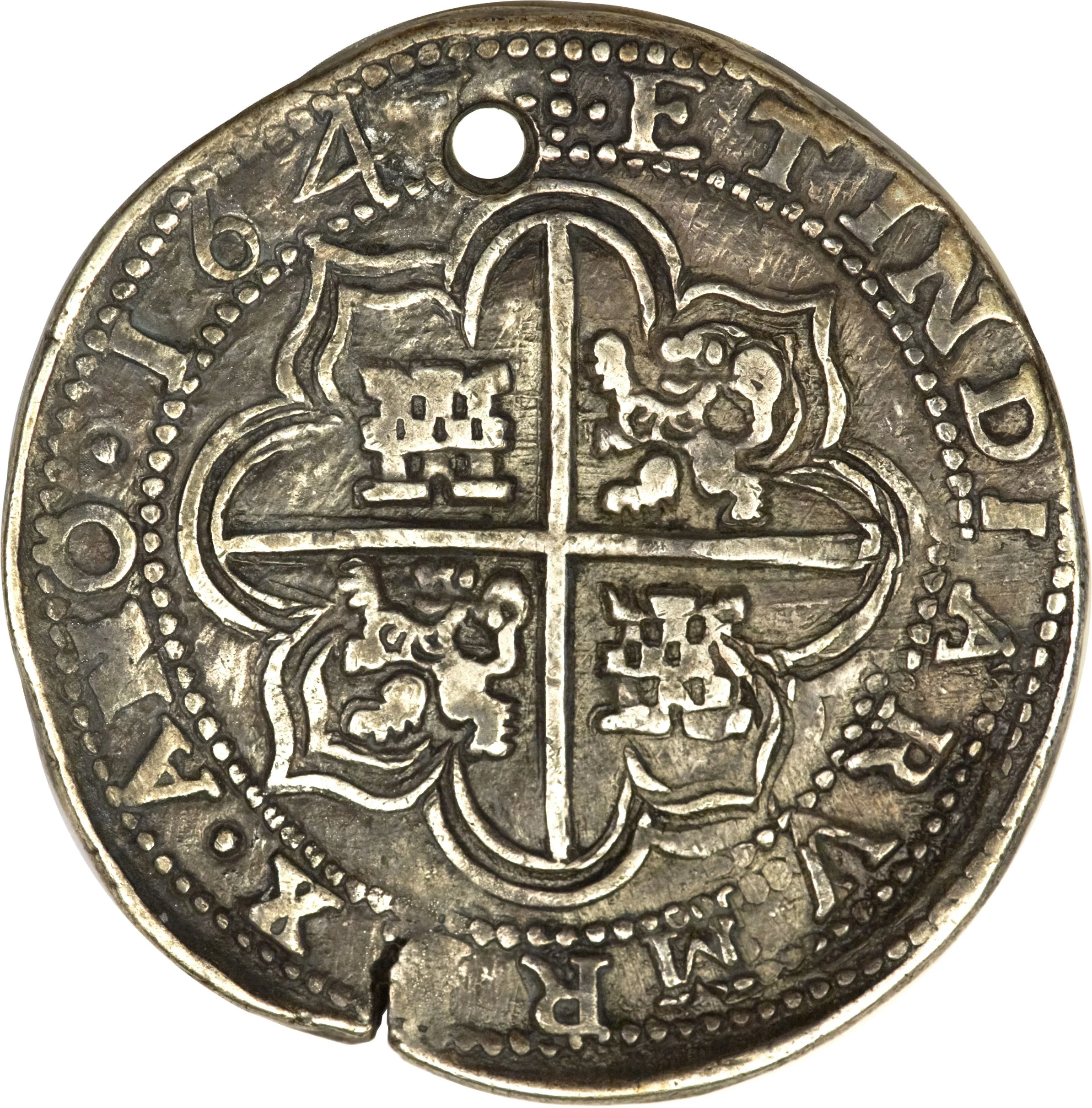
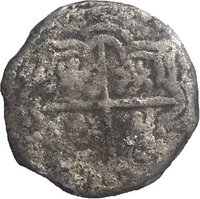
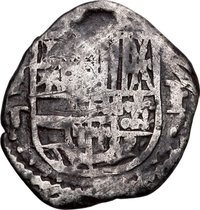
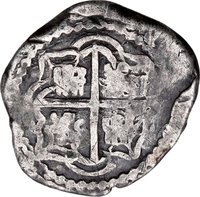
Philippe IV 8 reales, Potosí (1645-1648). Engraver R/TR, tréflée. Great Transition period.
Script: Latin
Reverse
Edge
thick is irregular (3 mm)
Mintings
| Year | Mint Mark | Mintage | Quality | Collection |
|---|---|---|---|---|
| 1625 | P | — | ||
| 1626 | P | — | ||
| 1627 | P | — | ||
| 1628 | P | — | ||
| 1629 | P | — | ||
| 1630 | P | — | ||
| 1631 | P | — | ||
| 1632 | P | — | ||
| 1633 | P | — | ||
| 1634 | P | — | ||
| 1635 | P | — | ||
| 1636 | P | — | ||
| 1637 | P | — | ||
| 1638 | P | — | ||
| 1639 | P | — | ||
| 1640 | P | — | ||
| 1641 | P | — | ||
| 1642 | P | — | ||
| 1643 | P | — | ||
| 1644 | P | — | ||
| 1645 | P | — | ||
| 1646 | P | — | ||
| 1647 | P | 1 | ||
| 1648 | P | — |
Historical background
In 1625, the currency situation in the Royal Audiencia of Charcas (modern Bolivia) was defined by the overwhelming dominance of silver, mined from the legendary Cerro Rico of Potosí. The Spanish Crown had established the Potosí Mint (Casa de la Moneda) in 1574, and by the early 17th century, it was one of the most prolific coin-producing centers in the world. The primary unit was the silver real, with eight reales making a peso (often called a "piece of eight"), which served as the backbone of both local and global trade. This vast output of silver coinage integrated the region into the nascent global economy, financing the Spanish Empire and flooding markets as far as Europe and Asia.
Despite this immense silver wealth, a severe shortage of circulating small-denomination currency plagued the local economy. The mint primarily produced high-value coins for large-scale and international transactions, creating a critical gap in everyday commerce. To facilitate minor transactions, people resorted to cutting silver coins into fractional pieces, known as "macuquinas partidas," or using crudely minted, irregular macuquina coins that were often debased. This practice led to frequent fraud, disputes, and economic inefficiency, as the value of these fragments was uncertain and easily manipulated.
The Spanish Crown's rigid mercantilist policies exacerbated these issues. All precious metals were legally required to be sent to the official mints, and the monetary system was strictly controlled from Spain, leaving little flexibility to address local needs. Furthermore, while silver coins flowed out to pay for imported European goods and imperial taxes, little currency returned, perpetuating the shortage. Thus, in 1625, Bolivia's currency landscape was a paradox: at the heart of global silver production, yet struggling with a dysfunctional and inadequate circulating medium for its own population's daily needs.
Despite this immense silver wealth, a severe shortage of circulating small-denomination currency plagued the local economy. The mint primarily produced high-value coins for large-scale and international transactions, creating a critical gap in everyday commerce. To facilitate minor transactions, people resorted to cutting silver coins into fractional pieces, known as "macuquinas partidas," or using crudely minted, irregular macuquina coins that were often debased. This practice led to frequent fraud, disputes, and economic inefficiency, as the value of these fragments was uncertain and easily manipulated.
The Spanish Crown's rigid mercantilist policies exacerbated these issues. All precious metals were legally required to be sent to the official mints, and the monetary system was strictly controlled from Spain, leaving little flexibility to address local needs. Furthermore, while silver coins flowed out to pay for imported European goods and imperial taxes, little currency returned, perpetuating the shortage. Thus, in 1625, Bolivia's currency landscape was a paradox: at the heart of global silver production, yet struggling with a dysfunctional and inadequate circulating medium for its own population's daily needs.
💎 Extremely Rare